
Polymarket Reawakens! Why Traders Are Flocking Back After Legal Limits End
A Deep Dive Into the Prediction Market Rebirth
In 2025, something unexpected happened a 4-year ban that limited U.S. users from using Polymarket one of the world’s most popular decentralized prediction markets came to an end. The result? A rapid resurgence of interest, new traders joining the platform, and real money flowing into markets tracking politics, crypto, current events, and macro trends.
This article explains what Polymarket actually is, how it works, why traders are already making money, and what it means for the future of decentralized finance and prediction markets.
What Is Polymarket?
Polymarket is a decentralized prediction market platform built on blockchain technology that allows users to trade on the outcome of future events. Instead of buying stocks or crypto, traders buy and sell shares tied to real-world events similar to betting, but on a transparent decentralized market.
Examples of markets could include
- “Will Candidate X win the election?”
- “Will BTC be above $100,000 by year-end?”
- “Will the Federal Reserve raise rates at the next meeting?”
Each outcome has a price between $0 and $1 that represents the market’s collective probability prediction. If you buy at $0.60 and the event occurs, you earn $1 per share a 40% gain.
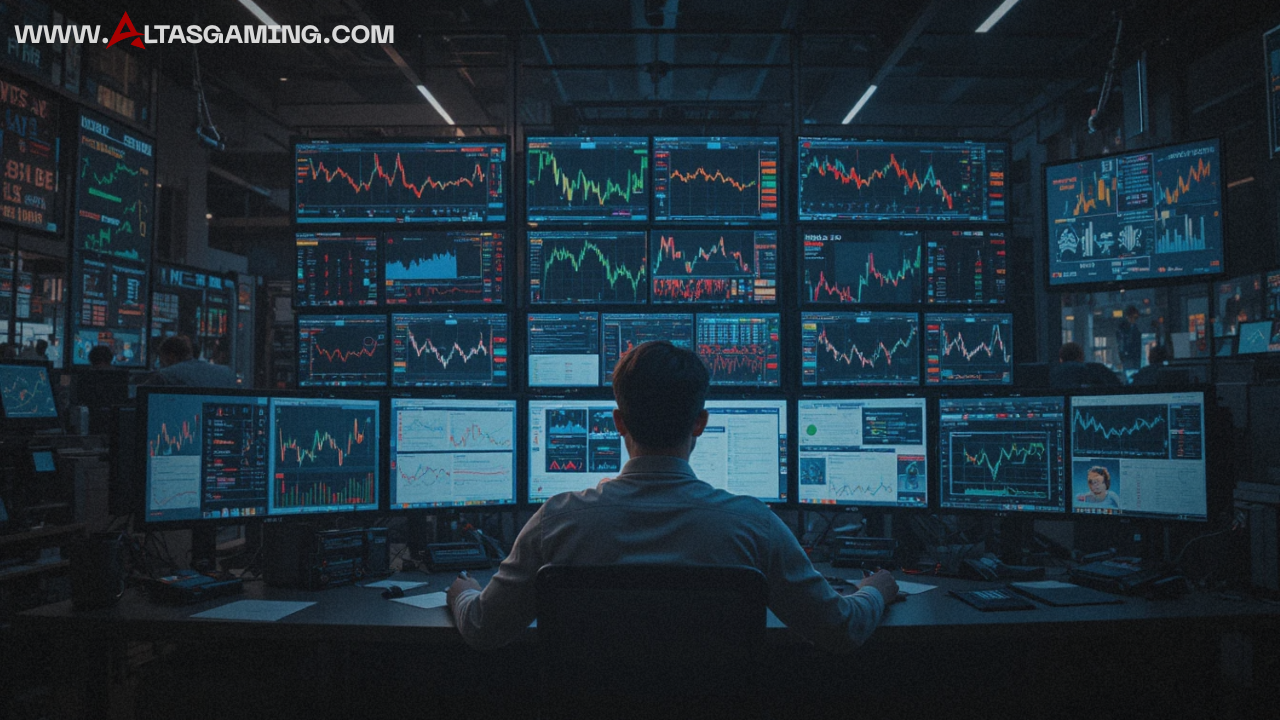
How Polymarket Works
Core Components
1. Markets
Events are listed with possible outcomes that traders can buy and sell.
2. Liquidity
Anyone can provide liquidity to markets, earning fees from trade volume.
3. Smart Contracts
All trades and outcomes are settled by blockchain smart contracts, making them transparent, automated, and resistant to censorship.
4. Oracles
Final event outcomes are confirmed by trusted data providers or decentralized oracle systems.
Trading Mechanics
- Buy low, sell high: You profit if your traded outcome’s probability increases.
- Market depth matters: Low liquidity markets can have wide bid-ask spreads.
- Resolution fees and settlement: Once an event resolves, winners are paid out automatically.
The 4-Year U.S. Ban and Its End
From roughly 2021 through 2025, most U.S. users were restricted from participating due to regulatory concerns. Prediction markets live in a legal gray area
- Are they gambling markets?
- Or information markets?
Polymarket argued that its platform provides price discovery and collective intelligence, not mere betting, but legal uncertainty forced restrictions.
In late 2025, legal interpretations shifted, allowing U.S. access to resume. Once the ban lifted
- New liquidity flowed in
- U.S. traders returned
- Markets expanded rapidly
This resurgence reminded observers that demand for decentralized prediction tools was still strong.
Why Traders Are Already Making Money
1. Volatility = Opportunity
Prediction markets thrive on uncertainty. As news breaks
- prices adjust quickly
- savvy traders capitalize on early probability shifts
- information asymmetry creates trading edges
Experienced traders can sometimes beat retail by anticipating outcomes before sentiment shifts.
2. Real-Time News to Price Action
Polymarket turns breaking news into tradable odds in real time. For example
- A surprise Fed decision? Expect rate-related markets to move immediately.
- Election polls shift? Candidate odds update in minutes.
This immediacy creates opportunities that traditional financial markets often delay.
3. Decentralized Access
No custodial accounts, no broker approvals traders can enter markets quickly, as long as they have a supported crypto wallet and funds.
Polymarket’s Position in the Broader Market
Polymarket isn’t alone other prediction platforms exist but it is among the largest and most visible decentralized markets. Its return to the U.S. increases competition with

- Augur
- Gnosis Markets
- Omen
- Centralized prediction products (where legal)
Unlike centralized exchanges, Polymarket’s decentralized nature (smart contracts + on-chain settlement) offers
- censorship resistance
- transparency
- lower barriers to entry
Risks What Traders Should Know
Trading on Polymarket is not risk-free.
Legal Uncertainty
Even after the ban lift, broader regulatory questions remain
- How will the SEC interpret prediction markets?
- Could lawmakers treat certain markets as betting?
Liquidity Risk
Small markets can be easily manipulated or offer poor execution prices.
Smart Contract Risk
Though audited, blockchain contracts can have vulnerabilities.
Emotional Trading
Like any market, traders driven by fear or hype often lose money.
 ltas Opinion Polymarket Is More Than a Platform It’s a Test of Who Controls Information
At Altas, we see Polymarket’s return after a four-year U.S. ban as far more significant than a regulatory footnote. It represents a growing confrontation between decentralized intelligence and centralized authority a conflict that is quietly reshaping how truth, probability, and power are distributed online.
Prediction Markets Expose a Hard Truth
Traditional media, polling firms, and even financial analysts often claim authority over forecasting the future. Polymarket challenges that authority by doing something radical: letting the crowd price reality in real time.
When thousands of people put money behind their beliefs, sentiment becomes measurable. Unlike social media opinions or pundit commentary, Polymarket forces accountability. You’re either right or you lose capital.
That alone explains why prediction markets have always made regulators uncomfortable.
Why the U.S. Ban Mattered And Why Its End Matters More
The four-year restriction didn’t kill demand. It suppressed participation, not interest. U.S. traders simply watched from the sidelines, often using indirect signals from Polymarket to inform decisions elsewhere.
Now that access has reopened
- Liquidity is increasing rapidly
- Market efficiency is improving
- Information gaps are narrowing
This suggests something important prediction markets are not niche tools anymore. They are becoming parallel systems of knowledge production.
The Money Isn’t the Real Story The Signal Is
Yes, traders are already making money. But Altas believes the real value of Polymarket lies in signal extraction, not profit alone.
Polymarket answers questions faster than
- traditional polls
- financial analysts
- media consensus
In many cases, Polymarket prices shift before headlines do. That makes it a powerful early-warning system for
- political outcomes
- macroeconomic shifts
- crypto and tech sentiment
Markets don’t wait for permission and neither does Polymarket.
A Platform Regulators Can’t Fully Control
Polymarket sits in an uncomfortable gray zone. It isn’t a casino in the traditional sense, and it isn’t a stock exchange either. That ambiguity is its strength.
Because it is
- decentralized
- smart-contract driven
- globally accessible
it resists the clean regulatory categories governments prefer.
Altas’ view is clear future regulation will not eliminate platforms like Polymarket it will adapt to them. Attempts to suppress decentralized prediction markets historically fail, because information wants liquidity.
The Risk Most Traders Ignore
Altas also sees a growing danger overconfidence.
As Polymarket grows, newer traders may mistake probability prices for certainty. A 70% outcome is still wrong 30% of the time. The platform rewards discipline, not hype.
Prediction markets punish
- emotional trading
- ideological bias
- narrative attachment
Those who treat Polymarket as “crypto gambling” will likely lose. Those who treat it as an information market may thrive.
Why Polymarket’s Comeback Feels Inevitable
From Altas’ perspective, Polymarket’s resurgence feels less like a comeback and more like a delayed inevitability.
In a world where
- trust in institutions is declining
- centralized narratives are questioned
- users demand transparency
prediction markets fill a vacuum.
They don’t tell you what to think they show you what people are willing to risk.
Altas Final Verdict
Polymarket’s return after four years isn’t just about traders making money. It’s about who gets to define probability in the modern world.
Altas believes Polymarket represents
- the financialization of belief
- the decentralization of forecasting
- the next evolution of information markets
Whether governments like it or not, markets that price the future are here to stay.
And Polymarket is no longer waiting quietly on the sidelines.
FAQs
Q1: Is Polymarket gambling or trading?
Altas Answer: Functionally, it shares traits with both, but legal interpretations vary by jurisdiction. It behaves more like a prediction trading engine than a traditional betting platform.
Q2: Can Polymarket be used for financial hedging?
Altas Answer: Some traders attempt hedging through correlated markets, but it’s not structured like official financial hedging products.
Q3: How are market outcomes verified?
Altas Answer: Via oracles trusted data feeds or decentralized consensus mechanisms that resolve event results.
Q4: Does Polymarket influence real events?
Altas Answer: No it reflects trader expectations, like any market prices but does not cause real outcomes.
Q5: Can malls or central institutions regulate or censor Polymarket after the ban ended?
Altas Answer: As a decentralized, smart contract–based platform, censorship is harder, but legal jurisdictions can restrict access via policy or enforcement.
Table of Contents
- Is World War 3 coming Iran–Israel–USA Conflict 2026 The Complete Story, Hidden Tensions, and What Could Happen Next
- Taiwan Invasion by 2027 – But the Real War for AI, Chips, and Global Power Has Already Begun
- Resident Evil Requiem Becomes 2026’s Highest-Rated Game – A Survival Horror Masterpiece or an Overhyped Sequel That Loses Steam?
- Black Ops 7 Sets a New Standard for Tactical FPS Combat – But Controversy and Matchmaking Frustrations Spark Debate
- Ghostrunner 2 Free on Epic Games, A Cyberpunk Masterpiece of Relentless Action – or a Brutally Punishing Game That’s Too Hard to Love?
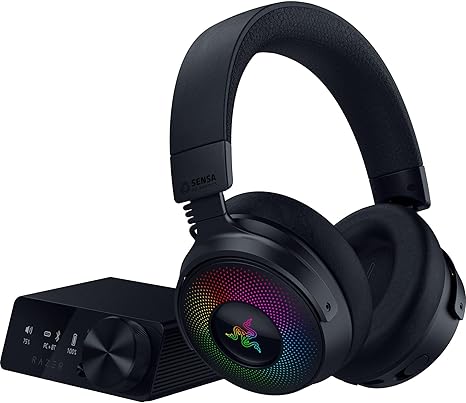
Razer Kraken V4 Pro
| Brand | Razer |
| Color | Black |
| Ear Placement | Over Ear |
| Form Factor | Over Ear |
| Impedance | 32 Ohm |
Leave a Reply