PlayStation Portal Breaks Free Sonys Latest Update Turns a Streaming Experiment Into a Handheld Revolution
For nearly a year, the PlayStation Portal lived in a strange limbo.
Not quite a handheld.
Not quite a console.
And for many players, not quite necessary.
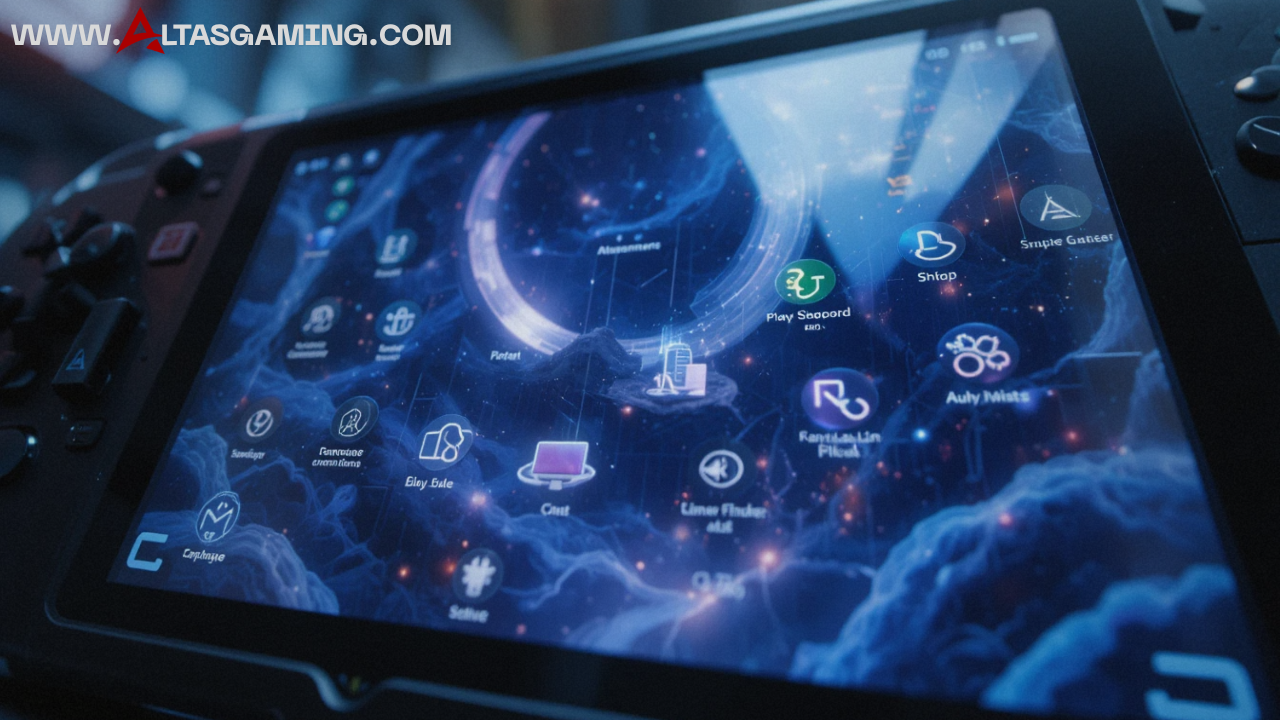
But Sony’s 2025 system update didn’t just improve the Portal it repositioned it entirely.
With cloud streaming support for nearly 2,800 games, independent access from a PS5, smoother navigation, and native in-game purchases, Sony has transformed the Portal from a companion device into something far more disruptive:
A cloud-first handheld in everything but name.
And that changes the conversation around PlayStation’s future.
What “Cutting the Cord” Actually Means (Technically & Practically)
Before this update, the Portal’s identity was limited
- It mirrored your PS5
- It required your console to be powered on
- Your home network determined your experience
Now, Sony has removed that dependency.
Key Technical Shift
- Games stream directly from PlayStation cloud servers
- No PS5 handshake required
- Location-independent play
- Seamless resume across networks
This is not Remote Play 2.0.
This is PlayStation Cloud streaming embedded at the system level.
Sony didn’t market it loudly but from a system architecture perspective, this is one of the biggest changes PlayStation hardware has seen in years.
The 2,800-Game Library Quantity Meets Strategy
The expanded catalog includes
- PlayStation Plus cloud titles
- PS4 and PS5 games optimized for streaming
- Indie titles perfect for short sessions
- AAA games playable in bite-sized bursts
Why this matters
Sony isn’t chasing raw performance here it’s chasing engagement frequency.
A library this large allows
- Casual drop-in play
- Long-term RPG sessions
- Experimentation without download anxiety
This mirrors the strategy behind
- Netflix’s content breadth
- Xbox Game Pass’s discovery model
But with a key difference:
Sony is doing it on dedicated hardware.
UI Overhaul Why Smooth Navigation Is More Important Than It Sounds
The Portal’s UI update may look cosmetic but it’s foundational.
Improvements include
- Faster menu transitions
- Reduced input latency
- Handheld-optimized scaling
- Clearer store and library access
Why it matters
Clunky UI kills handheld gaming.
Sony clearly recognized that if Portal is to be used as a primary device, not a mirror, it needs:
- Independence
- Speed
- Reduced friction
The result?
The Portal now feels purpose-built, not borrowed.
Native In-Game Purchases The Silent Power Move
This feature deserves more attention than it’s getting.
Before
- You needed a PS5 or phone to buy DLC
- Purchases felt detached from play
Now
- Players can buy content directly on Portal
- Store integration is seamless
- Impulse purchases are frictionless
From a business perspective, this is huge.
Sony didn’t just enable convenience it enabled:
direct monetization from portable play
That’s not an accessory feature.
That’s ecosystem thinking.
Cloud Performance Is It Finally “Good Enough”?
Cloud gaming has always lived in the “almost” zone.
With the Portal update
- Latency is noticeably reduced
- Image compression is cleaner
- Input delay is manageable for most genres
Best experiences
✔ RPGs
✔ Adventure games
✔ Strategy titles
✔ Racing (non-competitive)
Still limited
✖ Competitive shooters
✖ Fighting games at tournament level
But here’s the key point:
Sony doesn’t need perfection it needs consistency.
And in 2025, cloud gaming has finally crossed that threshold.
Market Context Why This Update Feels Strategic, Not Accidental
Look at the current handheld landscape
- Nintendo Switch dominates casual + hybrid play
- Steam Deck owns enthusiast portable gaming
- Xbox pushes cloud, but lacks dedicated hardware
Sony was missing.
Now?
Sony is probing the space without committing publicly.
The Portal update allows Sony to
- Test cloud demand
- Measure handheld engagement
- Gather purchase behavior data
- Evaluate latency tolerance globally
This is market reconnaissance, not a coincidence.
 ltas Opinion Sony Is Running a Handheld Dry Run
At Altas Gaming, we see the PlayStation Portal 2025 update as a deliberate experiment, not a random improvement.
Our breakdown
The Portal Is a Prototype in Disguise
Sony avoided the risk of launching a full handheld instead, they
- Soft-launched cloud hardware
- Tested real players
- Iterated quietly
Smart. Very smart.
This Update Fixes the PS Vita’s Biggest Mistakes
PS Vita failed due to
- Weak third-party support
- Poor ecosystem integration
Portal fixes both by
- Leveraging existing PlayStation libraries
- Embedding store and subscriptions
Sony Is Learning From Steam Deck Without Copying It
Sony isn’t competing on raw hardware power.
They’re competing on
- Content access
- Ecosystem familiarity
- Cloud convenience
A True Handheld Is Now Logically Inevitable
If Portal usage spikes
- A standalone PlayStation handheld becomes justified
- With optional local processing
- Hybrid cloud + native play
The groundwork is already laid.
FAQs
Q1: Can PlayStation Portal become Sony’s main cloud gaming device?
Yes this update positions it exactly that way.
Q2: Does Portal support multiple user profiles independently now?
Cloud profiles sync instantly, making shared use more viable.
Q3: Will Sony expand Portal hardware specs via revisions?
Likely if usage metrics justify a second-gen device.
Q4: Is Portal replacing Sony’s focus on console hardware?
No it complements PS5 rather than competes with it.
Q5: Could Portal support non-PlayStation cloud apps in future?
Unlikely officially, but the architecture now allows expansion.
Table of Contents
- Iran War 2026 What Happened and Why Is It Important?
- Helldivers 2 Ultimate Survival Guide: Best Weapons, Builds, Missions & Pro Tips (2026)
- The PlayStation 6 – Everything Gamers Have Been Waiting For – Specs, Power, Features, and the Future of PS Gaming
- Global Crisis 2026 – The New World Order? How Nations Are Reshaping Global Power and Economy- What Happens After the Dollar Era?
- The Witcher 3: Wild Hunt – The Fantasy Masterpiece That Redefined Open-World RPGs

Crosshair A17 HX D8W
Crosshair A17
Product Description
Efficient Performance
Equipped with the top-tier Ryzen 9 8940HX processor featuring up to 16 cores, this MSI Crosshair laptop delivers exceptionally fast performance for gaming, streaming, and demanding multitasking.
Excellent Graphics
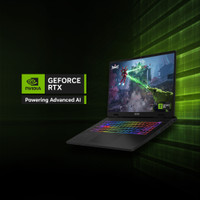
Enjoy premium visuals with the NVIDIA GeForce RTX 5070, supporting DLSS 3.5, ray tracing, and next-gen GDDR7 memory for smoother frame rates and remarkable graphical detail in every title.
| Warranty Summary |
|
| Type of Warranty |
|
| Warranty Service Type |
|
| Covered in Warranty |
|
| Not Covered in Warranty |
|
| Domestic Warranty |
|
| Warranty |
|
| Dedicated Graphic Memory Type |
|
| Dedicated Graphic Memory Capacity |
|
| Processor Brand |
|
| Processor Name |
|
| SSD |
|
| SSD Capacity |
|
| RAM |
|
| RAM Type |
|
| Processor Variant |
|
| Clock Speed |
|
| Memory Slots |
|
| RAM Frequency |
|
| Graphic Processor |
|
| Number of Cores |
|
| Storage Type |
|
| Operating System |
|
| Sales Package |
|
| Brand |
|
| Model Number |
|
| Part Number |
|
| Model Name |
|
| Series |
|
| Color |
|
| Type |
|
| Suitable For |
|
| Power Supply |
|
| Battery Cell |
|
| MS Office Provided |
|
| Is Fragile |
|
| Is Tablet |
|
| Touchscreen |
|
| Screen Size |
|
| Screen Resolution |
|
| Screen Type |
|
| Speakers |
|
| Internal Mic |
|
| Refresh Rate |
|
| Color Gamut |
|
| Screen Resolution Type |
|
| Dimensions |
|
| Weight |
|
| Disk Drive |
|
| Web Camera |
|
| Finger Print Sensor |
|
| Face Recognition |
|
| Lock Port |
|
| Security Chip |
|
| Keyboard |
|
| Backlit Keyboard |
|
| Recovery Options |
|
| Key Features |
|
| OS Architecture |
|
| Operating System |
|
| Supported Operating System |
|
| Mic In |
|
| VGA Port |
|
| USB Port |
|
| HDMI Port |
|
| Hardware Interface |
|
| Wireless LAN |
|
| Bluetooth |
|
| Ethernet |
|
Leave a Reply