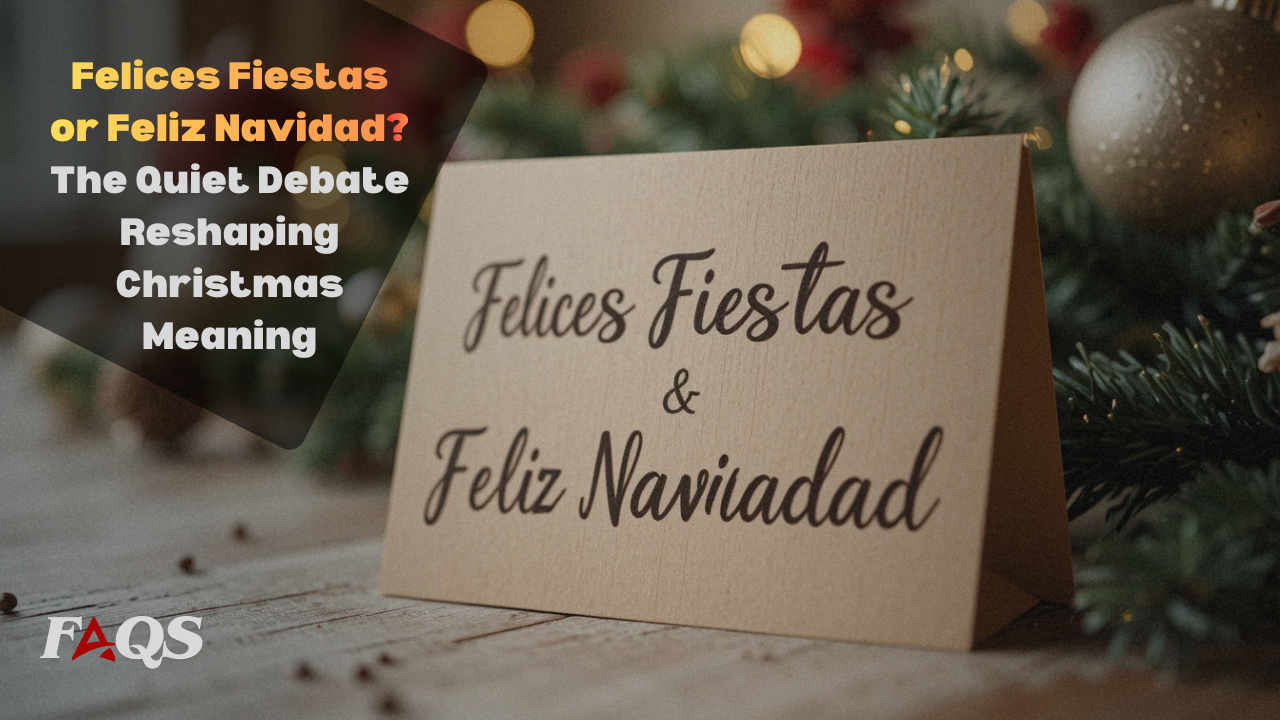
Felices Fiestas, A Greeting That Reflects a World in Transition
Every December, as cities glow with lights and the familiar rhythm of the holiday season returns, a phrase echoes across media platforms, corporate emails, and public announcements
“Felices Fiestas.”
At face value, it is kind.
It is polite.
It is safe.
But beneath its warmth lies a question that modern societies continue to wrestle with:
What happens when a tradition is celebrated without being named?

Christmas as Language, Not Just a Holiday
Christmas has never been only a date on the calendar.
It is a story, a belief, a ritual, and crucially a word.
For centuries, saying “Feliz Navidad” or “Merry Christmas” carried meaning beyond greeting
- it acknowledged shared belief
- it affirmed cultural continuity
- it reinforced collective memory
Language was the vessel through which tradition traveled from generation to generation.
When language changes, tradition does not disappear but it transforms.
The Rise of Neutral Greetings in a Globalized World
The shift toward “Felices Fiestas” did not occur suddenly, nor was it driven by hostility toward Christmas.
It emerged from globalization.
Modern societies are
- religiously diverse
- culturally layered
- increasingly secular in public institutions
Governments, corporations, and media outlets operate under pressure to include without offending.
Neutral language became the solution.
Why Institutions Prefer “Felices Fiestas”
From a public-facing perspective, neutral greetings offer
- broader appeal
- reduced reputational risk
- professional distance from belief
For outlets like SegurosNews, “Felices Fiestas” functions as a universal signal of goodwill, not a theological statement.
Yet neutrality is never truly neutral.
The Emotional Response Why Some Feel Something Is Missing
For many, hearing “Felices Fiestas” feels incomplete not because it is wrong, but because it feels detached.
Why?
Because Christmas is deeply personal.
It is tied to
- childhood memories
- family gatherings
- religious reflection
- inherited rituals
When the word “Navidad” disappears, it can feel as though the heart of the celebration is softened.
Remembering the Religious Core Without Excluding Others
Thinkers like Ricardo Calleja emphasize an often-misunderstood point
To remember the religious meaning of Christmas is not to deny others their beliefs it is to acknowledge origins.
Christianity shaped
- the calendar
- the symbolism
- the narrative of Christmas
Removing that context entirely risks turning Christmas into a season without a story.
Is This a Cultural War? Not Exactly
This debate is frequently framed as a battle
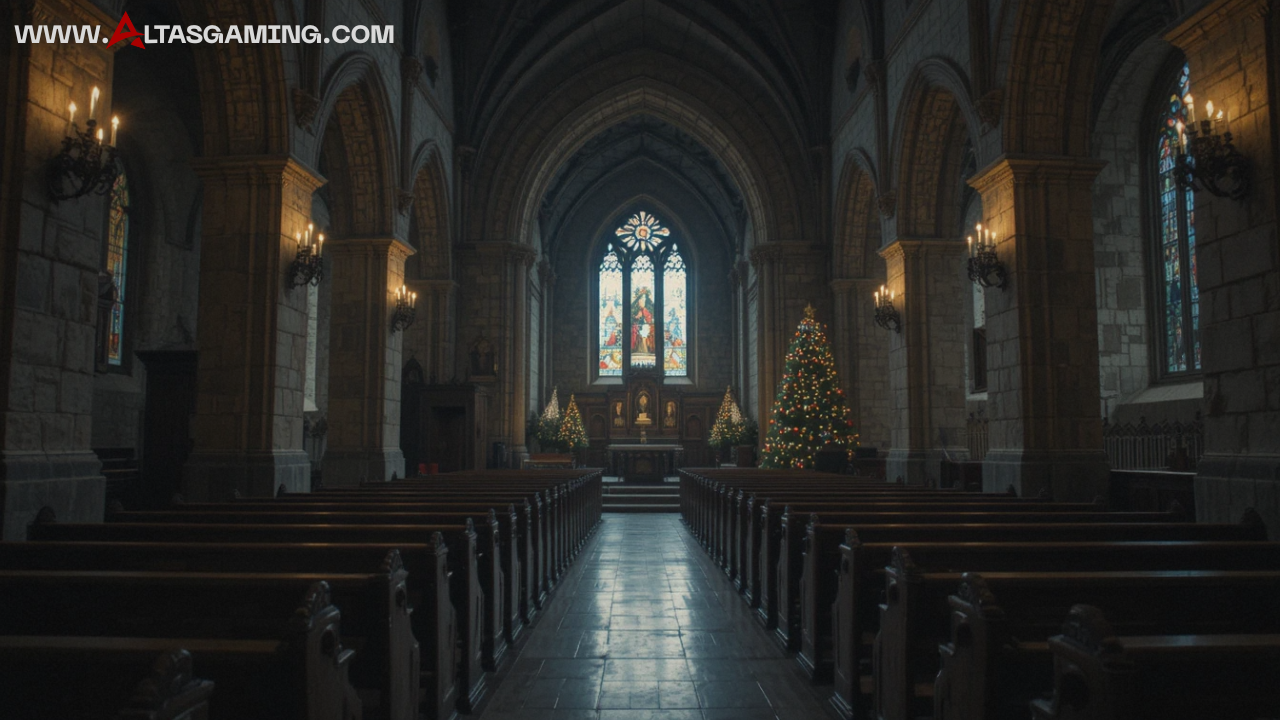
- tradition vs progress
- religion vs secularism
But this framing oversimplifies reality.
What we are witnessing is a negotiation.
Societies are renegotiating
- how belief appears in public
- how tradition adapts to diversity
- how language balances respect and identity
The Media’s Role in Shaping Collective Memory
Media does not merely reflect culture it rehearses it.
When neutral greetings dominate headlines and broadcasts
- they normalize distance from tradition
- they shape generational habits
- they redefine what feels “normal”
Over time, repetition rewires expectation.
The Psychology of Naming
Naming matters because it anchors meaning.
Anthropologists note that rituals lose depth when
- symbols are detached from origins
- language becomes abstract
- repetition loses narrative
“Felices Fiestas” celebrates the moment.
“Feliz Navidad” recalls the meaning.
Both are valuable but not interchangeable.
 ltas Opinion
At Altas, we see this issue not as a fight over words but as a reflection of modern uncertainty.

1. Inclusion Without Amnesia
True inclusion does not require forgetting history.
2. Tradition Is Stronger Than Fear
Traditions do not collapse when named they weaken when avoided.
3. Context Is the Missing Ingredient
A corporate message is not a personal greeting.
Expecting them to sound the same is unrealistic.
Altas Editorial View
A society confident in its diversity should not be afraid of its roots.
“Felices Fiestas” and “Feliz Navidad” can and should exist together.
The danger lies not in choosing one over the other, but in silencing one entirely.
Why This Question Returns Every December
Because Christmas sits at the intersection of
- faith
- culture
- commerce
- identity
And intersections are where tension lives.
Each year, society revisits the question not to settle it, but to understand itself again.
FAQs
Q1: Is neutral language a form of cultural erosion?
Altas Answer: Not inherently but unchecked neutrality can lead to loss of context.
Q2: Why do institutions fear explicit religious language?
Altas Answer: Risk management, not ideology.
Q3: Can tradition survive without public affirmation?
Altas Answer: Privately yes, publicly it weakens.
Q4: Is this debate unique to Spanish-speaking cultures?
Altas Answer: No. Similar debates exist around “Happy Holidays” globally.
Q5: Will future generations care about this distinction?
Altas Answer: Only if they are taught why it matters.
Table of Contents
- Iran War 2026 What Happened and Why Is It Important?
- Helldivers 2 Ultimate Survival Guide: Best Weapons, Builds, Missions & Pro Tips (2026)
- The PlayStation 6 – Everything Gamers Have Been Waiting For – Specs, Power, Features, and the Future of PS Gaming
- Global Crisis 2026 – The New World Order? How Nations Are Reshaping Global Power and Economy- What Happens After the Dollar Era?
- The Witcher 3: Wild Hunt – The Fantasy Masterpiece That Redefined Open-World RPGs
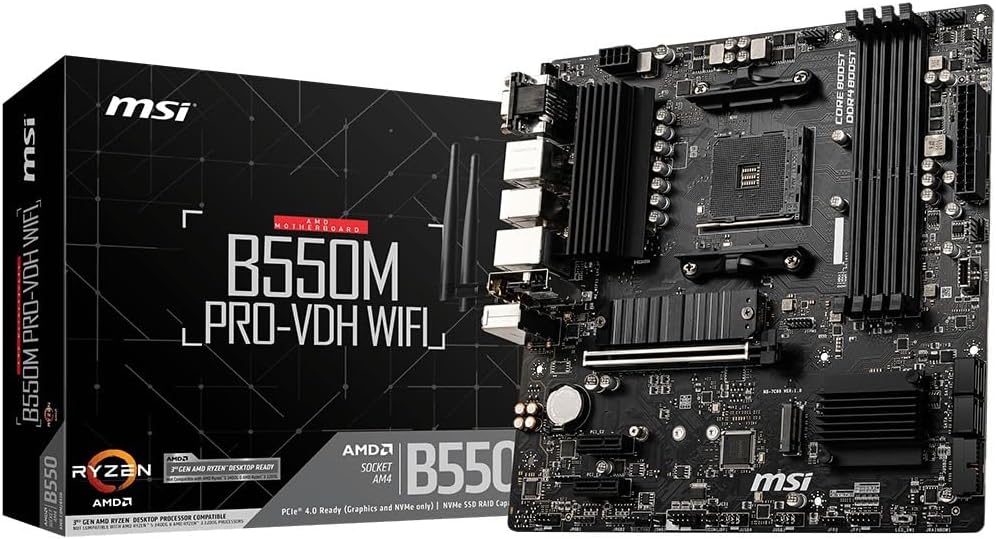
MSI B550M PRO-VDH WiFi ProSeries Motherboard
MSI B550M PRO-VDH WiFi ProSeries Motherboard
About this item
- Support for 3rd Gen AMD Ryzen processors and future AMD Ryzen processors with BIOS update.Audio ports (Rear): Realtek ALC892/ALC897 Codec
- Supports dual channel DDR4 memory up to 128 GB (4400 MHz)
- Lightning Fast Game experience: PCIe 4.0, Lightning Gen 4 M.2 with M.2 Shield Frozr, AMD Turbo USB 3.2 GEN 2
- Core Boost technology combines optimized power circuit layouts and digital power regulation which allows for precise and steady current delivery to the CPU
- AUDIO BOOST rewards your ears with studio grade sound quality for immersive gaming experiences.Premium Thermal Solution: Heatsink thermal pad rated for 7W/mk and PCB with 2oz thickened copper.Flash BIOS Button lets users flash the BIOS even without a CPU or memory.
-
From the manufacturer

MSI is the most trusted name in gaming and eSports. We’ve dedicated countless hours and committed numerous resources to support the world’s most aspiring and best gamers and use their knowledge and expertise in our products in return. MSI integrated all gamer’s aspirational functions in its gaming rigs and pushing the performance beyond limits.
B550M PRO-VDH WIFI
Advancing Ascension
Powered by AMD Ryzen AM4 processors, the MSI B550M PRO-VDH WIFI combines stable functionality and high-quality assembly to solve professional workflows.
- Support for 3rd Gen AMD Ryzen processors and future AMD Ryzen processors with BIOS update
- Supports dual channel DDR4 memory up to 128 GB (4400 MHz)
- Lightning Fast Game experience: PCIe 4.0, Lightning Gen 4 M.2 with M.2 Shield Frozr, AMD Turbo USB 3.2 GEN 2
- Core Boost technology combines optimized power circuit layouts and digital power regulation which allows for precise and steady current delivery to the CPU
- AUDIO BOOST rewards your ears with studio grade sound quality for immersive gaming experiences
- Premium Thermal Solution: Heatsink thermal pad rated for 7W/mk and PCB with 2oz thickened copper
- Flash BIOS Button lets users flash the BIOS even without a CPU or memory

LIGHTNING GEN 4 SOLUTION
Strike fast with MSI Lightning Gen 4 PCI-E. Attach ultra fast PCI-E 4.0 devices and enjoy up to 64GB/s unidirectional transfer bandwidth.

DISPLAY OUTPUT FLEXIBILITY
B550M PRO-VDH WIFI
V – VGA
D – DisplayPort
H – HDMI

PCB WITH 2OZ THICKENED COPPER
An enhanced PCB material design with 2oz thickened copper increases conductivity, improving heat dissipation and high-performance reliability.

CORE BOOST
Core Boost combines a reserved zone of optimized circuits and premium power delivery components to create a highly efficient power system capable of precise current output to the CPU.

AUDIO BOOST
Reward your ears with studio grade sound quality. MSI Audio Boost delivers the highest sound quality through the use of premium quality audio components.

FORTIFY WITH PCI-E STEEL ARMOR
MSI PCI Express Steel Armor slots are secured to the motherboard with extra solder points and support the weight of heavy graphics cards. When every advantage in games counts, Steel Armor shields the point of contact from electromagnetic interference.
Product information
Additional Information
Customer Reviews 4.4 out of 5 stars
Best Sellers Rank - #16 in Computer Motherboards
Warranty & Support
Amazon.com Return Policy:You may return any new computer purchased from Amazon.com that is “dead on arrival,” arrives in damaged condition, or is still in unopened boxes, for a full refund within 30 days of purchase. Amazon.com reserves the right to test “dead on arrival” returns and impose a customer fee equal to 15 percent of the product sales price if the customer misrepresents the condition of the product. Any returned computer that is damaged through customer misuse, is missing parts, or is in unsellable condition due to customer tampering will result in the customer being charged a higher restocking fee based on the condition of the product. Amazon.com will not accept returns of any desktop or notebook computer more than 30 days after you receive the shipment. New, used, and refurbished products purchased from Marketplace vendors are subject to the returns policy of the individual vendor.
Leave a Reply