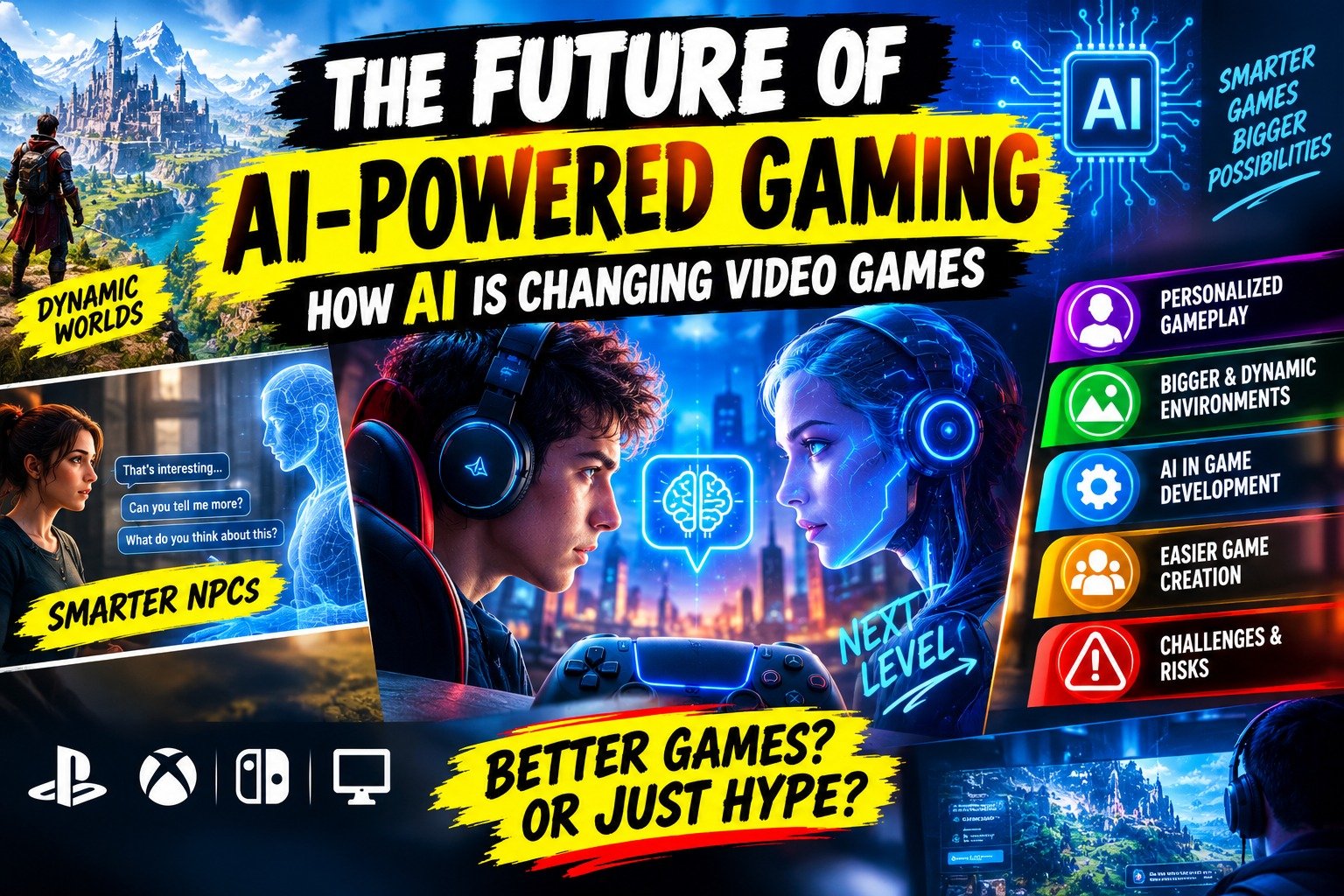
Future of AI-Powered Gaming
Artificial intelligence is changing how video games are created, played, and experienced. From smarter enemies to characters that respond to players in more natural ways, AI-powered gaming is opening new possibilities for developers and gamers alike.
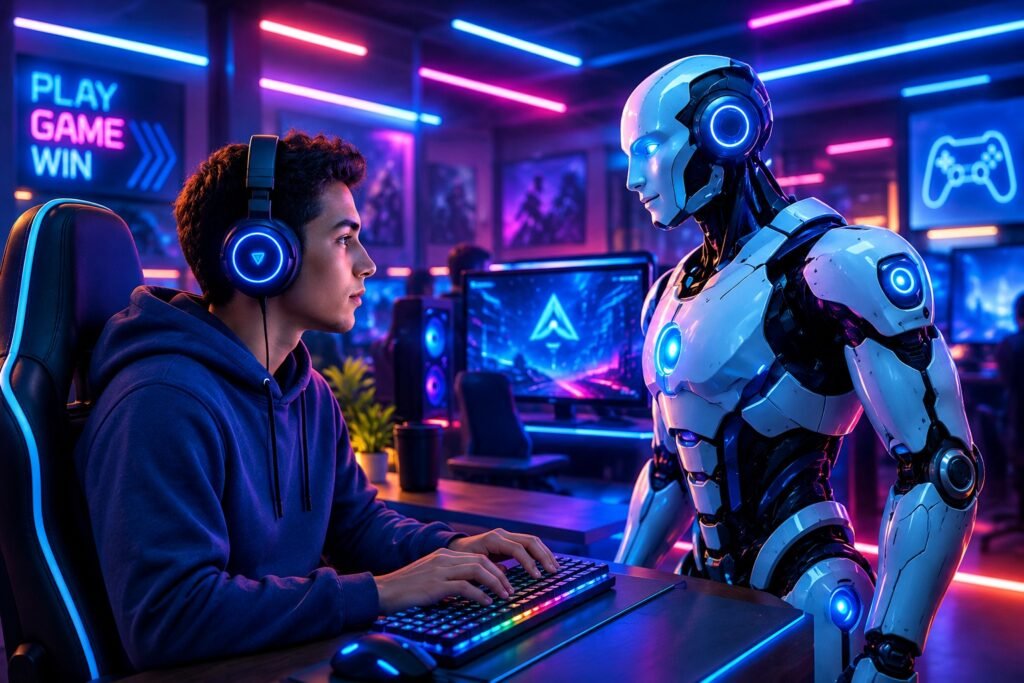
In the past, most game characters followed predefined instructions. Today, developers are exploring AI tools that can help create content, improve testing, support character interactions, and make gameplay more dynamic.
But what does the future of AI-powered gaming actually look like? Will games become more realistic, will every NPC have its own personality, and could AI change how developers build entire virtual worlds?
Let’s explore the biggest developments and challenges shaping the future of gaming.
Smarter NPCs and More Natural Conversations
Non-playable characters, commonly known as NPCs, help make game worlds feel alive. They can provide quests, sell equipment, share information, or act as enemies and allies.
Traditionally, NPCs rely on scripted dialogue and predefined behavior. AI technologies could allow some characters to respond more naturally to player questions, remember relevant interactions, or make decisions based on the situation.
For example, imagine speaking to a shopkeeper in an open-world RPG and asking questions beyond the available dialogue options. An AI-powered character could potentially respond in context rather than repeating a limited set of lines.
NVIDIA ACE is one example of technology designed to help developers create conversational and more autonomous game characters. However, these capabilities depend on implementation, game design, and available computing resources. They are not yet standard across all games.
Personalized Gameplay Experiences
AI could make games feel more responsive to individual players.
Imagine a game that adjusts enemy tactics when you repeatedly use the same strategy, offers additional challenges when you improve, or changes its difficulty when you struggle.
Some games already use adaptive systems, but more advanced AI could support increasingly flexible responses to player behavior.
This does not mean every game should become harder or easier automatically. Developers would need to balance personalization with fairness, player choice, and the intended difficulty of the experience.
When implemented carefully, adaptive gameplay could help make games more engaging for beginners and experienced players alike.
Bigger Worlds and Dynamic Game Environments
Procedural generation has helped developers create maps, landscapes, missions, and other game elements for years. AI could expand these capabilities by helping generate or refine environments, assets, and variations in content.
For example, future exploration games might offer more varied side missions, environmental details, or encounters without requiring every element to be created manually.
However, generating more content does not automatically create a better game. Interesting worlds still require thoughtful design, meaningful objectives, consistent storytelling, and careful testing.
The real opportunity is to use AI to support creative teams while allowing developers to maintain control over the experience.
AI Is Changing Game Development
AI is not only changing what players see on screen. It is also becoming part of the development process.
Developers can use AI-assisted tools for coding support, asset creation, animation workflows, quality assurance, and repetitive production tasks.
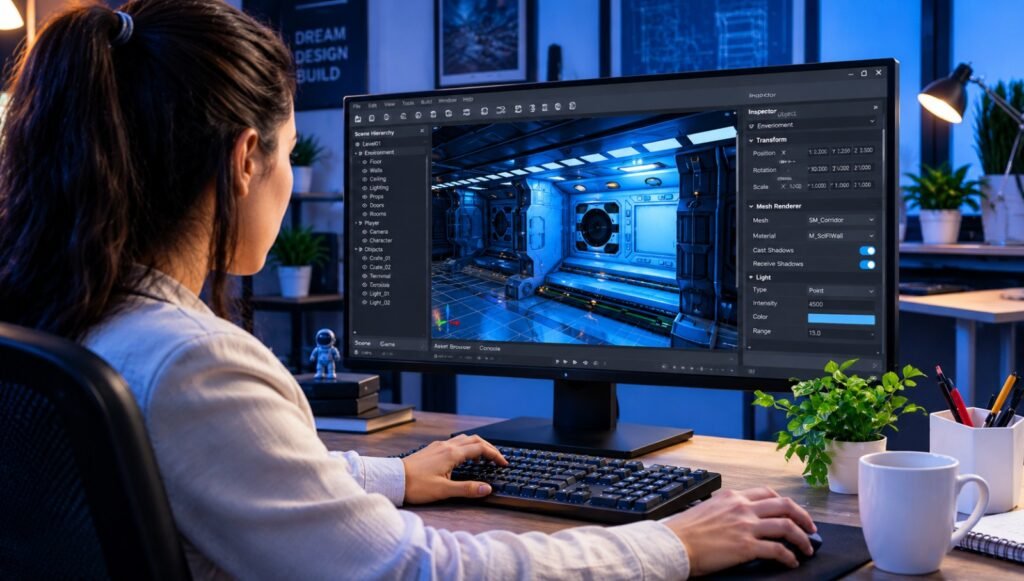
Unity’s 2025 Gaming Report found that developers were already exploring AI across several workflows, including automated playtesting, code assistance, animation improvements, and content generation. The report suggests that practical production support is an important part of AI’s role in gaming.
These tools could help smaller studios experiment with ideas and make development workflows more efficient. Human developers will still need to evaluate quality, fix problems, direct the creative process, and make important design decisions.
More Accessible Game Creation
Creating a video game traditionally requires a combination of programming, art, design, sound, and testing skills. AI tools may lower some of these barriers.
A beginner might describe a basic game concept in everyday language, use AI assistance to build a prototype, and gradually refine the result.
AI-assisted development tools can already help with code, assets, and early prototypes. Yet building a complete, polished game remains much more demanding than generating a simple playable demonstration.
Performance, controls, accessibility, security, and gameplay balance still require careful work.
For aspiring developers, AI may become a useful creative assistant rather than a replacement for learning game design.
The Challenges of AI-Powered Gaming
Despite its potential, AI introduces important questions for the gaming industry.
Performance and cost: Advanced AI systems may require additional computing resources, memory, or cloud infrastructure.
Quality control: AI-generated dialogue or content can become repetitive, inconsistent, or unsuitable for the game’s story.
Privacy: Systems that personalize experiences may need player data, making responsible data handling essential.
Copyright and ownership: Developers must consider how training data, generated assets, licensing, and creative contributions are handled.
Jobs and creative control: AI may change production roles, but replacing human creativity entirely could reduce originality and quality.
The future of gaming will depend not only on what AI can generate, but also on how responsibly developers use it.
What Gamers Can Expect Next
Over time, AI could support more responsive characters, smarter testing systems, personalized experiences, and faster development workflows.
Some changes will be gradual rather than revolutionary. Many studios will likely use AI behind the scenes before introducing noticeable AI-driven features directly into gameplay.
Players should also expect different approaches across the industry. Some developers may embrace AI-generated interactions, while others may prioritize handcrafted dialogue and traditional production methods.
Ultimately, the most successful AI-powered games will need to offer something more important than impressive technology: an experience that is fun, coherent, memorable, and worth playing.
Final Thoughts
The future of AI-powered gaming is full of possibilities. Smarter NPCs, adaptive gameplay, dynamic environments, and AI-assisted development could change how games are made and enjoyed.
However, AI alone cannot guarantee an excellent gaming experience. Creative direction, thoughtful design, reliable performance, and player trust will remain essential.
For gamers, the exciting question is not simply whether AI will become part of every game. It is how developers will use it to create experiences that were previously difficult or impossible to build.
Would you play a game where every NPC could have a natural conversation with you? Share your thoughts and follow Altas Gaming for more gaming technology news and insights.
Table of Contents

Leave a Reply