

Game Studios
The video game industry continues to face a difficult period, with layoffs, studio restructuring, and project uncertainty affecting developers across the world. While gaming remains a major entertainment business, working in game development has become increasingly unpredictable for many people behind the games players enjoy.
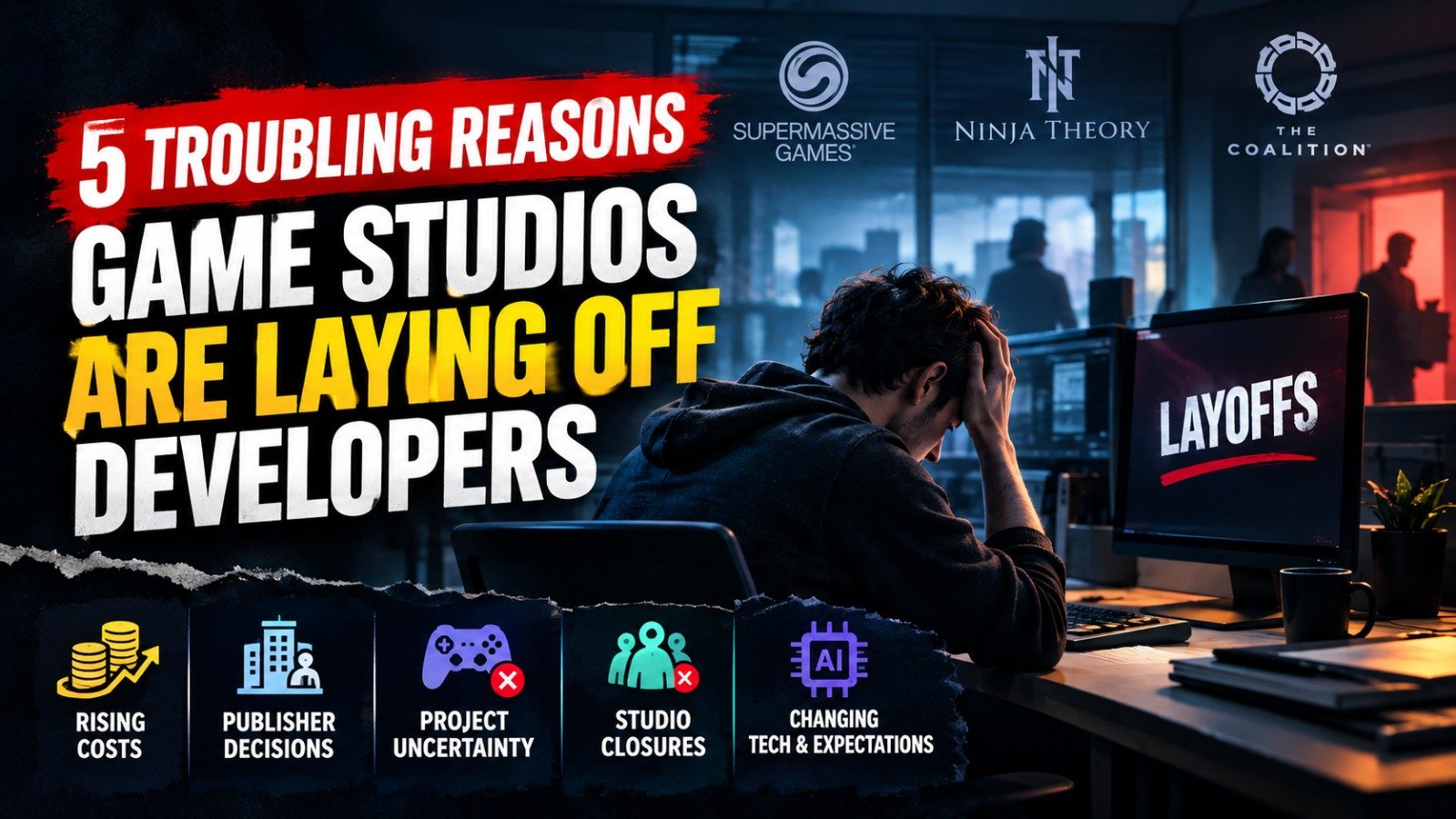
Recent reports have brought renewed attention to Supermassive Games, Ninja Theory, and The Coalition. These studios have appeared in industry coverage for different reasons, from completed job cuts to uncertainty surrounding their future.
But why are game studios laying off developers, even when gaming remains popular? The answer involves rising development costs, changing business strategies, project performance, and pressure on publishers to manage spending.
Game Development Is Becoming More Expensive
Modern video games can require years of work from large teams of programmers, artists, animators, writers, designers, sound specialists, and quality assurance testers.
Games with detailed environments, cinematic storytelling, online features, and advanced graphics can demand substantial budgets. Longer development cycles also mean studios must pay employees and cover operating costs for extended periods before a game generates revenue.
This creates financial pressure, particularly when a project takes longer than expected or fails to reach its commercial targets.
However, expensive development does not automatically lead to layoffs. The impact depends on a company’s finances, project plans, management decisions, and expectations for future revenue.
Publishers Are Restructuring Their Businesses
One important reason behind gaming layoffs is the way large publishers organize their businesses.
Companies may review their studios, reduce operating costs, cancel projects, or move resources toward franchises and platforms they consider strategically important. These decisions can affect employees even when a studio has released successful games in the past.
Microsoft’s Xbox restructuring in July 2026 illustrates the scale of these changes. Reuters reported that Microsoft planned to cut 4,800 jobs company-wide, including 3,200 roles within Xbox, while also changing the ownership structure of several studios.
The changes reflected a broader reassessment of Microsoft’s gaming business following years of investment and a shift toward distributing games across multiple platforms.

For developers, restructuring can mean losing a job because of a company’s broader strategy rather than because of the quality of their individual work.
Game Launches Do Not Always Guarantee Job Security
Releasing a game is a major milestone, but it does not necessarily guarantee long-term employment for the entire development team.
Studios may hire additional workers to complete a large project, then reassess staffing once development ends. Publishers may also evaluate sales, player engagement, ongoing support costs, and future projects before deciding how many employees they need.
Supermassive Games is a recent example of the uncertainty developers face. In August 2026, the studio announced a redundancy process that could affect up to 75 employees, several months after releasing Directive 8020. Subsequent reporting indicated that the affected redundancies had been completed.
The studio described the cuts as a step toward long-term sustainability. The situation demonstrates that releasing a game does not necessarily protect a studio from further job reductions.
It is also important not to assume that a game’s reception alone explains layoffs. Financial planning, staffing requirements, publisher decisions, and future development plans can all influence the outcome.
Studio Closures and Failed Sales Create Uncertainty
Sometimes the problem goes beyond reducing a team’s size. A studio may face uncertainty about whether it will continue operating at all.
Ninja Theory, the developer known for the Hellblade series, has faced a particularly concerning situation. According to reporting published in October 2026, attempts to sell the studio had fallen through, and Microsoft had moved toward a closure process. Employee posts subsequently indicated that layoffs had begun.
This situation highlights how changes in ownership and corporate strategy can affect developers who have spent years building a studio’s games and reputation.
The Coalition, known for the Gears of War franchise, has also appeared in recent coverage, but its situation is different. Reports have described employee concerns about possible future layoffs following wider Xbox job cuts. Those concerns should not be confused with a confirmed announcement that The Coalition itself is laying off its workforce.
These distinctions matter because a proposed closure, reported employee fears, and confirmed redundancies represent different stages of uncertainty.
Changing Technology and Business Expectations Add Pressure
Technology is changing how games are developed. AI-assisted tools, improved game engines, procedural generation, and automated testing can alter development workflows.
However, it would be misleading to attribute the current wave of layoffs entirely to AI. Public reporting points to several overlapping factors, including restructuring, cost management, project decisions, and changes in business priorities.
Companies are also under pressure to show returns on their investments. Large publishers must balance development budgets with marketing, platform fees, ongoing updates, and the costs of supporting games after launch.
When expected returns do not match spending plans, management may cut costs or change projects. Employees can be affected even when they have little control over these decisions.
For developers, adapting to new tools and expanding technical skills may help with career flexibility, but no individual skill can guarantee job security in an industry shaped by broader business decisions.
How Are Gaming Layoffs Affecting Players?
The consequences extend beyond the people who lose their jobs.
Layoffs can delay upcoming releases, disrupt projects, reduce the number of games a studio can develop, and affect ongoing updates or post-launch support. They can also lead to the loss of experienced developers whose knowledge and creative contributions took years to build.
Smaller teams may have to take on additional responsibilities, while cancelled projects can leave players waiting for games that may never arrive.
At the same time, a restructuring does not automatically mean a game will be cancelled or a studio’s remaining projects will fail. The outcome depends on the specific circumstances.
Players should follow official studio announcements and reliable reporting rather than treating every rumour about job cuts as confirmed news.
What Does the Future Hold for Game Developers?
The latest developments show that working in game development can involve significant uncertainty, even at established studios with recognizable franchises.
Publishers must manage costs and plan sustainable projects, but repeated layoffs can also damage morale, remove valuable expertise, and weaken the teams responsible for creating future games.
A healthier industry would benefit from realistic project budgets, better workforce planning, clearer communication, and employment strategies that do not rely on repeatedly expanding and shrinking development teams.
For aspiring developers, learning transferable skills, building a portfolio, and understanding different career paths across game development can be useful steps. For studios, retaining experienced talent and planning projects responsibly can be just as important as controlling costs.
Final Thoughts
Game studio layoffs are not caused by one single problem. Rising development expenses, corporate restructuring, project uncertainty, and changing business priorities all contribute to the challenges facing the industry.
Supermassive Games, Ninja Theory, and The Coalition illustrate different aspects of the current situation, from reported job losses to uncertainty about future employment. Their circumstances should be considered individually rather than treated as identical cases.
Gaming’s future will depend not only on the games companies release, but also on how sustainably they build and support the teams that make them.
What do you think is the biggest reason behind gaming industry layoffs: rising development costs, publisher decisions, or changing player expectations? Share your thoughts with the Altas Gaming community.
Table of Contents



Leave a Reply