Create Account
Tesla Roadster
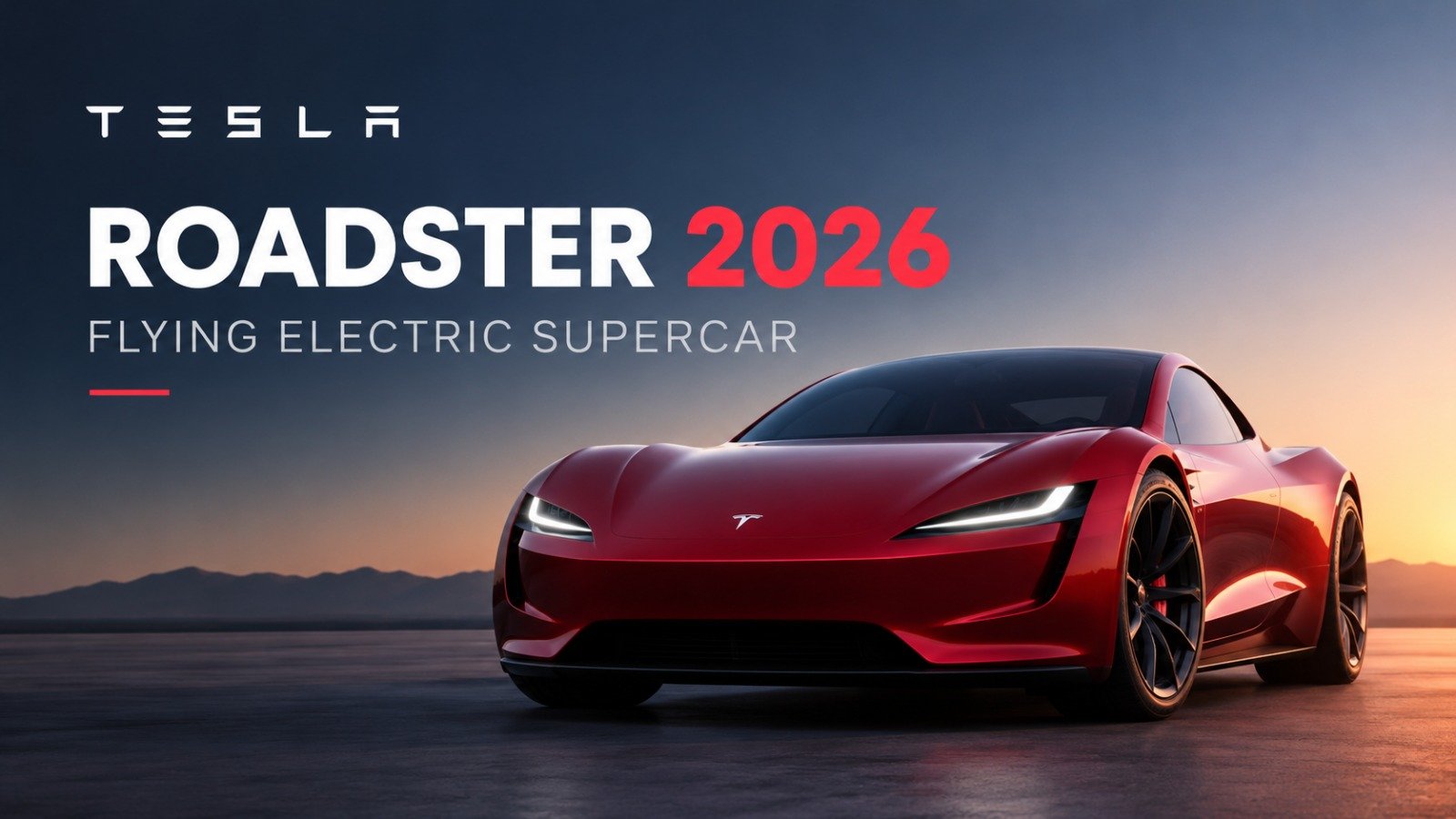
Tesla Roadster 2026: The Exciting New Electric Supercar That Can Fly
Tesla has revealed its long-awaited next-generation Roadster in a dramatic demonstration that could redefine expectations for electric sports cars. Unveiled in Texas in October 2026, the new Tesla Roadster attracted attention for its rocket-style thrusters, extraordinary acceleration claims and experimental aerial manoeuvres. Developed by Tesla with technology associated with SpaceX, the vehicle represents a bold attempt to combine electric performance with aerospace engineering. However, the demonstration does not mean buyers can drive a flying car on public roads today. Production is expected to begin in 2028, and important questions about road legality, final specifications and customer deliveries remain. Here is what we know about the Tesla Roadster 2026 and why its reveal matters to the automotive technology industry.
What Is the New Tesla Roadster?
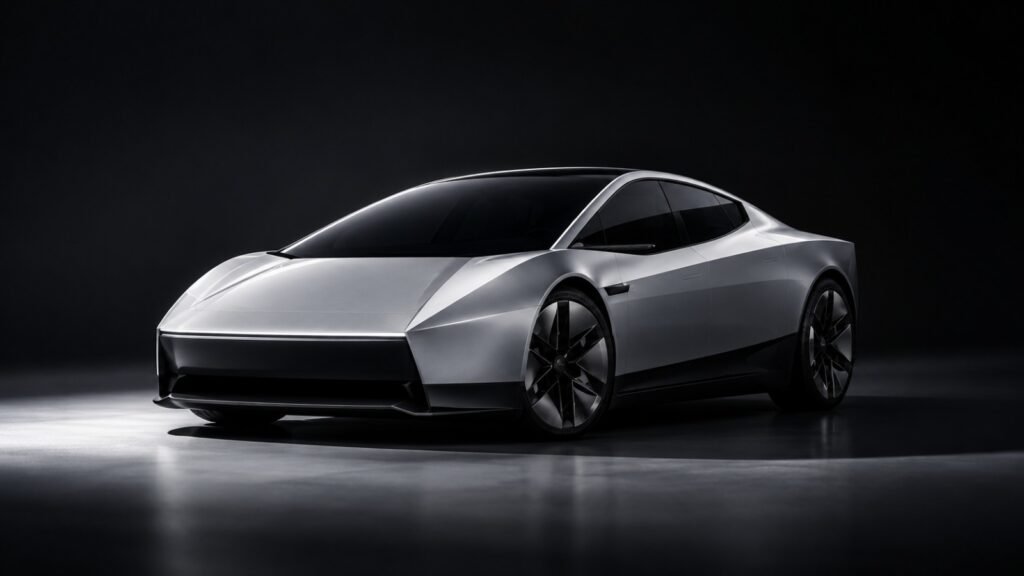
The new Roadster is the next-generation version of Tesla’s electric sports car, originally introduced in prototype form in 2017. The latest reveal brings the long-delayed project back into the spotlight with a design focused on extreme performance and aerospace-inspired technology.
Unlike conventional electric vehicles designed primarily for everyday transportation, the Roadster is positioned as a high-performance supercar. Its demonstration included dramatic stunts involving thrusters and a system designed to generate suction, allowing the prototype to perform unusual manoeuvres.
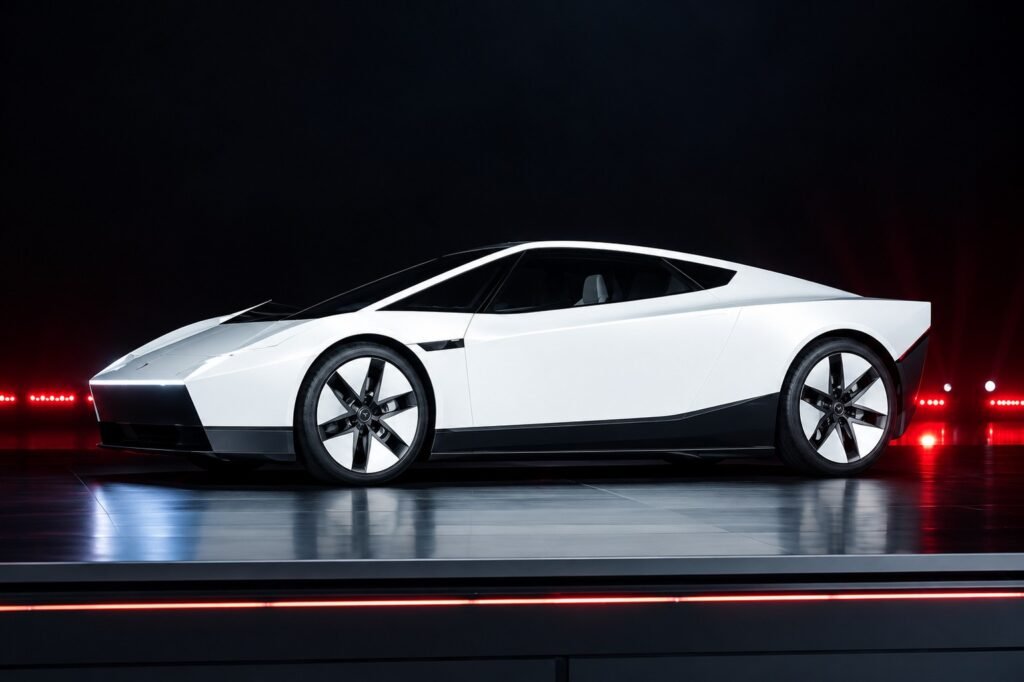
The reveal took place at a SpaceX facility in Texas, highlighting the technological relationship between Tesla’s electric vehicle engineering and SpaceX’s aerospace expertise.
However, the Roadster should not yet be described as a commercially available flying car. Its demonstrated capabilities, production plans and legal status need to be considered separately.
Tesla Roadster 2026: Key Features and Performance
The biggest talking point is the vehicle’s claimed acceleration. Reports from the unveiling describe a 0–60 mph time of approximately 0.81 seconds under the demonstrated configuration. If achievable in a production vehicle under clearly defined testing conditions, that would represent extraordinary acceleration.
The demonstration also featured cold-gas thrusters, which use pressurised gas to generate thrust. These systems are associated with spacecraft manoeuvring, making their proposed application in a sports car particularly unusual.
Here are the major highlights reported so far:
- Electric powertrain: The Roadster is designed as an all-electric sports car.
- Extreme acceleration: Tesla’s demonstration reportedly showed acceleration from 0 to 60 mph in under one second.
- Rocket-style technology: Cold-gas thrusters are intended to deliver additional performance capabilities.
- Experimental manoeuvres: The reveal featured brief aerial movement and other demonstrations.
- High-performance design: The vehicle is aimed at the premium electric supercar market.
- Future production: Manufacturing is expected to begin in 2028, rather than immediately after the reveal.
These details should be treated with care. Demonstration results do not automatically establish the performance, safety or specifications of a final production model.
What Makes the Roadster Different From Other Electric Cars?
Most electric vehicles compete on range, charging speed, comfort, price and everyday practicality. Performance-focused models also compete on acceleration, handling and braking.
The Roadster takes a more experimental approach by introducing aerospace-inspired systems into a vehicle designed around high-speed driving. Its thruster demonstration is the feature that separates it from more conventional electric supercars.
However, the technology also raises practical questions. Thrusters require specialised hardware, and an experimental vehicle that performs aerial manoeuvres faces challenges that ordinary road cars do not. Safety, weight, maintenance, reliability and legal approval could all affect whether these systems reach customer vehicles.
For most drivers, a car’s real value still depends on how well it performs in everyday conditions. The Roadster will need to demonstrate more than spectacular launch footage before its practical advantages can be fully assessed.
Tesla Roadster Price and Release Date
The Roadster is not expected to enter production until 2028, according to reports following its October 2026 unveiling. This means interested buyers may have to wait more than a year before production begins, with actual deliveries potentially following later.
Pricing also requires careful interpretation. Reports have described reservation deposits of $50,000 for a performance version and $250,000 for a more specialised thruster-equipped configuration. These figures are deposits, not necessarily the final purchase prices of the vehicles.
Tesla’s reservation terms also warn that the vehicle remains under development and that delivery timing cannot be guaranteed. Buyers should therefore check the current terms on Tesla’s official website before making any financial commitment.
For international customers, availability, taxes, import duties and vehicle registration requirements may also affect the final cost. No single global price should be assumed to apply to every market.
Is Tesla Actually Launching a Flying Car?
The headline-making demonstrations have led to comparisons with flying cars, but there is an important distinction between a vehicle performing a brief aerial manoeuvre and a practical flying car.
A conventional flying car would need to meet demanding requirements for controlled flight, stability, passenger protection and safe operation. A road vehicle must also satisfy the applicable regulations in the country where it is driven.
The Roadster’s reported demonstration used thrusters and a suction system to perform specialised stunts. That does not establish that the vehicle can operate as a conventional aircraft or safely fly through public airspace.
The road legality of the thruster-equipped version is also uncertain. Reporting on the reveal indicates that the specialised Rocket configuration is not approved for ordinary public-road use.
For now, the most accurate description is an experimental electric supercar with aerospace-inspired capabilities, rather than a fully practical flying car.
Why the New Roadster Matters for the Electric Vehicle Industry
The reveal arrives at a time when electric vehicle manufacturers are competing to deliver better performance, efficiency and technology. Premium electric cars already offer rapid acceleration, advanced software and increasingly sophisticated driver-assistance systems.
Tesla’s Roadster adds another dimension to that competition: creating a vehicle that attracts attention through ambitious engineering and unusual demonstrations.
The project may also help Tesla strengthen its performance-car identity. The original Roadster played an important role in demonstrating that an electric vehicle could be desirable as a sports car, rather than simply an alternative to a petrol-powered commuter vehicle.
Nevertheless, the new model’s commercial impact will depend on production costs, customer demand, reliability and the company’s ability to deliver the promised features. A dramatic reveal can generate interest, but sustained success requires a product that customers can actually buy and use.
What Happens Next?
The most important milestone is the Roadster’s path towards production, currently expected to begin in 2028. Before customers can judge the final car, Tesla will need to provide clearer information about production specifications, pricing, availability and delivery schedules.
Potential buyers should also watch for clarification about the differences between standard performance configurations and specialised thruster-equipped versions.
Further technical details will be particularly important. Independent testing could help establish whether the demonstrated acceleration is repeatable and how the vehicle performs under normal driving conditions.
Until these details become available, reservations should not be mistaken for confirmed delivery dates, and demonstration footage should not be treated as proof that every advertised capability will appear in the final production model.
Final Verdict: Is the Tesla Roadster Worth Watching?
The Tesla Roadster 2026 is one of the most unusual electric vehicle reveals of the year. Its combination of extreme acceleration claims, aerospace-inspired technology and experimental manoeuvres makes it a compelling project for technology enthusiasts.
However, the vehicle remains a work in progress, with production expected in 2028 and important questions about pricing, road legality and delivery still unresolved. Its most spectacular features may also be limited to specialised configurations rather than a standard road-going model.
For now, the Roadster is worth following as an ambitious engineering project, but potential buyers should wait for verified production specifications and clear delivery commitments before making decisions.
The next major test will not be how dramatically the car performs during a demonstration. It will be whether Tesla can turn that demonstration into a safe, reliable and commercially deliverable vehicle.
Table of Contents