
Gradium’s Secures $70M The French AI Voice Startup Backed by Eric Schmidt & Xavier Niel
Paris is quickly becoming one of Europe’s strongest AI hubs and the latest proof comes from Gradium, a rising AI voice startup that has just landed a massive $70 million seed round backed by heavyweights including Eric Schmidt (former Google CEO) and Xavier Niel (French tech billionaire and founder of Iliad).
For a seed round, this level of funding is rare. For a European startup, it’s extraordinary.
Gradium says it aims to redefine synthetic audio, real-time voice interfaces, and next-generation AI voice models, positioning itself as a direct competitor to major global players.
This article explores what Gradium does, why investors are betting big on it, and what this means for AI innovation in Europe with Alta’s personal take and unique FAQs.
What Is Gradium?
Gradium is a Paris-based AI voice technology startup focused on building advanced real-time voice models. These models can generate:
- Human-like speech
- Emotionally dynamic audio
- Multilingual voice assistants
- Synthetic voices for media, gaming, and enterprise
The company aims to make AI voices feel “alive, adaptive, and natural”, bridging the gap between synthetic audio and human conversation.
$70M Seed Round A Signal to the AI World
Gradium announced it raised $70 million in seed funding, an extraordinary figure for a company at such an early stage.
⭐ Key Investors
- Eric Schmidt – Former CEO of Google
- Xavier Niel – Founder of Iliad, owner of Station F, and major French tech investor
- Several undisclosed institutional and private investors
The funding will be used to scale research, hire AI talent, and build real-time voice models competitive with leading U.S. and Asian AI labs.
Why Does This Funding Matter?
Gradium is entering the AI market at a time when:
- Demand for natural AI voices is skyrocketing
- Global companies are racing to build voice-first interfaces
- Europe is seeking stronger independence from U.S. AI giants
This seed round is more than simple funding it’s a vote of confidence in Europe’s AI potential.
It shows that European AI is no longer playing catch-up, but shaping innovation on its own terms.
How Gradium Plans to Stand Out
The company claims its technology can deliver:
✔ Ultra-realistic emotional modulation
✔ Real-time voice interaction
✔ High-fidelity multilingual speech
✔ Precise voice cloning
✔ Audio generation for entertainment and enterprise
If successful, Gradium could power everything from virtual assistants to immersive video games, films, AI companions, and even future AI-powered customer service systems.
 lta’s Opinion “This Is a Big Moment for European AI But Risks Remain”

From my perspective, Gradium’s rise is exciting for three major reasons:
🔵 1. European AI finally attracts Silicon Valley-level backing
When Eric Schmidt invests, the tech world pays attention.
His involvement instantly puts Gradium on the global AI map.
🔵 2. AI voice technology is the next battleground
Voice interfaces will replace many traditional screen interactions.
Startups that dominate this space will shape future communication.
🔵 3. France is emerging as an AI superhub
After Mistral AI, Kyutai, and now Gradium, Paris is becoming a powerhouse.
But there are risks:
- Extremely high expectations with such a massive seed round
- Competition from giants like OpenAI, Google, ElevenLabs
- Regulatory hurdles from the EU’s AI Act
- Scalability challenges for real-time synthesis
If Gradium turns its vision into reality, it could become Europe’s leading voice AI champion.
If not, it risks becoming another overhyped startup with too much funding too early.
Still, the momentum is real and this funding round might be one of the EU’s defining AI moments.
FAQs
Q1: Why is a $70M seed round unusual?
Because seed rounds normally range from $1M–$10M.
$70M indicates extreme investor confidence — or extreme expectations.
Q2: Does Gradium compete directly with ElevenLabs or OpenAI Voice?
Yes. Gradium aims to build alternative voice models with:
- Better emotional realism
- Faster response times
- Larger language support
It’s entering a very competitive space.
Q3: How will MiCA and EU AI regulations affect Gradium?
EU rules could limit:
- Deepfake voice cloning
- High-risk voice AI deployments
- Data-collection methods
But clear regulations may also help build trust in the brand.
Q4: Could Gradium become a European “AI unicorn”?
If its tech performs as promised, absolutely.
With $70M in seed funding, it’s already halfway there.
Q5: Will Gradium create AI voices that sound 100% human?
Not yet but the goal is to eliminate the “robotic edge” that today’s models still have.
Gradium wants voices that feel emotionally authentic and conversational.
Q6: What industries will benefit first?
Likely:
- Entertainment studios
- Call centers
- Gaming
- Virtual assistants
- Marketing and media
- Accessibility technologies
Q7: Why are U.S. investors suddenly interested in Paris AI startups?
Because France has:
- Exceptional AI talent
- Strong government support
- Rapidly growing VC environment
- Rising global success stories (Mistral, HuggingFace, Kyutai, etc.)
Table of Contents
- Is World War 3 coming Iran–Israel–USA Conflict 2026 The Complete Story, Hidden Tensions, and What Could Happen Next
- Taiwan Invasion by 2027 – But the Real War for AI, Chips, and Global Power Has Already Begun
- Resident Evil Requiem Becomes 2026’s Highest-Rated Game – A Survival Horror Masterpiece or an Overhyped Sequel That Loses Steam?
- Black Ops 7 Sets a New Standard for Tactical FPS Combat – But Controversy and Matchmaking Frustrations Spark Debate
- Ghostrunner 2 Free on Epic Games, A Cyberpunk Masterpiece of Relentless Action – or a Brutally Punishing Game That’s Too Hard to Love?
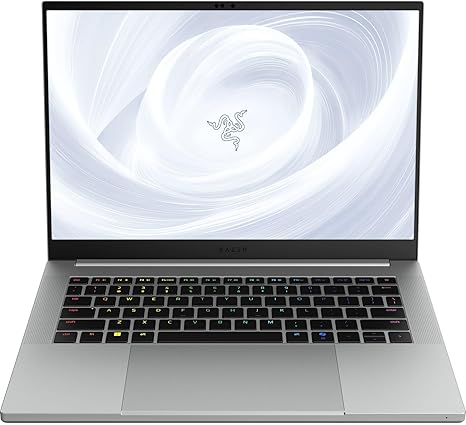
RAZER BLADE 14 RTX 5070 MERCURY WHITE
| Brand | Razer |
| Specific Uses For Product | Gaming |
| CPU Manufacturer | AMD |
| Model Name | Razer Blade 14 |
| Screen Size | 14 Inches |
| Color | Mercury White |
| Hard Disk Size | 1 TB |
| CPU Model | Ryzen AI |
| Ram Memory Installed Size | 32 GB |
| Operating System | Windows 11 Home |
Leave a Reply