NVIDIA ⚡ May Stop Bundling VRAM with GPUs, What It Means for the Industry!
Introduction
Recent rumors suggest that NVIDIA may stop bundling VRAM (video memory) with its GPUs for board partners (AIBs), forcing vendors to source memory independently. This comes amid global GDDR memory shortages and growing pressure on supply chains. If true, this could reshape the graphics card market, impacting pricing, production timelines, and the relationship between NVIDIA and its manufacturing partners.
In this article, we’ll examine why NVIDIA might take this step, how AIBs could respond, and what it could mean for gamers, enthusiasts, and the broader semiconductor industry.
Why NVIDIA Bundled VRAM in the First Place
Historically, NVIDIA has bundled memory directly with GPUs for several reasons:
- Streamlined Production: By supplying both the GPU die and memory, NVIDIA could ensure compatibility and performance standards.
- Quality Control: Bundling VRAM allowed NVIDIA to maintain consistent specifications and reliability across partner products.
- Pricing and Profitability: Controlling memory sourcing helped NVIDIA manage pricing and margins, particularly during periods of supply volatility.
However, this model has always limited AIBs’ flexibility. Many smaller partners rely on NVIDIA’s bundled memory rather than sourcing VRAM themselves, which could have been more expensive or logistically challenging for them.
Rumored Change Vendors to Source Memory Independently
According to industry whispers:
- AIBs may now receive only the GPU die from NVIDIA.
- VRAM will no longer be included, forcing vendors to source memory modules directly from manufacturers like Micron, Samsung, or SK Hynix.
- This change is reportedly in response to the Ongoing GDDR memory crunch, which has affected the entire GPU and electronics supply chain.
Implications for AIBs
- Increased Costs & Complexity: Smaller vendors may face higher prices or supply challenges sourcing memory independently.
- Customization Opportunities: Some partners may use alternative memory configurations to create unique products or performance tiers.
- Potential Production Delays: If memory is scarce, some GPUs may be delayed or produced in limited quantities, affecting market availability.
Why This Might Be a Good Thing
From an industry perspective:
- AIB Independence: Board partners will have more control over memory choice, quality, and sourcing.
- Innovation Potential: Partners could experiment with higher-speed GDDR memory or customized designs.
- Reduced Vendor Lock-in: NVIDIA’s historically tight control over AIBs could loosen, allowing more competitive offerings.
However, skepticism remains. NVIDIA has a history of strict influence over partners, and the rumor suggests that some “control tactics” may persist, potentially limiting the actual freedom of board partners.
Market Implications GPU Prices, Shortages, and Gamers
- GPU Prices: With AIBs sourcing memory independently, prices could rise if GDDR supply remains constrained.
- Chip Shortage 2: Electric Boogaloo: The rumor hints at renewed scarcity in graphics cards, potentially driving scalpers, bots, and secondary market price spikes.
- Gamers & Enthusiasts: Buying strategies may shift as availability becomes less predictable, and certain high-end cards may become harder to obtain.
 ltas Opinion What This Means
From AltasGaming.com’s perspective:
- Supply Chain Pressure Is Real: The GDDR shortage is the root cause, and NVIDIA may be offloading risk onto partners.
- Mixed Blessing for Innovation: While AIBs could create custom memory configurations, smaller vendors may struggle to compete if prices rise.
- Market Dynamics Will Shift: This may favor larger partners with direct access to memory supply, potentially squeezing smaller competitors.
- Gamers Should Prepare: Expect potential price volatility and stock scarcity. Buying strategies like alert systems or automated scalping tools may become relevant again.
- Long-Term Outlook: If NVIDIA sticks to this strategy, we could see a permanent shift in how GPUs are manufactured and sold, redefining partner dynamics and the high-end GPU market.
In short, while some may see this as a positive move toward AIB independence, the short-term consequences could be messy for both vendors and consumers.
❓ FAQ NVIDIA VRAM Bundling Rumors
Q1: Why did NVIDIA supply VRAM with GPUs before?
A: Bundling VRAM ensured compatibility, consistent performance, and streamlined production for AIBs, especially smaller partners.
Q2: Why would NVIDIA stop bundling VRAM now?
A: The rumored decision responds to GDDR memory shortages, aiming to reduce NVIDIA’s direct supply burden while shifting sourcing responsibility to partners.
Q3: How does this affect AIBs?
A: Vendors may face higher costs, production delays, or logistical challenges sourcing memory independently, though some may leverage it for custom GPU designs.
Q4: Will this increase GPU prices for consumers?
A: Potentially, especially if memory shortages persist. Custom sourcing costs could be passed on to buyers.
Q5: Could this impact GPU availability?
A: Yes, smaller AIBs may produce fewer units, potentially causing stock scarcity and market volatility.
Q6: Is this permanent or temporary?
A: Rumors suggest it’s a response to current shortages, but NVIDIA’s history suggests some degree of control may remain long-term.
✅ Conclusion
The NVIDIA VRAM bundling rumor could mark a significant shift in the GPU industry. If true, AIBs will gain independence but face new challenges in sourcing memory. Gamers and enthusiasts may see higher prices and scarcity, potentially reigniting scalper and bot activity.
Ultimately, this reflects the delicate balance between supply chain constraints, corporate control, and market dynamics a situation that could reshape the GPU landscape for years to come.
Table of Contents
- Oil, Gold, Silver, Crypto & War 2026 The Complete Story From Beginning to Now
- Is World War 3 coming Iran–Israel–USA Conflict 2026 The Complete Story, Hidden Tensions, and What Could Happen Next
- Taiwan Invasion by 2027 – But the Real War for AI, Chips, and Global Power Has Already Begun
- Resident Evil Requiem Becomes 2026’s Highest-Rated Game – A Survival Horror Masterpiece or an Overhyped Sequel That Loses Steam?
- Black Ops 7 Sets a New Standard for Tactical FPS Combat – But Controversy and Matchmaking Frustrations Spark Debate

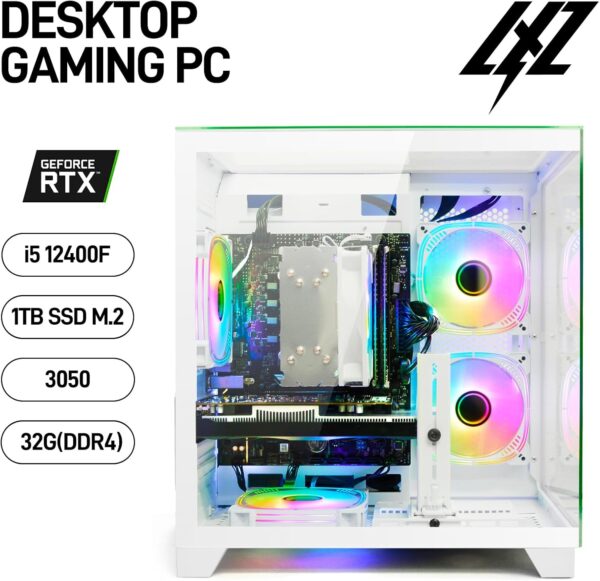
LXZ Gaming PC Desktop 12th Genration
About this item
- Processor (CPU): Core i5-12400F, which is the mid-range model of 12th generation Core series, has 6 cores and 12 threads, with a base frequency of 2.5GHz and can be boosted to 4.4GHz through Core technology. This processor excels in performance and can easily handle the demands of multitasking and large games.
- Graphics card (GPU): GeForce RTX 3050, an entry-level model of Ampere architecture, supports real-time ray tracing and DLSS technology, delivering excellent game graphics and a smooth gaming experience. Although it is not the top of the line graphics card, it is more than adequate for most mainstream games.
- Memory (RAM): 32GB DDR4 RAM, which is a considerable amount of memory capacity and crucial for gaming and multitasking. High-capacity memory allows the computer to run multiple programmes at the same time without lagging, whether it’s opening multiple browser tabs, running specialised software, or playing large games.
- Storage: 1TB NVMe SSD, Solid State Drives (SSDs) have faster read and write speeds compared to traditional mechanical hard drives (HDDs), which means your computer boots up faster, games load faster, and file transfers are faster. 1TB is more than enough for storing games, photos, videos, and other files.
- Design & Extras: The PC is equipped with 5× RGB fans and lighting effects. These lights can be set according to the user’s preference, adding a splash of colour to the PC and enhancing the overall visual effect. The chassis is designed with glass panel on three sides, which allows users to visualise the internal hardware layout and lighting effects. At the same time, the glass side panels also ensure good heat dissipation performance, ensuring that the hardware remains stable under prolonged operation Applicable Scenarios.
-
Brand LXZ Operating System Windows CPU Model Core i5-12400F CPU Speed 2.5 GHz Cache Size 32 GB Graphics Card Description Dedicated Graphics Coprocessor Ge Force Rtx 3050 Memory Storage Capacity 1 TB Specific Uses For Product Business, Education, Gaming Personal computer design type Computer Tower -
Product description
LXZ Gaming Desktop with 12th Generation Processor & GPU GeForce RTX 3050

CPU: Core i5-12400F 6 cores / 12 threads, Turbo Boost up to 4.4GHz Mid-range gaming/ multitasking. Strong single-core performance for smooth gaming
GPU: RTX 3050 (6GB DDR4) handles modern titles at medium-high settings, but struggles with ultra settings at 1440p or full ray tracing.

Who Should Buy This PC?

Budget Gamers: Prioritizing 1080p smoothness over maxed graphics.
Students/Creators: Balancing coursework, casual editing, and gaming.
Multitaskers: Running VMs, heavy browser workloads, or office suites.
Home Users: Seeking an all-in-one PC for family entertainment.

Core i5-12400F & GeForce RTX 3050 GPU
This gaming pc with Core i5-12400F and GeForce RTX 3050 graphics card, is capable of running all your favorite games at Ultra settings, detailed 1080p Full HD resolution gameplay.

Greatly Improves Graphical Performance.
GeForce RTX 3050, an entry-level model of Ampere architecture, supports real-time ray tracing and DLSS technology, delivering excellent game graphics and a smooth gaming experience.
32GB DDR4 3200MHz RAM & 1TB NVMe SSD
Overkill for gaming, ideal for heavy multitasking, video editing, or virtual machines. Near-instant boot times and rapid game/software loading.

Triple Display Ready (DVI + DP + HDMI)

Windows system is plug and play.

Leave a Reply