
🟦 Ripple, Atomic Settlement & the New Financial Era Is XRP Finally at the Center of Global Change?
The global financial system is undergoing a dramatic transformation. With cross-border payments becoming faster, more digital, and more interconnected, blockchain networks like Ripple’s XRP Ledger (XRPL) are emerging as serious contenders for next-generation infrastructure. Recent developments including Ripple mirroring the Bank for International Settlements’ (BIS) “Project Meridian” atomic settlement system and joining Mastercard at a global payments event mark a major turning point.
But this is not happening in isolation. Trade conflicts, geopolitical tensions, and war-driven economic shocks are accelerating the demand for alternative payment systems giving blockchain a powerful new role.
Here’s a deep dive into what’s happening, why it matters, and what could be next.
🔵 1. Ripple Mirrors BIS’ “Project Meridian” What It Means
The BIS (Bank for International Settlements) recently ran Project Meridian, demonstrating atomic settlement a next-generation technology enabling instant, irreversible transactions across multiple ledgers.
Now Ripple and the XRP Ledger are implementing similar capabilities, signaling:
✔ Instant cross-border settlements
✔ No intermediaries
✔ No settlement failure
✔ Automated, trust-minimized transfers
✔ Lower costs than traditional Swift-based systems
Atomic settlement is considered the future backbone of global finance and XRPL aligning with this direction gives it legitimacy at a regulatory and institutional level.
🟦 2. Ripple Joins Mastercard at Key Event A Symbol of Institutional Adoption
Ripple appearing alongside Mastercard one of the world’s largest payment networks sends a strong message:
👉 Blockchain is no longer optional for global payment giants.
👉 Ripple is positioning itself as a core infrastructure provider.
👉 Institutions are preparing for real-time tokenized payments.
Mastercard is actively experimenting with tokenized bank deposits, stablecoins, and cross-border settlement rails, and Ripple’s presence in these discussions shows that XRP-based solutions could integrate into mainstream payments more rapidly than expected.
🌍 3. Finance Is Transforming Banking, Bonds, Currencies & Markets Going On-Chain
Governments, banks, and corporations are shifting to digital assets, tokenized bonds, CBDCs, and real-time ledgers.
Ripple argues:
“Blockchain is driving a new era of global business.”
Here’s what that transformation includes:
• Tokenized government bonds
Already piloted across Europe and Asia.
• CBDC integration
Ripple is working with over 20+ central banks on digital currency development.
• Instant liquidity markets
Using XRPL and potential automated market makers (AMMs).
• Replacement of legacy systems
SWIFT messaging is too slow for modern global commerce.
The world is clearly preparing for fully digital financial rails and XRPL is positioning itself as a primary settlement layer.
🔥 4. How Trade Wars & Global Conflicts Boost Crypto Adoption
Geopolitical instability always pushes nations and companies to find alternative ways to trade.
The current world environment US-China tensions, Russia sanctions, Middle East conflicts, and fluctuating commodity prices is creating massive pressure on the global financial system.
⚠ Sanctions restrict dollar-based payments
Countries explore blockchain rails to bypass limitations.
⚠ Trade routes destabilize
Businesses need fast, trustless, global settlement networks.
⚠ Currency volatility increases
Digital assets provide a cross-border hedge.
⚠ War-driven inflation affects traditional banking
Crypto offers alternative liquidity channels.
⚠ Global fragmentation accelerates innovation
Nations build new payment blocs (BRICS, ASEAN, Gulf States).
Blockchain especially XRP Ledger due to its speed and neutrality is emerging as the most practical bridge between disconnected financial systems.
 lta’s Opinion 💬 “Ripple Is Quietly Becoming the Infrastructure of a New Financial Order”
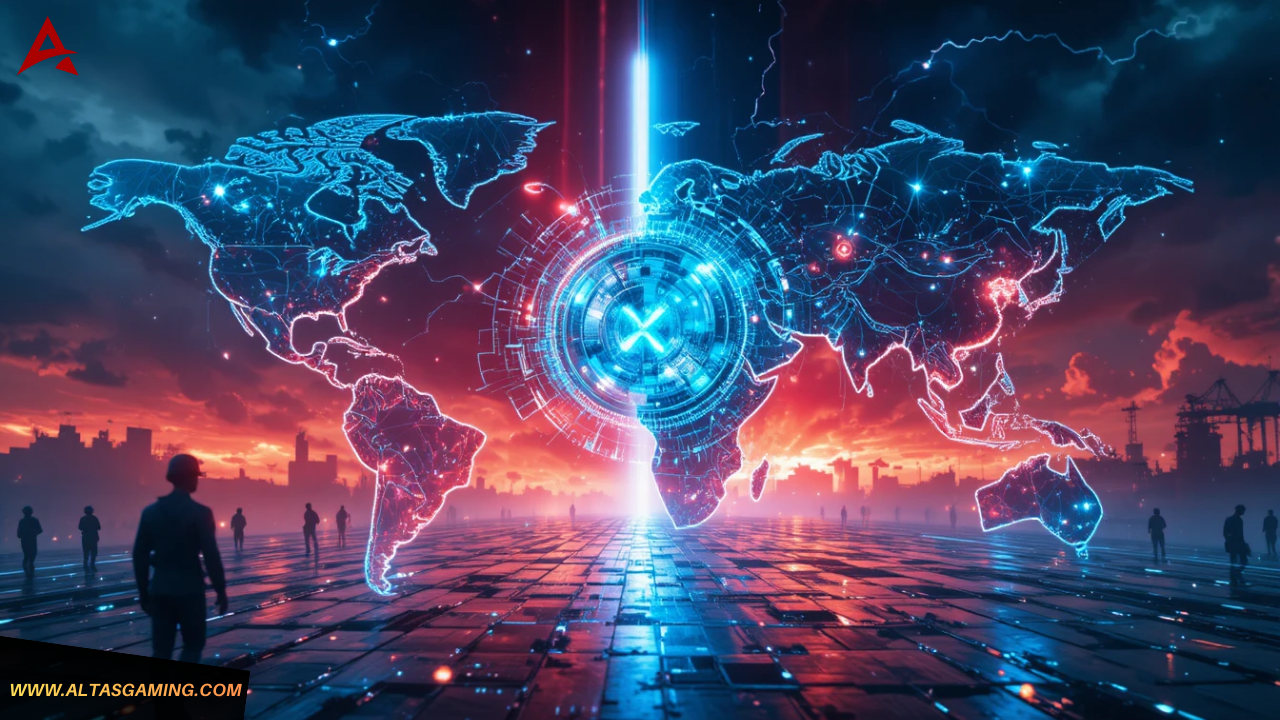
In my view, Ripple’s recent moves are far more important than the price of XRP suggests.
Here’s why:
✔ BIS and Ripple aligning on atomic settlement is a historic shift
This is the future of global clearing and settlement.
✔ Joining Mastercard shows institutional seriousness
Ripple is no longer a “crypto outsider” it’s part of the financial establishment.
✔ Trade war pressures accelerate blockchain adoption
Global tensions make decentralized settlement more attractive.
✔ XRP’s price does not reflect its real-world positioning
The market is emotional, but infrastructure plays are long-term.
✔ A major breakout could occur once institutional pilots go live
If even 5–10% of cross-border liquidity runs through XRP, the effect will be massive.
That said:
⚠ Regulation remains Ripple’s biggest bottleneck
Especially in the US.
⚠ Global conflict creates opportunities but also unpredictability
Markets will be volatile before they stabilize.
But overall: Ripple is exactly where it needs to be at the center of the new global financial architecture.
❓ FAQ’s
Q1: Does atomic settlement mean XRP will replace SWIFT?
Not directly.
But it means XRPL can run parallel rails that eventually outperform SWIFT especially for high-volume institutional settlement.
Q2: Will the Mastercard partnership cause XRP demand to rise?
If Mastercard integrates Ripple’s technology for settlement or CBDC transfer rails yes, massively.
But any XRP price impact depends on actual on-ledger volume, not announcements.
Q3: How do wars and trade conflicts increase blockchain usage?
Conflicts disrupt trust, reliability, and liquidity in traditional banking.
Blockchain provides:
✔ borderless transfer
✔ 24/7 settlement
✔ no dependency on geopolitics
This makes it ideal for unstable environments.
Q4: Is Ripple becoming “bank-friendly blockchain”?
Yes.
Ripple is deliberately aligning with institutions, regulators, and financial infrastructures rather than the decentralized “crypto rebel” model.
Q5: Why isn’t XRP pumping despite major progress?
Because infrastructure adoption moves slowly.
Price reacts only when liquidity corridors open and daily settlement volume increases.
Q6: Could XRP become a global payments standard?
Technically yes it has:
- Speed
- Security
- Low fees
- ISO 20022 alignment
- Enterprise support
The only barrier is global regulatory coordination.
Q7: Will atomic settlement make traditional banks obsolete?
No.
Banks will still exist but their backend rails will be blockchain-powered.
Table of Contents
- Is World War 3 coming Iran–Israel–USA Conflict 2026 The Complete Story, Hidden Tensions, and What Could Happen Next
- Taiwan Invasion by 2027 – But the Real War for AI, Chips, and Global Power Has Already Begun
- Resident Evil Requiem Becomes 2026’s Highest-Rated Game – A Survival Horror Masterpiece or an Overhyped Sequel That Loses Steam?
- Black Ops 7 Sets a New Standard for Tactical FPS Combat – But Controversy and Matchmaking Frustrations Spark Debate
- Ghostrunner 2 Free on Epic Games, A Cyberpunk Masterpiece of Relentless Action – or a Brutally Punishing Game That’s Too Hard to Love?

Razer Blade 16
-
Key Specs
Screen TypeIPSScreen Size16 inchesScreen Resolution2560 x 1600Touch ScreenNoRefresh Rate240HzBrightness500 nitsProcessor ModelIntel 13th Generation Core i9CPU Base Clock Frequency2.2 gigahertzStorage TypeSSDTotal Storage Capacity1000 gigabytesSystem Memory (RAM)16 gigabytesGraphicsNVIDIA GeForce RTX 4060Display Connector(s)1 x Thunderbolt 4, 1 x HDMI 2.1Battery ChemistryLithium-ionBacklit KeyboardYes -
General
BrandRazerModel NumberRZ09-0483REH3-R3U1Product NameBlade 16 – 16” Gaming Laptop – QHD+ 240 Hz – Intel 24-Core i9-13950HX – NVIDIA GeForce RTX 4060 – 16GB RAM – 1TB SSDColorBlackYear of Release2023 -
Display
Display TypeLCDScreen TypeIPSScreen Size16 inchesScreen Resolution2560 x 1600Touch ScreenNoRefresh Rate240HzBrightness500 nitsColor Gamut (Standard RGB)100 percent -
Processor
Processor BrandIntelProcessor ModelIntel 13th Generation Core i9Processor Model Number13950HXCPU Base Clock Frequency2.2 gigahertzCPU Boost Clock Frequency5.5 gigahertzNumber of CPU Cores24-coreNumber of CPU Threads32Neural Processing Unit (NPU)No -
Storage
Storage TypeSSDTotal Storage Capacity1000 gigabytesSolid State Drive Capacity1000 gigabytes -
Memory
System Memory (RAM)16 gigabytesType of Memory (RAM)GDDR5System Memory RAM Speed5600 megahertz -
Graphics
Graphics TypeDedicatedGPU BrandNVIDIAGraphicsNVIDIA GeForce RTX 4060Advanced Graphics Rendering Technique(s)DLSS 3 (Deep Learning Super Sampling), Ray tracingUnlocked GPUYesGPU Base Clock Frequency1.47 gigahertzGPU Boost Clock Frequency2.37 gigahertzGPU Video Memory (RAM)8 gigabytesGPU Video Memory Type (RAM)GDDR6 -
Compatibility
Operating SystemWindows 11 Home -
Connectivity
Display Connector(s)1 x Thunderbolt 4, 1 x HDMI 2.1Number of HDMI Outputs (Total)1USB Ports3 x USB-A 3.2Number of USB Ports (Total)5Wireless ConnectivityBluetooth, Wi-Fi -
Power
Battery ChemistryLithium-ion -
Camera
Front-Facing CameraYes -
Features
Backlit KeyboardYes -
Dimensions
Product Height0.87 inchesProduct Width13.98 inchesProduct Depth9.61 inchesProduct Weight5.4 pounds -
Certifications Listings & Approvals
ENERGY STAR CertifiedNoEPEAT QualifiedNo -
Warranty
Warranty – Parts1 YearWarranty – Labor1 Year -
Other
UPC840272906743BSINJ39HWFH7KWSKU6534200


Leave a Reply