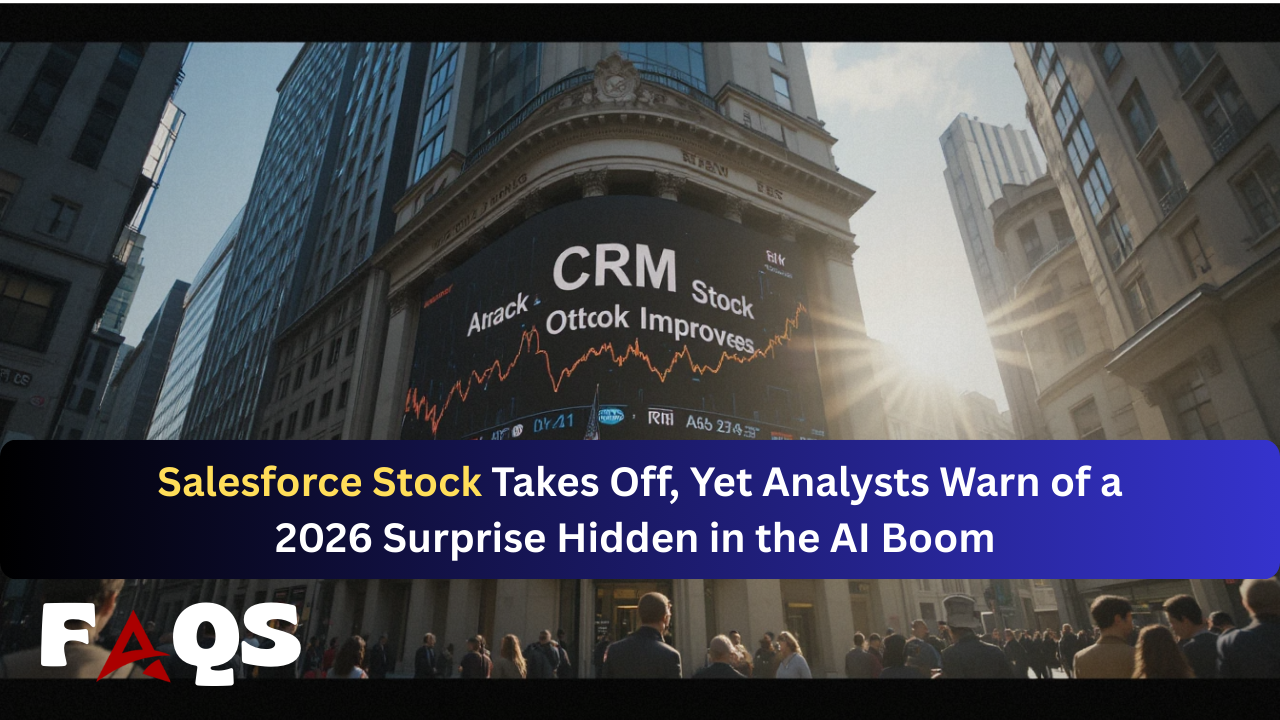
Salesforce Stock Takes Off, Yet Analysts Warn of a 2026 Surprise Hidden in the AI Boom
That combination robust earnings + discounted valuation + rising AI adoption is creating one of the most interesting setups Salesforce has seen in a decade.
Let’s break down what happened across earnings, forecasts, and the larger market psychology shaping CRM’s stock story.
Salesforce’s Earnings A Clean Beat When Wall Street Expected a Slowdown
Salesforce delivered what investors quietly hoped for but didn’t expect
Earnings beat expectations
Higher-than-forecast operating margins continued a trend of disciplined spending and improved efficiency.
Revenue guidance came in stronger than Wall Street projected
This included better-than-expected outlooks for enterprise subscription growth critical for a company whose model depends on recurring revenue stability.
Sales and Data Cloud products drove the quarter
Demand for integrated enterprise AI tools—especially after the major Einstein 1 relaunch played a central role.
Despite concerns that enterprise software budgets were tightening entering 2025, Salesforce’s results showed stable deal flow, renewed multi-year contracts, and less churn than anticipated.
Why Is Salesforce’s Stock Still Cheap? A Rare Moment That Has Analysts Split
Even with strong numbers, Salesforce shares remain in what analysts are calling a “historically discounted range.”
Why?
1. Market fears around enterprise AI adoption rates
Some investors believe generative AI will take longer than expected to convert into revenue for SaaS players.
2. Lingering concerns from last year’s slowdown
The narrative of delayed customer spending still weighs on sentiment even though the data now contradicts it.
3. Competitive pressure from Microsoft and AI-native platforms
There’s fear that Salesforce could lose share to more integrated, AI-heavy platforms.
Yet the company’s recent performance and new product adoption metrics suggest those concerns are overstated.
AI Not Just a Buzzword Salesforce Says It’s Becoming a Revenue Engine
On the earnings call, Salesforce emphasized
Enterprise adoption of AI tools is accelerating, not slowing
Particularly in Sales Cloud and Service Cloud, where generative AI directly impacts productivity.
Data Cloud is becoming the “central nervous system” of customer AI usage
Which positions Salesforce to charge premium pricing for high-value data processing services.
Einstein AI is beginning to produce measurable pipeline impact
Customers are reporting real efficiency gains, helping Salesforce justify its massive AI infrastructure investments.
This directly addresses investor skepticism that AI revenue will “take too long” to appear.
Where Salesforce Goes From Here
Salesforce enters 2026 with
- A stronger-than-expected revenue forecast
- Solid margins
- Clear proof that AI investments are paying off
- And a stock price that does not reflect operational strength
This combination makes Salesforce one of the more intriguing large-cap tech plays heading into the new year.
 LTAS OPINION
Salesforce’s latest performance creates one of the most paradoxical setups I’ve seen in enterprise tech in years. The company just delivered strong earnings, raised revenue guidance, and proved that AI adoption inside its ecosystem is accelerating, not stalling. Yet the stock is priced as if the company is heading into an uncertain fiscal year with weak margins and declining customer demand neither of which is true.

In my view, Wall Street is anchoring to last year’s fears instead of this year’s data. Investors were burned by overhyped AI promises from some SaaS companies, and they’re projecting that caution onto Salesforce even though CRM is now producing tangible AI-driven revenue, especially through Data Cloud.
Data Cloud is the quiet superstar here. If Salesforce succeeds in turning it into the “operating system of enterprise AI,” the stock is deeply undervalued at current levels. My belief:
Salesforce is entering a re-rating cycle that the market hasn’t priced in yet.
Between rising multi-cloud adoption, strong renewals, and maturing AI product lines, Salesforce could easily outperform broader market expectations in 2026 assuming it maintains cost discipline and avoids unnecessary expansionary spending.
FAQs
1. Why does Salesforce’s valuation look cheap even after strong earnings?
Because investor confidence hasn’t yet adjusted to Salesforce’s stronger margins and AI traction. Sentiment is lagging behind the numbers.
2. Is Salesforce’s AI revenue coming from new customers or existing ones?
Primarily existing customers expanding into Data Cloud and generative AI tools. The upsell opportunity is bigger than fresh customer acquisition.
3. Could Salesforce’s AI strategy fail if enterprise AI adoption slows again?
Yes but only in the short term. Long term, Salesforce’s data moat makes it nearly impossible for enterprise clients to migrate out of the ecosystem.
4. Is Salesforce shifting from “growth mode” to a margin-focused company permanently?
Early signs suggest a hybrid model: moderated growth + strong cost discipline + strategic AI investment.
5. What is the biggest overlooked risk to Salesforce’s stock in 2026?
Enterprise contract renegotiations. If CFOs tighten budgets again, renewal cycles could see pressure despite high AI interest.
6. Which Salesforce cloud is most likely to drive unanticipated upside?
Data Cloud because it ties directly into AI usage, storage, and real-time automation.
7. Could Salesforce become an AI infrastructure provider rather than just a SaaS company?
Indirectly, yes. As AI models integrate deeper into customer data, Salesforce becomes the “data pipe,” not just the CRM layer.
Table of Contents
- Resident Evil Requiem Becomes 2026’s Highest-Rated Game – A Survival Horror Masterpiece or an Overhyped Sequel That Loses Steam?
- Black Ops 7 Sets a New Standard for Tactical FPS Combat – But Controversy and Matchmaking Frustrations Spark Debate
- Ghostrunner 2 Free on Epic Games, A Cyberpunk Masterpiece of Relentless Action – or a Brutally Punishing Game That’s Too Hard to Love?
- Code Vein II Is a Beautiful Evolution – But Its Uneven World Holds It Back! Or Does It Still Lack the Crown? (Feb 2026)
- Nioh 3 Review- A Brutal Soulslike Masterpiece That Perfects Samurai Combat – Or an Unforgiving Grind That Pushes Players Too Far?
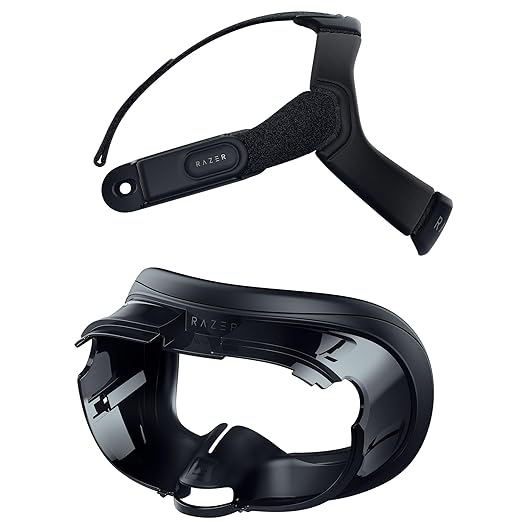
Razer Adjustable Head Strap System Authorized for Meta Quest 3
Tech Specs
-
At a glance
-
- Product Dimensions:
Length: 215 mm / 8.46″
Width: 200 mm / 7.87″
Height: 175 mm / 6.88″ - Weight: 70 g / 0.15 lbs
-
Component Material Straps Nylon Textile Laminate Clips Polycarbonate ABS
- Product Dimensions:
- Compatible Hardware Device:Meta Quest 3
-
Leave a Reply