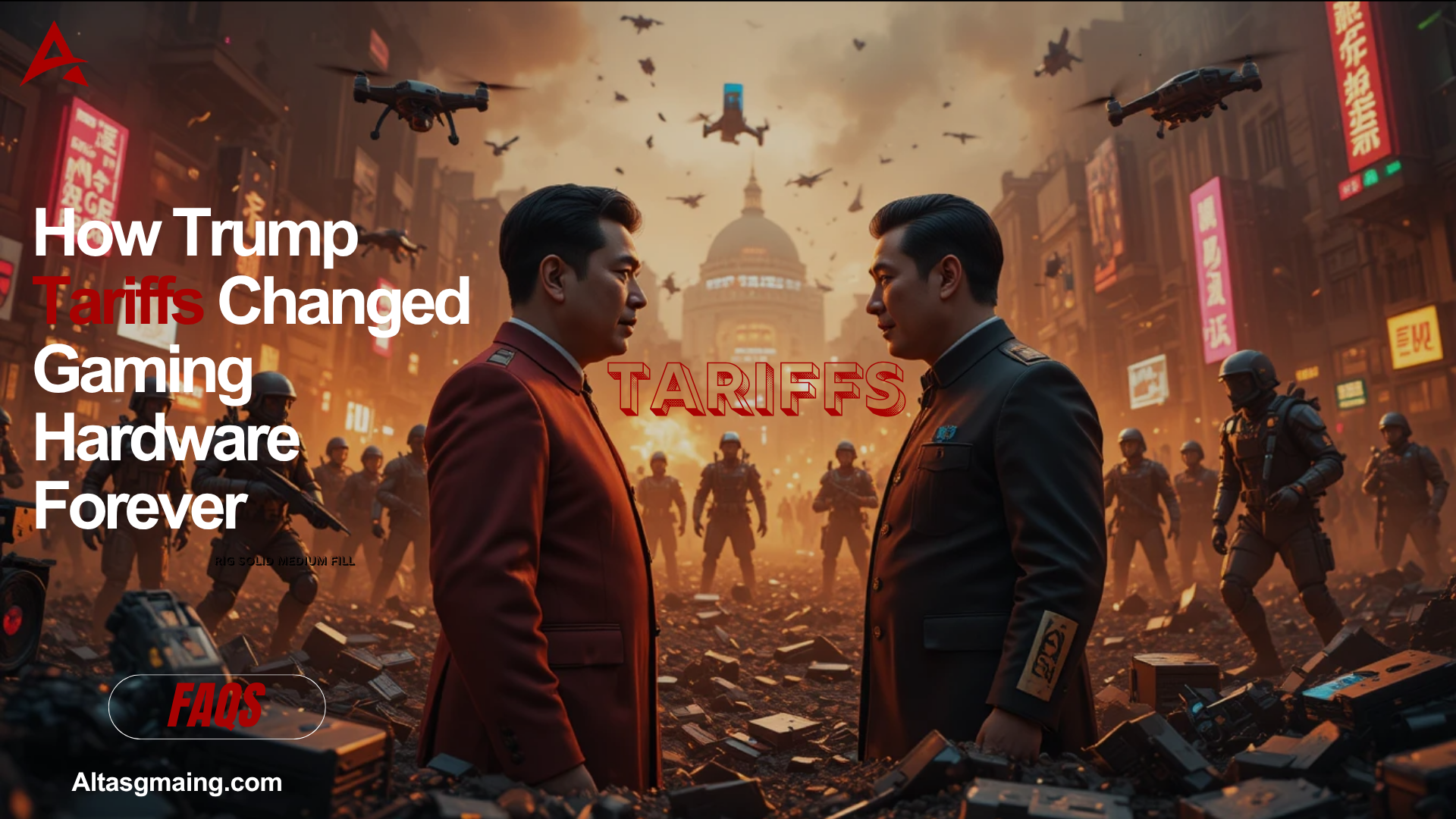
How Trump Tariffs Changed Gaming Hardware Forever: USA–China Trade War Explained (2025 Update)
USA–China Trade War and Gaming Hardware: How Tariffs and Chip Shortages Are Rewriting the Future of Gaming
🎮 Introduction
The gaming industry has always been powered by innovation and silicon. But as the USA–China trade war intensifies and semiconductor tensions deepen, the very chips that bring your favorite games to life are becoming political weapons. From rising tariffs to supply chain shifts, the gaming hardware ecosystem is caught in a complex web of economics, diplomacy, and technology.
This article explores how tariffs, trade policies, and chip shortages have reshaped gaming hardware from the PlayStation and Xbox to high-end gaming PCs and what it all means for the future of gamers worldwide.
⚙️ A Look Back: The Trade War Begins
The USA–China trade conflict began in 2018, when the U.S. imposed heavy tariffs on billions of dollars of Chinese imports. China retaliated, targeting American exports. The gaming industry heavily reliant on Chinese manufacturing felt the ripple effects almost immediately.
- Consoles like PS5 and Xbox Series X, produced largely in Asia, saw increased shipping costs and slower production.
- PC builders and GPU buyers faced rising prices for components like motherboards, power supplies, and RAM.
- Accessory brands, from Razer to Logitech, also reported manufacturing delays due to new export restrictions.
The conflict never fully cooled down and now, in 2025–2026, the new tariff wave under the Trump administration threatens to reignite these challenges.
💰 The Impact of Trump’s New Tariffs
As part of a renewed economic push, Trump’s 2025 tariff plan includes up to 100% import taxes on computer chips and electronic components, unless companies move production to the U.S.
This move aims to boost local semiconductor manufacturing but has created immediate cost spikes for:
- Gaming laptops and desktops
- GPUs and CPUs (especially NVIDIA and AMD units built in Taiwan/China)
- PlayStation and Xbox hardware
- PC accessories like cooling fans, RGB systems, and SSDs
🔍 Table: U.S. vs. China Key Gaming Hardware Affected by Tariffs
| Category | USA-Made / Supported | China-Manufactured / Affected | Tariff Impact |
|---|---|---|---|
| GPUs | NVIDIA (Design in USA, made in Taiwan) | Components sourced from China | High – import costs rising |
| CPUs | Intel (U.S. fabs expanding) | AMD components via Asian fabs | Moderate – sourcing diversification |
| Consoles | Xbox (U.S. company) | PS5, Xbox parts made in China | High – console price hikes possible |
| Peripherals | Logitech, Corsair | Razer, Redragon, Onikuma | Medium – accessory prices up 10–20% |
| PC Components | ASUS, MSI (HQ Asia) | Gigabyte, CoolerMaster | Moderate – longer shipping delays |
| Gaming Monitors | Dell Alienware | AOC, Xiaomi, TCL | Medium – tariff increases expected |
🧠 The Chip Shortage: Is the U.S. Still Struggling?
Yes while things have improved since the 2020–2023 crisis, the U.S. still faces semiconductor supply pressures.
- Basic chips (for everyday devices) are stabilizing.
- Advanced AI and gaming GPUs remain limited.
- Lead times for high-end processors remain weeks longer than pre-pandemic norms.
- Manufacturing transitions (moving production from China to Vietnam, Malaysia, or the U.S.) cause short-term delays.
The CHIPS and Science Act helped establish new fabs in Arizona, Ohio, and Texas but full capacity will take years. Until then, gamers may continue to face premium pricing for next-gen GPUs and limited stock of top-tier consoles.
💬 A Unique Perspective: The Hidden Vulnerability in Gaming Hardware
Here’s what most analysts don’t mention the high-end gaming ecosystem (4K/8K GPUs, ray tracing, AI-driven graphics) depends on a handful of suppliers and rare components concentrated in East Asia.
Even a minor tariff, factory delay, or export ban can ripple across the world making elite gaming hardware scarcer and more expensive. While most mid-range parts will remain available, the premium gaming rigs may become a luxury again.
This is where AI upscaling, cloud gaming, and optimized game engines could play a big role, helping gamers enjoy next-gen experiences on slightly older hardware a market trend worth watching closely.
🧮 Global Ripple Effects: Beyond the USA
🇬🇧 United Kingdom
The UK gaming PC market relies heavily on imports. Any U.S. tariff ripple will raise European prices, especially for GPUs.
🇨🇦 Canada
Canadian buyers often pay a premium due to exchange rates and tariffs expect prices to climb further if new trade barriers stay in place.
🇦🇺 Australia
Distance adds to cost Aussie gamers may face both import delays and higher final prices on custom gaming rigs and consoles.
🧰 How Gamers Can Adapt: Pro Tips
- 🛠 Buy During Sales: Watch for local deals and refurbished models on Amazon, Best Buy, or Micro Center.
- 💾 Upgrade Smart: Upgrade storage, cooling, and RAM before GPU/CPU prices spike further.
- 🔋 Consider Aftermarket Components: Brands like NZXT, Cooler Master, and EVGA offer compatible parts not hit by tariffs.
- 🌐 Diversify Sources: Check non-U.S. retailers in the UK or EU to bypass certain tariffs.
- ☁️ Try Cloud Gaming: Services like GeForce NOW and Xbox Cloud let you play high-end titles without hardware upgrades.
🎯 Final Thoughts
The USA–China trade war and chip supply disruptions have turned gaming hardware into a high-stakes battlefield. As tariffs rise and supply chains shift, gamers worldwide face a future where innovation continues but at a higher cost.

Yet, this challenge also sparks creativity and resilience: new chip fabs in the U.S., smarter AI-powered gaming, and stronger domestic ecosystems may soon lead to a more stable, self-reliant gaming future.
🔹 FAQs — USA–China Trade War, Gaming Hardware & Trump Tariffs
Q1: How have Trump tariffs impacted gaming hardware prices in the USA?
Trump’s tariffs on Chinese imports increased the cost of essential gaming components like GPUs, motherboards, and consoles. Brands such as NVIDIA, ASUS, and MSI had to adjust retail pricing, resulting in higher PC and console costs for American consumers.
Q2: Which gaming products are most affected by the USA–China trade war?
The tariffs mainly impacted graphics cards (GPUs), motherboards, monitors, and gaming laptops, since most of these are assembled or sourced from Chinese factories. PlayStation and Xbox consoles also saw indirect price pressure due to manufacturing costs.
Q3: Are U.S. gamers still facing the effects of the tariffs today (2025–2026)?
Yes. Although some tariffs were eased, supply chain shifts and component sourcing still keep U.S. prices higher than pre-2018 levels. Some gaming brands are now diversifying production to Vietnam, India, and Taiwan to stabilize prices.
Q4: Did the USA face a chip shortage due to the trade war?
Yes. The trade conflict disrupted semiconductor supply lines, especially during COVID-19. U.S. gaming PC and console manufacturers struggled to meet demand, causing GPU shortages and inflated prices between 2020–2023.
Q5: Which Chinese companies were most affected by Trump tariffs in gaming hardware?
Companies like Foxconn, Gigabyte, ASRock, and Cooler Master faced direct tariff costs on exports to the U.S. Many had to shift parts of their production to Malaysia and Vietnam to avoid extra taxes.
Q6: How are gaming laptop and PC brands responding in 2026?
Brands such as Dell (Alienware), HP (Omen), and ASUS (ROG) are increasing U.S.-based assembly and using Taiwanese or Korean chipsets to reduce dependency on Chinese-made parts, aiming for tariff-free or reduced-duty imports.
Q7: Will future tariffs impact the gaming industry again?
Analysts warn that if new tariffs are imposed, the cost of next-gen GPUs, CPUs, and gaming laptops could rise by 10–25%. The industry is pushing for domestic chip production through U.S. initiatives like the CHIPS and Science Act to reduce reliance on imports.
Q8: What unique challenges does the trade war create for game developers and players?
Developers face hardware testing delays and higher server costs, while gamers deal with slower upgrade cycles due to high PC part prices. Some U.S. studios now design games optimized for mid-range PCs, aware of rising hardware costs.
Q9: Which country currently leads in gaming hardware manufacturing?
China still dominates hardware assembly and component production, but Taiwan (TSMC) and South Korea (Samsung) are key in chip manufacturing. The U.S. is catching up with new Intel fabs under construction to localize semiconductor production.
Q10: What’s a unique prediction for 2026–2030 in gaming hardware?
By 2030, expect a hybrid supply chain: chips designed in the U.S., produced in Taiwan or South Korea, and assembled in Vietnam or India reducing tariff risks. This will make gaming hardware prices more stable and globally competitive again.
Table of Contents
- Tanker Shot at Strait of Hormuz- “Tensions Rise in Strait of Hormuz as Diplomacy Struggles to Keep Peace Deal” 2026
- China US Iran Tensions Claims of Blockade Defiance and a Shifting Global Order 2026 14 April
- Ceasefire on the Brink- Iran War Could Explode Again Any Day 🔥Is a Bigger War Coming? Global Crisis Alert ‘2026″
- Iran Ceasefire, Did the US Lose While China Won? Critics Say Trump Deal Strengthened Iran & China 4/8/26
- Political Storm in Washington- 25th Amendment Debate Explodes” Can Trump Be Removed?


Leave a Reply to Football prediction Cancel reply