Trump Delays Furniture Tariffs for a Year Relief for Consumers or Just a Temporary Trade Truce?

Overview, A One-Year Pause That Matters
Former US President Donald Trump has postponed planned Tariff hikes on upholstered Furniture, Kitchen Cabinets, and Bathroom vanities for one full year, delaying their implementation amid ongoing trade negotiations. The decision offers short-term relief to American consumers, retailers, and manufacturers, particularly during a fragile economic period shaped by inflation concerns, geopolitical tensions, and seasonal spending pressures around Christmas.
But while the delay sounds like good news, it also raises critical questions: Is this a strategic pause or simply a postponement of higher costs?
What Exactly Has Been Delayed?
The delayed tariffs cover:
- Upholstered furniture
- Kitchen cabinets
- Bathroom vanities
- Certain wood-based and composite household products
These items were expected to face higher import duties, primarily impacting goods sourced from China and other Asian manufacturing hubs.
The Tariffs are now on hold for one year, giving industries time to adjust or brace.
Why Did Trump Delay the Tariffs?
1. Trade Negotiations Are Still Ongoing
The White House cited ongoing trade talks as the main reason. Imposing tariffs prematurely could derail negotiations or escalate retaliatory measures.
2. Inflation Sensitivity
Furniture and home goods prices remain elevated. Additional tariffs would:
- Push prices even higher
- Hurt middle-income households
- Add political risk during an economically sensitive period
3. Pressure from Retailers and Builders
Retail chains, homebuilders, and renovation companies lobbied heavily against immediate tariffs, warning of:
- Job losses
- Reduced housing affordability
- Supply chain disruptions
What This Means for Consumers
Short-Term Positive Impact
- No immediate price hikes on furniture and cabinetry
- Better affordability for home renovations
- Stability during holiday and early-year buying cycles
Hidden Risk
Retailers may still raise prices quietly to hedge against future tariffs, meaning consumers might not feel full relief.
Impact on US Businesses
Retailers
- Gain time to adjust sourcing strategies
- Can maintain promotional pricing longer
Manufacturers
- Domestic producers benefit indirectly as tariffs remain a future threat
- Encourages gradual reshoring rather than sudden shifts
Importers
- One-year window to renegotiate contracts
- Stockpiling risk increases toward year-end
Geopolitical Context Trade, Power, and Pressure
This delay reflects broader geopolitical realities:
- US–China trade relations remain fragile
- Tariffs are increasingly used as leverage, not just economic tools
- The move avoids escalation during a period marked by:
- Ongoing global conflicts
- Energy market instability
- Election-cycle sensitivities
Could Tariffs Still Return After One Year?
Yes very likely.
Unless a permanent trade agreement is reached, the tariffs could:
- Be reinstated
- Be increased
- Be replaced with alternative trade barriers
Businesses should treat this delay as temporary breathing room, not a cancellation.
Christmas & Seasonal Spending Angle
The delay helps stabilize:
- Holiday furniture sales
- Renovation projects planned during year-end breaks
- Small businesses dependent on seasonal volume
A tariff hike before Christmas would have been politically and economically costly.
Forecast; What Happens Next?
Next 6–12 Months
- Prices remain mostly stable
- Import volumes may increase
- Supply chains diversify slowly
Beyond One Year
- High risk of renewed tariffs
- Consumers could face sudden price shocks
- More aggressive “Buy American” policies possible
 lta’s Opinion Smart Delay, Unfinished Business
From Alta’s perspective, this decision is pragmatic but incomplete.
✔ Positive:
- Prevents immediate inflation pressure
- Supports consumers and small businesses
- Keeps trade talks alive
✖ Negative:
- Creates uncertainty instead of clarity
- Encourages short-term behavior rather than long-term planning
- Risks a sharper shock later if tariffs return suddenly
Bottom line: This is a pause, not a solution. Real stability requires a clear, long-term trade framework, not rolling delays.
What Should Consumers Do Now?
- If planning renovations, buy within the next year
- Lock in prices where possible
- Be cautious of “future tariff” surcharges in contracts
FAQ’s
Will furniture prices drop because of this delay?
Not significantly. The delay prevents increases, but existing inflation and logistics costs remain.
Are these tariffs canceled permanently?
No. They are postponed for one year only.
Which countries are mainly affected?
Primarily China and other Asian manufacturing exporters.
Will US-made furniture become cheaper?
Unlikely. Domestic production costs remain higher.
Could tariffs return earlier than planned?
Yes, if trade talks collapse or geopolitical tensions escalate.
Does this affect housing prices?
Indirectly, yes. Kitchen and cabinetry costs are part of home construction and renovation pricing.
Final Take
Trump’s decision to delay furniture and cabinet tariffs offers temporary relief in uncertain times, but it also underscores a deeper issue: America’s trade strategy remains reactive, not resolved.
For now, consumers can breathe but only briefly.
Table of Contents
- Iran War 2026 What Happened and Why Is It Important?
- Helldivers 2 Ultimate Survival Guide: Best Weapons, Builds, Missions & Pro Tips (2026)
- The PlayStation 6 – Everything Gamers Have Been Waiting For – Specs, Power, Features, and the Future of PS Gaming
- Global Crisis 2026 – The New World Order? How Nations Are Reshaping Global Power and Economy- What Happens After the Dollar Era?
- The Witcher 3: Wild Hunt – The Fantasy Masterpiece That Redefined Open-World RPGs
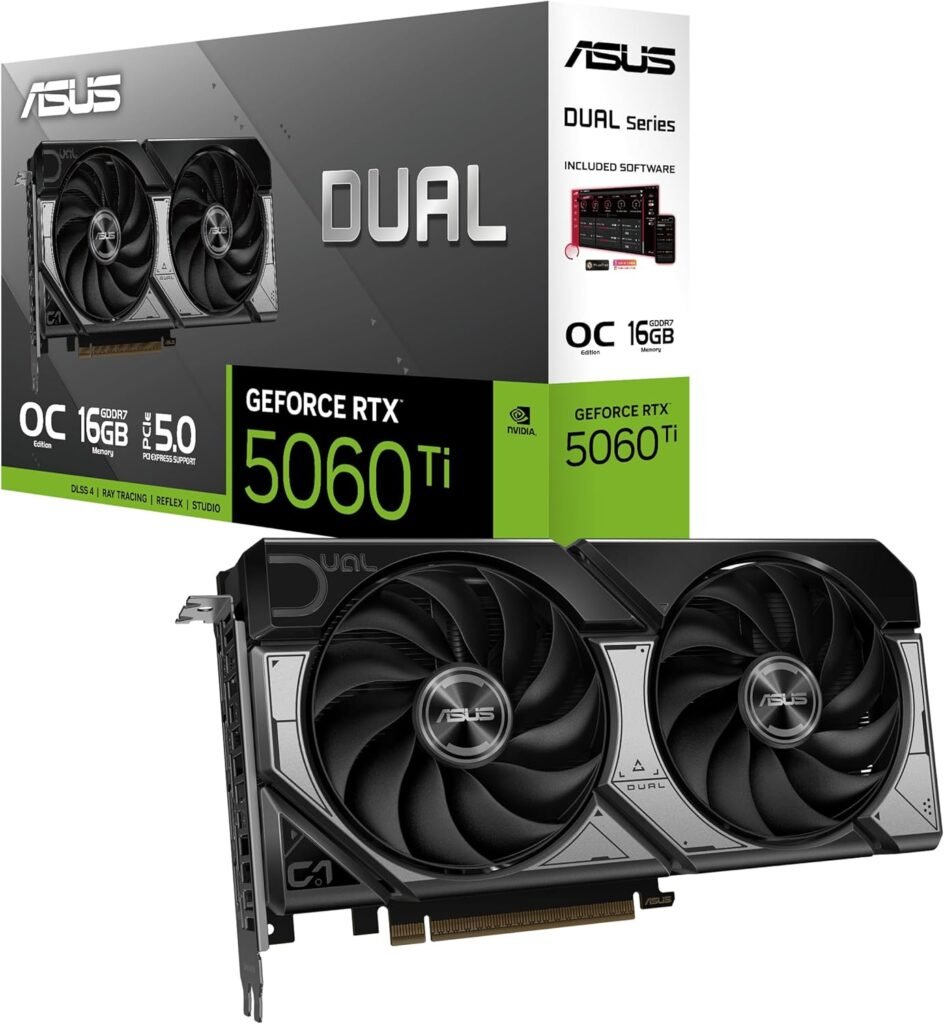
ASUS Dual GeForce RTX™ 5060 Ti 16GB GDDR7 OC Edition
Product Description
ASUS Dual GeForce RTX™ 5060 Ti combines powerful thermal performance with broad compatibility. Advanced cooling solutions from flagship graphics cards — including two Axial-tech fans for optimizing airflow to the heatsink. Designed in a compact 2.5-slot form factor, delivering more power in less space. ASUS Dual is a perfect choice for gamers who want heavyweight graphics performance in a compact build.
What’s in the box
- DUAL-RTX5060TI-16G Video Card
- Speedsetup Manual
Product information
| Brand | ASUS |
|---|---|
| Series | DUAL-RTX5060TI-O16G |
| Item model number | DUAL-RTX5060TI-O16G |
| Item Weight | 1.44 pounds |
| Product Dimensions | 9.02 x 4.72 x 0.1 inches |
| Item Dimensions LxWxH | 9.02 x 4.72 x 0.1 inches |
| Color | Black |
| Manufacturer | Asus |
| ASIN | B0F7WB6LSH |
From the manufacturer




2.5-slot Design
A carefully designed shroud, heatsink, and heatpipe layout enables the two Axial-tech fans to leverage chassis side-panel ventilation, delivering thermal performance that beyond the compact size.









Perfect PSU for the GeForce RTX 50 Series
Use the wattage calculator to estimate how much power you’ll need to fuel your rig, and then pick a compatible ROG, TUF Gaming or Prime power supply for ultimate performance.
Leave a Reply