China’s “Artificial Sun” Breaks a Fusion Limit Scientists Once Thought Unbreakable
China has crossed a scientific threshold that many fusion researchers believed would remain theoretical for decades. In a breakthrough that is already reshaping global energy discussions, China’s “artificial sun” fusion reactor has achieved a level of stable, high-density plasma once considered fundamentally impossible, marking a decisive step toward practical nuclear fusion energy.
The achievement, confirmed by Chinese scientists working under the Chinese Academy of Sciences (CAS), is not just a laboratory success. It is a geopolitical, technological, and energy milestone with far-reaching implications for global power balances, climate strategy, and energy independence.
What Is China’s “Artificial Sun”?
China’s so-called “artificial sun” refers to its Experimental Advanced Superconducting Tokamak (EAST) a doughnut-shaped fusion reactor designed to replicate the process that powers real stars.
Fusion works by:
- Heating hydrogen isotopes to over 100 million degrees Celsius
- Forcing them into a plasma state
- Allowing atomic nuclei to fuse, releasing massive amounts of energy
Unlike nuclear fission, fusion:
- Produces no carbon emissions
- Generates no long-lived radioactive waste
- Cannot melt down catastrophically
For decades, the challenge has not been ignition alone but maintaining stability.
The “Unbreakable” Fusion Limit That Was Just Broken
The major barrier in fusion science has been the density-stability tradeoff:
- Increase plasma density → instability rises
- Increase confinement time → plasma collapses
- Use heavy materials → reactor walls degrade
Chinese researchers have now sustained high-density plasma at unprecedented stability, violating what many scientists believed was a hard physical limit.
This is why global researchers are calling it a paradigm shift, not an incremental improvement.
The Tungsten Breakthrough No One Is Talking About Enough
One of the most critical and underreported aspects of this breakthrough involves tungsten, one of the hardest materials known.
Why Tungsten Matters:
- Fusion reactors require materials that can withstand extreme heat and neutron bombardment
- Tungsten was long considered too brittle and disruptive to plasma stability
- Even microscopic erosion could destabilize the reaction
Chinese scientists achieved:
- Stable plasma confinement with tungsten reactor components
- Controlled interaction between plasma and tungsten walls
- Dramatically reduced impurity contamination
This “tungsten miracle” solves one of fusion’s most stubborn engineering problems.
Why This Breakthrough Changes the Fusion Timeline
For years, the global consensus was:
“Commercial fusion is always 30 years away.”
This breakthrough compresses the timeline.
While fusion power plants are not imminent, experts now believe:
- Demonstration reactors could arrive earlier than expected
- Continuous fusion reactions are becoming technically achievable
- Energy breakeven is no longer purely theoretical
China has effectively moved fusion from science fiction into applied engineering.
Global Context- Why This Matters Now
This achievement arrives at a moment of intense global tension:
🔹 Energy Security
- Ongoing wars and sanctions have weaponized oil and gas
- Fusion represents energy independence without fossil fuels
🔹 Climate Pressure
- Nations face tightening emissions targets
- Fusion offers baseload clean energy, unlike solar or wind
🔹 Geopolitics
- Fusion leadership equals long-term strategic dominance
- China now leads a field once dominated by Western labs
Western fusion programs (ITER, private startups) remain competitive, but China’s centralized state-science model is delivering speed and scale.
Could Fusion Reshape Global Power Structures?
If China reaches commercial fusion first, the implications are enormous:
- Reduced reliance on Middle Eastern energy
- Lower geopolitical leverage of oil exporters
- Energy-abundant manufacturing dominance
- Potential export of fusion technology to allies
This is not just a science story it is a future power story.
Christmas Period & Public Reaction
Despite the holiday season, the announcement quickly spread across scientific circles, triggering:
- Emergency conferences among fusion researchers
- Renewed funding discussions in the US and EU
- Increased investor interest in fusion-adjacent technologies
The timing underscores the urgency and scale of the moment.
Forecast- What Happens Next?
Short Term (2025–2027)
- Further stability tests
- Longer plasma duration experiments
- Expanded tungsten integration
Medium Term (2028–2032)
- Pilot fusion energy systems
- Energy breakeven demonstrations
- International competition intensifies
Long Term (2035+)
- First grid-connected fusion plants possible
- Radical restructuring of global energy markets
 ltas Opinion
China’s artificial sun breakthrough is one of the most important scientific milestones of the 21st century.
While commercial fusion is still years away, the psychological barrier has fallen. The idea that fusion is “always impossible” no longer holds.
The real race now is not if fusion will work but who controls it first.
FAQ’s
❓ What exactly did China achieve?
They stabilized high-density fusion plasma beyond limits previously thought impossible.
❓ Is this fusion ignition?
Not full commercial ignition, but a critical step toward it.
❓ Why is tungsten important?
It enables reactors to survive extreme conditions without destabilizing plasma.
❓ Does this mean free energy soon?
No but it accelerates the path significantly.
❓ Is fusion safer than nuclear fission?
Yes. Fusion cannot run out of control or produce long-term nuclear waste.
Final Thoughts
China’s artificial sun has done more than break a fusion record it has broken a mental barrier.
For the first time, humanity can realistically imagine a future where energy scarcity is optional, not inevitable.
The question now is not whether fusion will power the world
but who will flip the switch first.
Table of Contents
- Iran War 2026 What Happened and Why Is It Important?
- Helldivers 2 Ultimate Survival Guide: Best Weapons, Builds, Missions & Pro Tips (2026)
- The PlayStation 6 – Everything Gamers Have Been Waiting For – Specs, Power, Features, and the Future of PS Gaming
- Global Crisis 2026 – The New World Order? How Nations Are Reshaping Global Power and Economy- What Happens After the Dollar Era?
- The Witcher 3: Wild Hunt – The Fantasy Masterpiece That Redefined Open-World RPGs
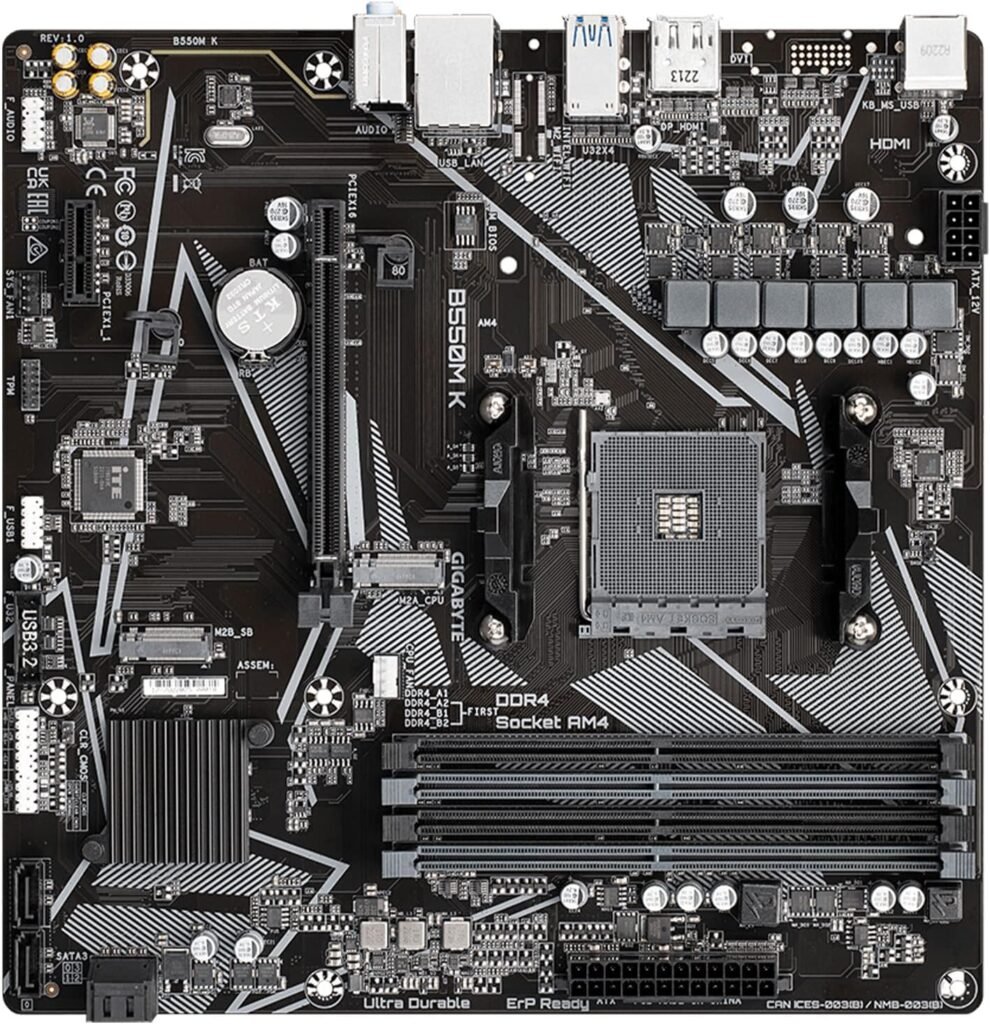
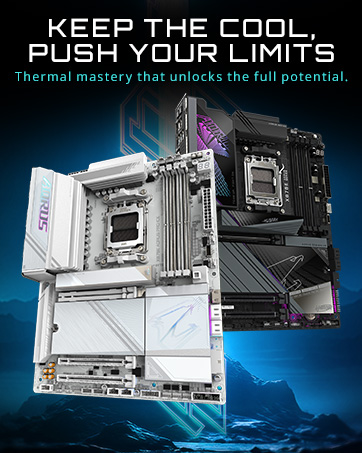
GIGABYTE B550M K Motherboard
GIGABYTE B550M K Motherboard
About this item
- AMD AM4 Socket: Supports AMD Ryzen 5000 Series or Ryzen 5000 G-Series or Ryzen 4000 G-Series and Ryzen 3000 Series Processors
- DDR4 Compatible: Dual Channel ECC or Non-ECC Unbuffered DDR4, 4 DIMMs
- Sturdy Power Design: 4 plus 2 Phases Digital Twin Power Design with Low RDS(on) MOSFETs
- Connectivity: PCIe 4.0 x16 Slot, Dual Ultra-Fast NVMe PCIe 4.0 or 3.0 x4 M.2 Connectors, Realtek GbE LAN chip
- Fine Tuning Features: RGB FUSION 2.0, Supports Addressable LED and RGB LED Strips, Smart Fan 5, Q-Flash Plus Update BIOS without installing, CPU, Memory, and GPU
| Brand | GIGABYTE |
| CPU Socket | Socket AM4 |
| Compatible Devices | Personal Computer |
| RAM Memory Technology | DDR4 |
| Compatible Processors | AM4 (Ryzen 5000/3000/4000) |
| Chipset Type | AMD B550 |
| Memory Clock Speed | 3200 MHz |
| Platform | Windows 11 |
| Model Name | B550M K |
| CPU Model | Others |
From the brand

-

-




Best Sellers
-












Product information
Additional Information
| Customer Reviews |
4.4 out of 5 stars |
|---|---|
| Best Sellers Rank |
|
Warranty & Support
Feedback
Leave a Reply