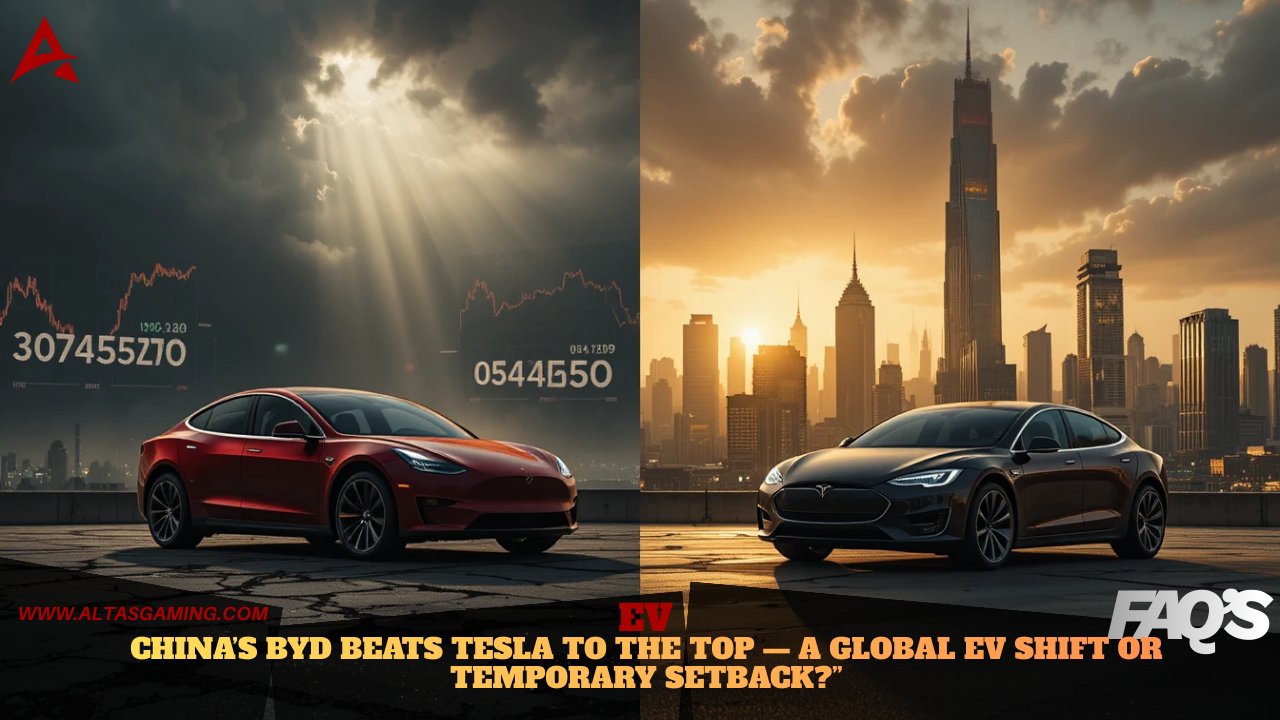
🚗 BYD Dethrones Tesla as the World’s Top EV Maker After a Record Quarter
The global electric vehicle (EV) industry has entered a historic turning point. China’s BYD has officially overtaken Tesla to become the world’s largest electric vehicle seller, ending more than a decade of Tesla’s dominance at the top. The shift reflects deeper changes reshaping the EV market from geopolitics and subsidies to consumer sentiment and competitive technology strategies.
While Tesla continues to push the boundaries with Full Self-Driving (FSD), sales momentum, affordability, and policy shifts have crowned a new EV king.
🌍 The Numbers That Changed Everything
BYD’s latest quarterly results confirmed what industry analysts had been predicting for months:
- BYD delivered more EVs globally than Tesla, marking a record-breaking quarter.
- Tesla recorded its second consecutive year of declining sales, a stark contrast to its past hypergrowth.
- The gap widened as Tesla felt the full impact of intensifying competition, expiring U.S. tax credits, and brand fatigue.
This is not just a quarterly anomaly it signals a structural change in the EV market.
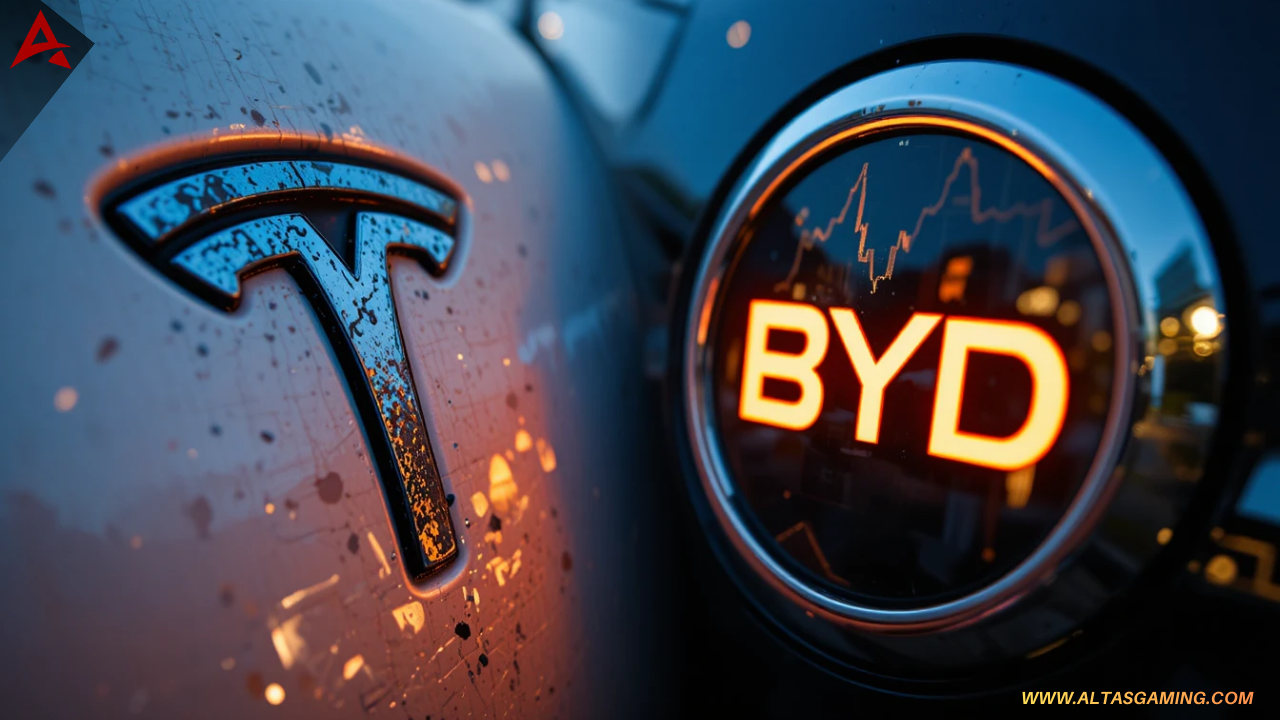
🇨🇳 Why BYD Is Winning the Global EV Race
BYD’s rise is no accident. Its dominance is rooted in scale, pricing power, and vertical integration.
Key Advantages Driving BYD’s Surge:
- Aggressive pricing: BYD EVs are significantly cheaper than Tesla models in most markets.
- Vertical integration: BYD manufactures its own batteries, chips, and key components.
- Global expansion: Rapid growth across Asia, Europe, Latin America, and emerging markets.
- Strong Chinese policy backing: Domestic incentives and industrial strategy continue to favor EV adoption.
BYD doesn’t just sell cars it controls much of the EV supply chain, allowing it to outmaneuver competitors on cost.
🇺🇸 Tesla’s Struggles- More Than Just Competition
Tesla’s fall from the top reflects a perfect storm of challenges:
🔻 Loss of U.S. Federal Incentives
As the largest EV maker in the United States, Tesla was hit harder than rivals by the elimination and tightening of federal EV tax credits. Many Tesla models no longer qualify, raising effective prices overnight.
🔻 Brand Sentiment Takes a Hit
Negative public sentiment linked to CEO controversies, political polarization, and pricing volatility has cooled consumer enthusiasm, particularly in Europe and North America.
🔻 Intensifying Global Competition
Legacy automakers and Chinese manufacturers alike are flooding the market with cheaper, feature-rich EVs, narrowing Tesla’s once-massive technological lead.
🤖 FSD Still Tesla’s Trump Card ‘But It’s Not Enough (Yet)
Despite declining sales, Tesla is not out of the innovation race.
Analyst Ferragu, writing on social platform X, emphasized that CES 2026 validated Tesla’s Full Self-Driving (FSD) strategy, noting that rivals are still years behind in real-world autonomy.
However, there’s a critical problem:
FSD does not yet translate into higher vehicle sales.
Consumers today prioritize price, reliability, and availability over future autonomy promises. Tesla’s technological edge remains impressive but BYD is winning the volume war.
🌐 Geopolitics- EVs at the Center of a New Trade War
The Tesla–BYD battle is inseparable from geopolitics.
🔴 U.S.–China Tensions
- The U.S. is tightening trade rules, tariffs, and EV eligibility criteria to limit Chinese dominance.
- China continues to support domestic champions like BYD as part of its industrial self-sufficiency strategy.
🔴 Europe’s Dilemma
European regulators face pressure to protect domestic automakers while consumers demand cheaper EVs many of which come from China.
The EV market is now a geopolitical battlefield, not just a technological one.
📈 Market Outlook- What Comes Next?
Short-Term (2025–2026)
- BYD likely extends its lead in global EV sales.
- Tesla may continue price cuts, squeezing margins.
- Increased tariffs and regulations could reshape global EV trade flows.
Long-Term
- Tesla’s FSD and AI investments could reassert dominance in high-margin software-driven vehicles.
- BYD’s strength in mass-market EVs positions it as the Toyota of the electric era.
 lta’s Opinion- 🧠 A Shift in Power, Not the End of Tesla
This moment marks a change in leadership, not a collapse.
Tesla remains the most influential EV innovator, but BYD has mastered execution, scale, and affordability the three factors that matter most in today’s market.
Tesla builds the future. BYD sells it today.
The EV industry is no longer about who invents first, but who delivers fastest, cheapest, and globally.
❓ Frequently Asked Questions (FAQ’s)
Q1: Has BYD permanently overtaken Tesla?
Not permanently but BYD currently leads in global sales volume, while Tesla still leads in software and autonomy.
Q2: Why did Tesla sales decline for two years?
Key reasons include loss of U.S. tax credits, increased competition, pricing volatility, and weaker brand sentiment.
Q3: Does Tesla’s FSD give it a future advantage?
Yes, but FSD is not yet a mass-market sales driver. Its value may emerge later in autonomous fleets.
Q4: Is this a U.S. vs China EV war?
In many ways, yes. EV dominance is now tied to economic power, supply chains, and geopolitical strategy.
Q5: What should investors watch next?
- Government policy changes
- Tesla’s margin stability
- BYD’s expansion into regulated Western markets
🔚 Final Takeaway
The world has a new EV sales leader and it’s not Tesla.
BYD’s rise underscores how price, scale, and geopolitics now matter as much as innovation.
Tesla’s story is far from over but the EV crown is no longer guaranteed.
Table of Contents
- Iran War 2026 What Happened and Why Is It Important?
- Helldivers 2 Ultimate Survival Guide: Best Weapons, Builds, Missions & Pro Tips (2026)
- The PlayStation 6 – Everything Gamers Have Been Waiting For – Specs, Power, Features, and the Future of PS Gaming
- Global Crisis 2026 – The New World Order? How Nations Are Reshaping Global Power and Economy- What Happens After the Dollar Era?
- The Witcher 3: Wild Hunt – The Fantasy Masterpiece That Redefined Open-World RPGs

KOORUI 24 Inch Gaming Monitor
| Brand | KOORUI |
| Screen Size | 24 Inches |
| Resolution | FHD 1080p |
| Aspect Ratio | 16:9 |
| Screen Surface Description | Matte |
Leave a Reply