

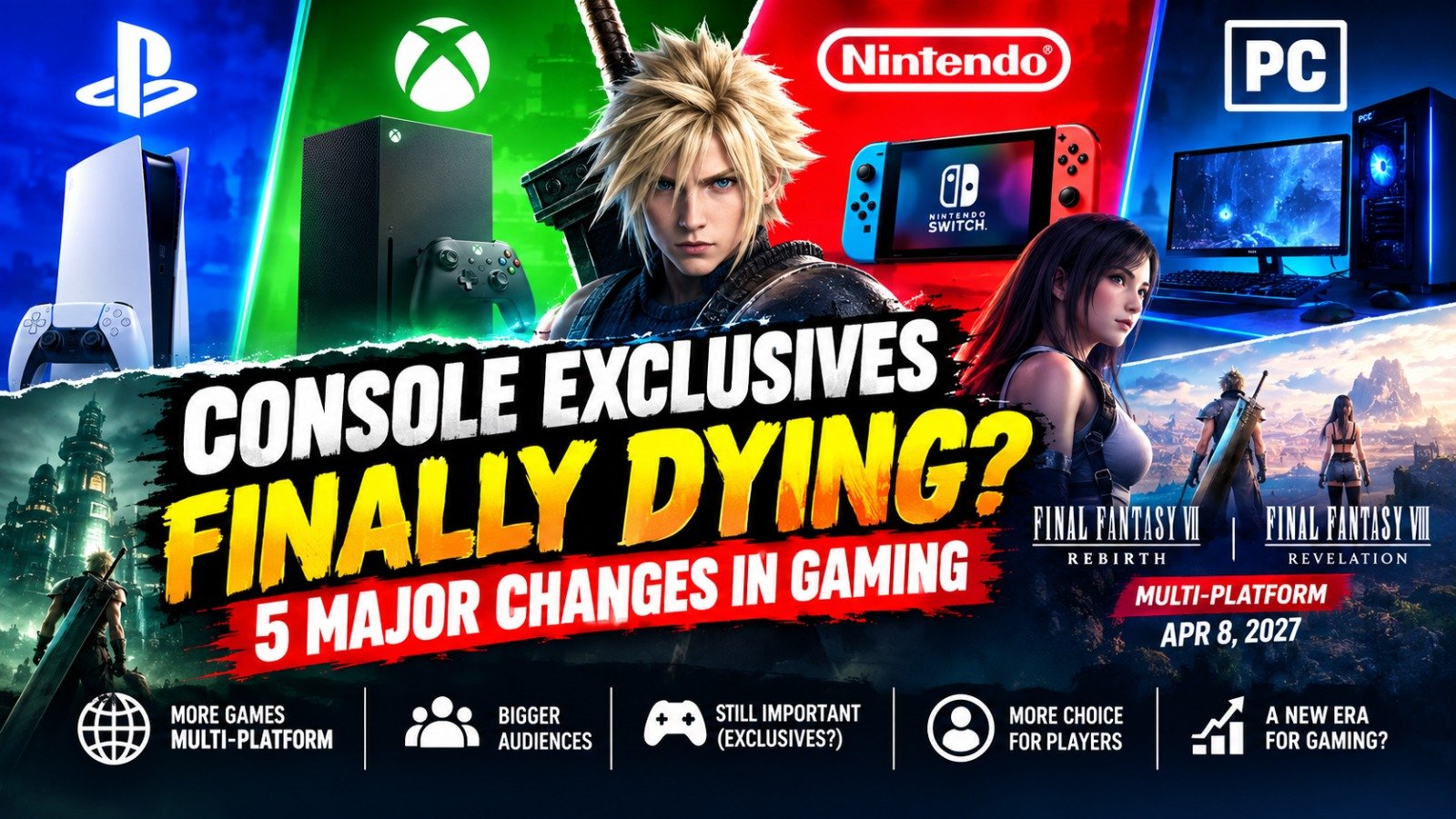
Console Exclusives
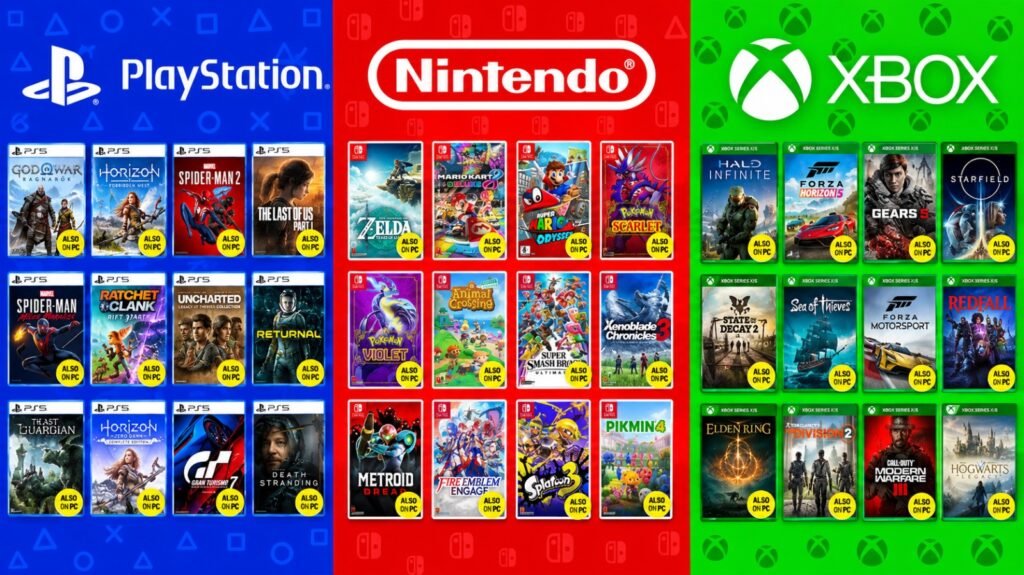
For years, console exclusives have played a major role in the gaming industry. PlayStation, Xbox, and Nintendo have used exclusive games to attract players, build loyal communities, and encourage people to choose one gaming system over another.
But the industry is changing. More games are launching on multiple platforms, previously exclusive titles are reaching new audiences, and publishers are exploring opportunities beyond a single console.
The Final Fantasy VII remake series offers an interesting example of this shift. Final Fantasy VII Rebirth, originally released on PlayStation 5, arrived on Xbox Series X|S and Nintendo Switch 2 in June 2026. Meanwhile, Final Fantasy VII Revelation, the final entry in the remake trilogy, is planned for simultaneous release across PlayStation 5, Nintendo Switch 2, Xbox Series X|S, and PC on April 8, 2027.
These developments raise an important question: are console exclusives finally becoming a thing of the past, or are gaming companies simply changing how they use them?
More Games Are Reaching Multiple Platforms
One of the clearest changes in gaming is the growing availability of major titles across different systems.
In the past, players sometimes had to purchase a specific console to experience a particular game. Today, publishers increasingly have reasons to bring their games to additional platforms.
Final Fantasy VII Rebirth illustrates this change. Following its original PS5 release in February 2024 and its PC release in January 2025, the game arrived on Nintendo Switch 2 and Xbox Series X|S on June 3, 2026.
This gives more players the opportunity to experience Cloud Strife’s adventure without purchasing a PlayStation 5 specifically for the game.
The next installment, Final Fantasy VII Revelation, takes the approach further by planning a simultaneous launch across multiple platforms. Its confirmed release date is April 8, 2027.
For players, wider platform availability can mean more choice. For publishers, it creates opportunities to sell games to audiences who might otherwise never purchase them.
However, not every game is becoming multiplatform. Some titles remain exclusive, while others arrive on additional systems months or years after their original release.
Why Do Gaming Companies Want to Reach More Players?
Developing a major video game can require years of work, large teams, expensive technology, and substantial marketing budgets.
Relying on a single platform limits the potential audience to people who own that system. Releasing a game on multiple platforms can expand its reach and create additional opportunities to generate revenue.
This is particularly relevant for large publishers with established franchises. A game that has already attracted attention on one platform may have another commercial opportunity when it reaches a new audience.
Multiplatform releases can also help publishers build a more consistent presence across the gaming market rather than depending entirely on hardware sales.
However, launching everywhere is not automatically the best strategy for every company. Porting games requires time and resources, and different systems can have different technical requirements. Publishers must weigh those costs against the potential benefits.
The business model is evolving, but platform exclusivity can still make financial sense in certain situations.
Are Console Exclusives Still Important?
Yes. Console exclusives can still influence purchasing decisions, even as multiplatform releases become more common.
A highly anticipated exclusive can encourage players to choose a particular console. It can also strengthen a platform’s identity and give its audience a reason to remain within its ecosystem.
Nintendo’s major franchises, for example, remain closely associated with Nintendo hardware. PlayStation and Xbox also continue to invest in games and services that distinguish their platforms.
The difference is that exclusivity does not have to mean the same thing in every situation.
Some games are permanently tied to one platform. Others are timed exclusives that arrive elsewhere later. Some are available across consoles and PC from launch, while certain games become accessible on additional systems through cloud gaming or subscription services.
This means the future is unlikely to be a simple choice between exclusive and multiplatform gaming. Instead, publishers may use different release strategies depending on the franchise, the audience, and the commercial goals.
What Does This Mean for Gamers?

For players, the expansion of major games across platforms can offer several advantages.
More hardware choice: Players may be able to enjoy major releases on the console or PC they already own.
Fewer reasons to buy another console: If the games someone wants are available on their existing system, purchasing additional hardware may become less necessary.
More competition: When games reach larger audiences, publishers may have stronger incentives to improve accessibility, performance, and overall player experience.
Different release schedules: Not every multiplatform game launches everywhere at the same time. Players may still need to wait for ports or choose a platform based on release timing.
There are also limitations. Performance can vary between systems, some features may differ, and cross-platform availability does not automatically mean cross-play or cross-progression is supported.
Players should check the official platform listings and feature details for each game rather than assuming every version offers exactly the same experience.
Ultimately, more choice can benefit gamers, but the details still matter.
Could Multiplatform Gaming Become the Industry Standard?
The direction of the industry suggests that publishers are increasingly willing to consider wider distribution. However, it would be premature to declare the end of console exclusives.
The Final Fantasy VII series demonstrates two approaches. Rebirth expanded to additional platforms after its original release, while Revelation is planned as a simultaneous multiplatform launch.
Both approaches can help a publisher reach more players, but they represent different release strategies.
In the future, some publishers may prioritize simultaneous launches, while others may continue using exclusivity agreements or platform-specific releases to support their hardware businesses.
Subscription services, digital distribution, and cloud gaming could also influence how players access games. Still, technical challenges, business partnerships, and hardware ecosystems will continue to shape decisions.
The most likely change is not the complete disappearance of exclusives, but greater flexibility in how and when games reach different audiences.
Final Thoughts
Console exclusives have helped define the gaming industry for decades, but their role is evolving. The expansion of Final Fantasy VII Rebirth and the planned multiplatform launch of Final Fantasy VII Revelation show how major franchises can reach players beyond a single console ecosystem.
For gamers, this shift could mean more options and fewer hardware restrictions. For publishers, it offers opportunities to expand audiences and generate revenue across different platforms.
Yet exclusives still have value, particularly for companies that use distinctive games to attract customers to their hardware and services.
Rather than asking whether console exclusives are completely dying, a better question may be how much longer publishers will rely on them as their primary competitive advantage.
What do you think? Should every major game launch on PlayStation, Xbox, Nintendo Switch, and PC from day one, or do console exclusives still make gaming more exciting? Share your opinion with the Altas Gaming community.
Table of Contents





Leave a Reply