

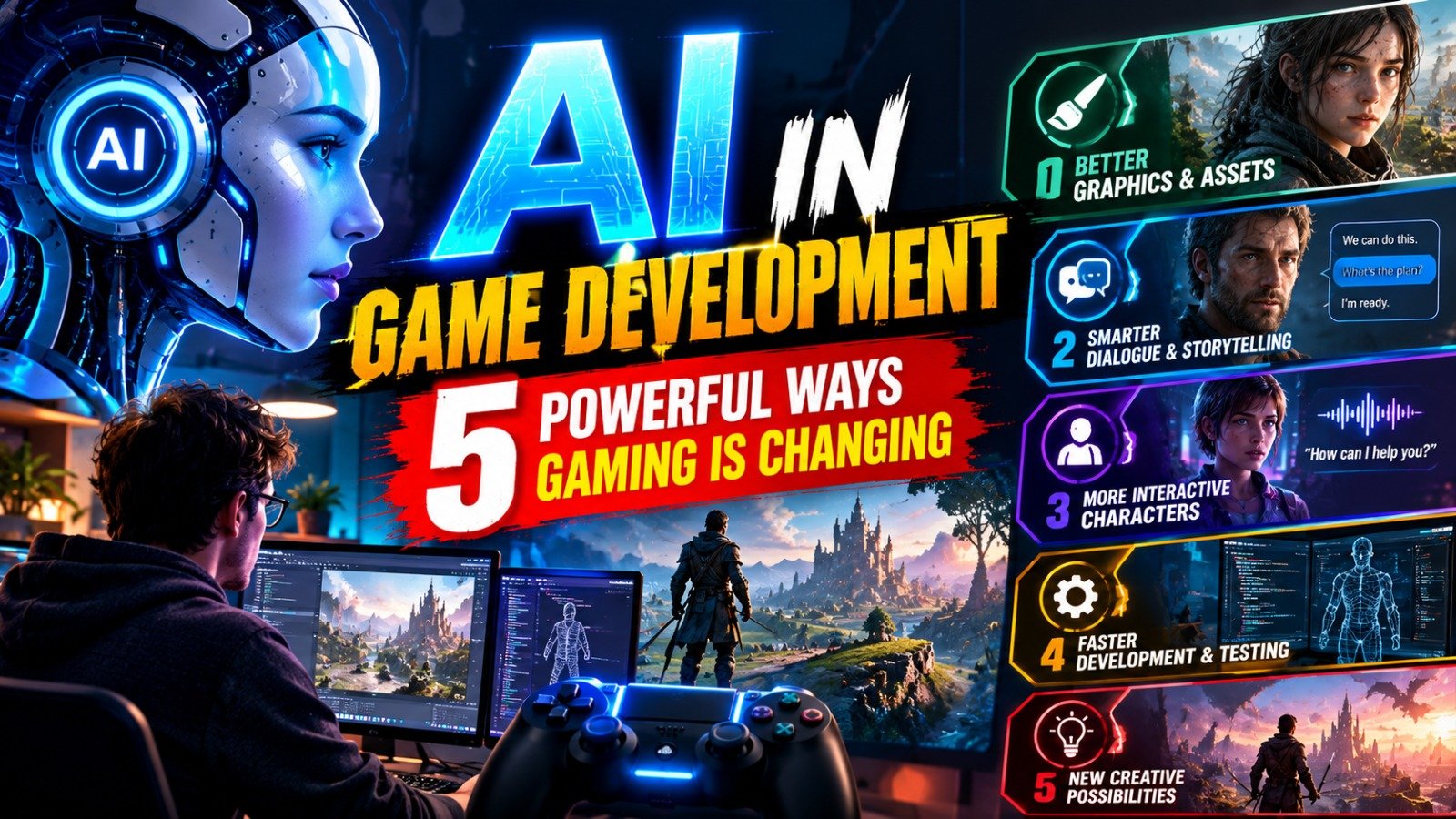
AI in Game Development
Artificial intelligence is becoming an increasingly important topic in the video game industry. From helping developers write dialogue to experimenting with more responsive characters, AI tools are creating new possibilities for how games are designed, developed, and played.
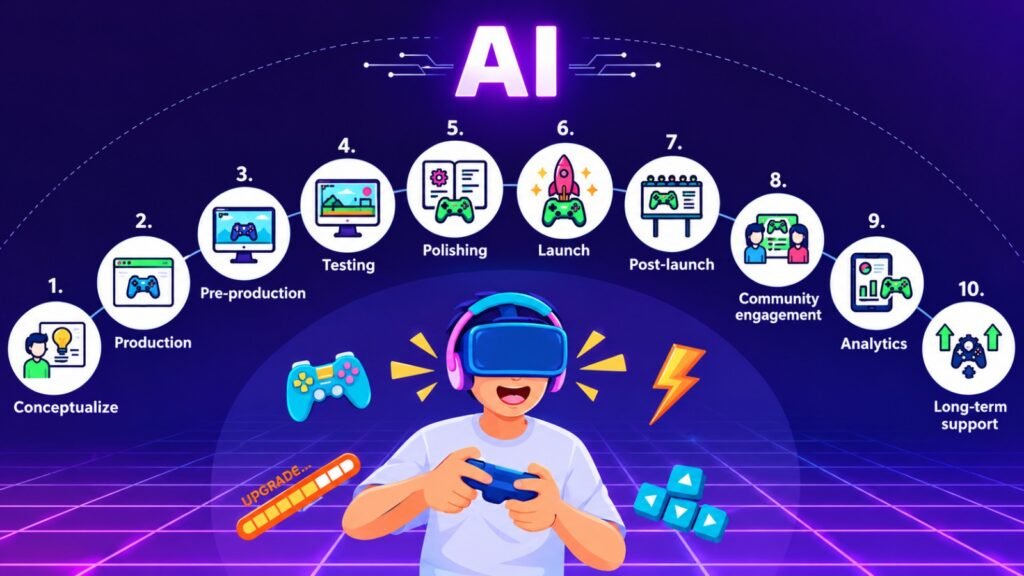
Ubisoft is among the major publishers exploring this technology. In September and October 2026, reports about an AI initiative called Motherbrain attracted attention after trademark filings connected the name with AI software for creating video games and interactive content.
According to Insider Gaming’s October 2026 report, Motherbrain is intended to support a broader generative AI effort at Ubisoft. However, Ubisoft has not publicly explained the initiative in detail, so its exact capabilities and implementation remain unconfirmed.
Motherbrain is part of a larger conversation about AI in game development. But what can this technology actually do, and could it change the way future games are made?
What Is Ubisoft’s Motherbrain AI Initiative?
Motherbrain is a reported name associated with Ubisoft’s expanding generative AI efforts. Recent coverage links it to trademark filings describing AI software for creating games and interactive content, along with other AI-related services.
The important distinction is that Motherbrain has not been publicly presented as a finished product for players. Ubisoft has not released a detailed feature list explaining exactly how it works or which games will use it.
Nevertheless, the reports have attracted attention because Ubisoft has already experimented with AI across several areas of game development.
The company has explored tools that assist writers, experiments involving more interactive non-player characters, and prototypes that allow players to communicate with AI-supported teammates using voice commands.
These projects provide useful context for understanding why a broader AI initiative could matter. They do not, however, confirm that every existing experiment is part of Motherbrain.
For now, Motherbrain should be viewed as a reported development initiative rather than a confirmed feature coming to an upcoming Ubisoft game.
AI Can Help Developers Create Game Dialogue
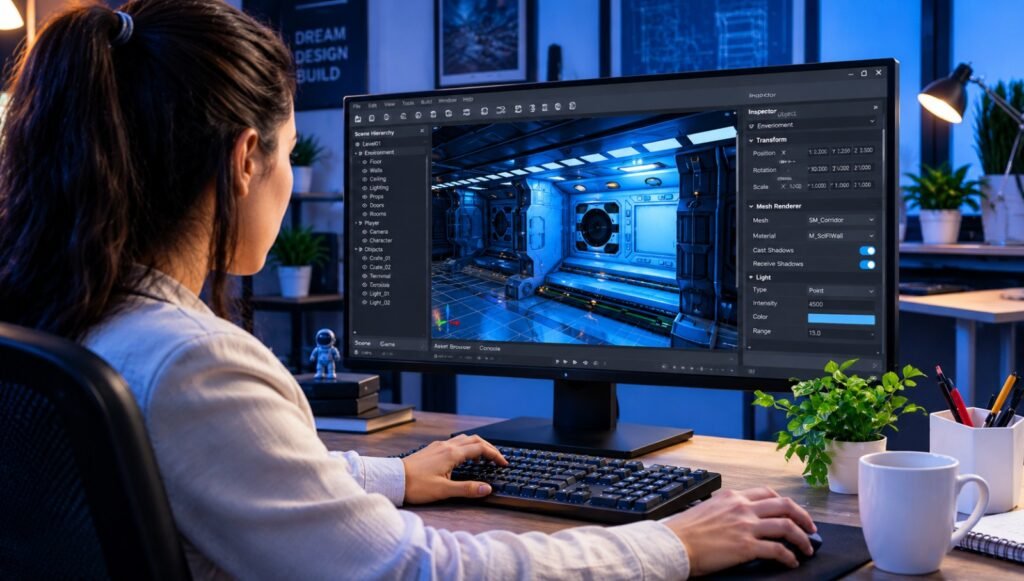
Writing dialogue for a modern video game can be a demanding task. Large games may contain thousands of spoken lines, background conversations, character reactions, and interactions that change depending on what the player does.
Ubisoft has already explored how AI can assist with this process through a tool called Ghostwriter.
According to Ubisoft’s official explanation of Ghostwriter, the tool was developed to help writers produce first drafts of short background lines, often called barks. These are brief phrases characters might say during gameplay.
For example, a character in an action game might shout a warning when an enemy appears or react to something happening nearby. Writers may need to create many variations of these lines to make the world feel alive.
AI assistance can help generate initial options, allowing writers to spend more time refining dialogue, character personalities, and story details.
However, generating a draft is not the same as producing finished writing. Human developers still need to review the results, maintain consistency, and ensure that dialogue fits the game’s tone and world.
The potential benefit is not necessarily removing writers from development. It is finding ways to reduce repetitive work while keeping creative decisions in human hands.
AI Could Make Game Characters More Interactive
Traditional video game characters generally respond through dialogue trees, scripted scenes, and predefined reactions. Although these techniques can create memorable experiences, they also place limits on how freely players can interact with characters.
Generative AI offers another possibility: characters that respond more flexibly to a player’s questions or actions.
Ubisoft explored this idea through its NEO NPC research project, which investigated generative AI for more spontaneous conversations with non-player characters.
The company later introduced Teammates, a playable AI research experiment announced in November 2025. It explored voice commands, responsive AI teammates, and character interactions that could adapt to what players said.
Imagine asking a companion to distract an enemy, explain a location, or help plan an approach rather than selecting from a small list of fixed responses.
This kind of interaction could make certain games feel more dynamic. It could also create new challenges, including keeping conversations relevant, preventing inappropriate responses, and ensuring characters remain consistent with the story.
These experiments demonstrate what developers are exploring, not a guarantee that every future game will feature fully conversational characters.
How AI Could Change the Game Development Process
AI can affect more than dialogue and character interaction. Developers are also investigating its potential in areas such as animation, testing, asset creation, data analysis, and development support.
Here are five possible applications:
Faster prototyping: Developers could use AI-assisted tools to explore ideas and test early versions of gameplay before committing extensive resources.
Dialogue drafting: Writers could generate initial variations of background conversations and then refine the strongest options.
Testing assistance: AI-based systems may help identify bugs, unusual player behaviours, or gameplay situations that require further testing.
Character behaviour: AI could help create more responsive non-player characters or companions in carefully controlled scenarios.
Development support: Teams may use AI to assist with repetitive tasks, organize information, or speed up certain technical workflows.
These applications have different levels of maturity. Some are already being explored in real development environments, while others remain experimental or depend on the specific tools being used.
AI also cannot automatically solve the biggest challenges in game development. Building an engaging game still requires creative direction, technical expertise, design decisions, testing, and coordination between different teams.
The most useful applications are likely to be those that solve clear problems without introducing new quality or production risks.
Could AI Replace Game Developers?
This is one of the biggest concerns surrounding AI in gaming.
If a tool can generate dialogue, images, code, or other development assets, some people worry that studios might use it to reduce their reliance on human workers.
AI could change the tasks developers perform, and some workflows may require fewer manual steps. But it would be inaccurate to conclude that AI will simply replace entire development teams.
Games involve interconnected creative and technical decisions. A generated asset still needs to fit the art direction, a line of dialogue must suit the character, and a new gameplay system must work reliably with the rest of the game.
There are also important questions about quality, copyright, training data, consent, and the use of creative work in AI systems.
For studios, the challenge is deciding where automation adds genuine value without damaging the originality or quality of their games. For developers, the challenge is understanding new tools while continuing to build the creative, technical, and collaborative skills that make games successful.
AI’s impact on employment will depend on how individual companies implement the technology, which tasks change, and how the industry responds.
What Does Ubisoft’s AI Push Mean for Gamers?
For players, the most meaningful question is not simply whether a game uses AI. It is whether the technology improves the experience.
Better character reactions, more believable companions, useful accessibility features, and smoother development workflows could all provide benefits if implemented well.
On the other hand, poorly controlled AI could produce repetitive dialogue, inconsistent characters, technical problems, or content that feels generic.
Gamers may also want greater transparency about how AI is used, particularly when it affects voice acting, writing, art, or other creative contributions.
Motherbrain has generated interest because it may signal a broader direction for Ubisoft’s AI work. But without a detailed public announcement, players should avoid assuming that it will introduce specific features or appear in particular games.
The real test will be whether future implementations deliver meaningful improvements rather than using AI simply because the technology is attracting attention.
Final Thoughts
AI is creating new possibilities for video game development, from assisting writers to exploring more responsive characters and improving selected production workflows.
Ubisoft’s reported Motherbrain initiative adds another development to watch, while Ghostwriter, NEO NPC, and Teammates offer more concrete examples of the company’s publicly discussed AI experiments.
Still, AI is a tool rather than a guarantee of better games. Its success will depend on how thoughtfully developers use it, how well the results are tested, and whether human creativity remains central to the process.
For gamers, the future could bring more interactive worlds and characters. For developers, it could mean new workflows, new responsibilities, and difficult questions about creative ownership and employment.
What do you think? Will AI make future games more immersive, or could it make them feel less original? Share your thoughts with the Altas Gaming community.
Table of Contents





Leave a Reply