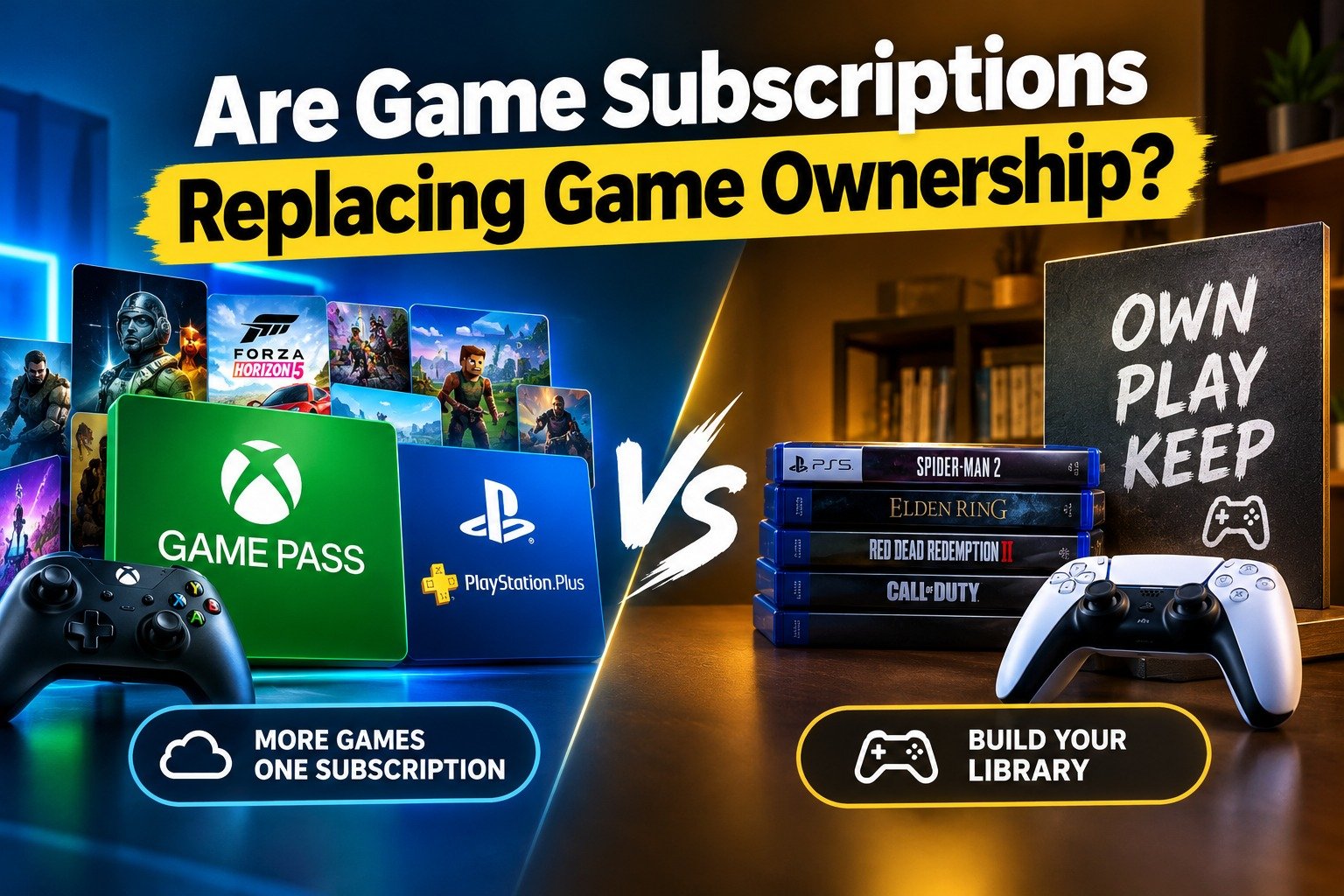
Game Subscriptions
Gaming has changed significantly over the past decade. Players once purchased individual games on discs or downloaded them permanently to their gaming libraries. Today, subscription services offer access to large collections of games for a recurring monthly or yearly fee.
Services such as Xbox Game Pass and PlayStation Plus allow players to explore different titles without purchasing each one separately. This can make gaming more affordable and convenient, particularly for players who enjoy trying new releases and different genres.
However, subscriptions also raise an important question: are gamers moving away from owning games and toward paying for temporary access?
The answer is not straightforward. Subscriptions are changing how people discover and play games, but traditional purchases still offer advantages that matter to many players.
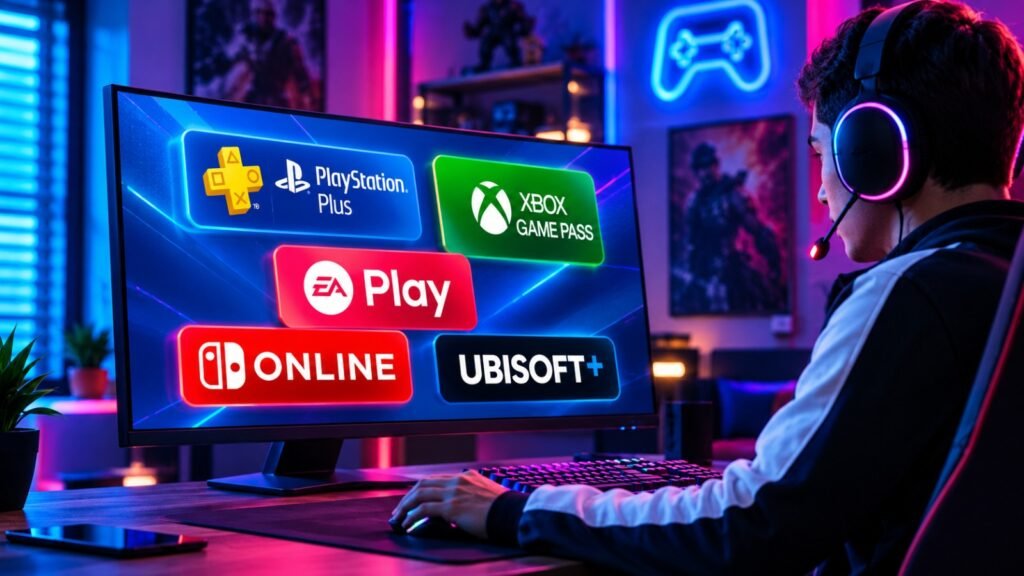
Why Game Subscriptions Are Becoming Popular
One of the biggest attractions of game subscriptions is access to a large library for a single recurring payment.
Instead of buying several games individually, subscribers can explore multiple titles included in their chosen plan. This encourages players to try unfamiliar genres, discover independent games, and experience titles they might otherwise skip.
For example, Xbox Game Pass offers different membership options with benefits that vary by plan. Similarly, PlayStation Plus provides game catalogs and other benefits depending on the membership tier.
Subscriptions can be particularly useful for players who finish games quickly or enjoy having several options available. They can also reduce the upfront cost of trying a game that might not match their expectations.
However, the value depends on the games included, the subscription price, and how frequently the player actually uses the service.
The Biggest Problem With Subscription Gaming
The main drawback is that access to a subscription catalog is not the same as permanently owning a copy of every game in it.
Games can leave a service when licensing agreements expire or publishers change their distribution plans. When a title leaves a catalog, subscribers generally need to purchase it separately if they want to continue playing it through that platform.
This creates a challenge for players who prefer to complete games at their own pace or revisit favorites years later.
Subscriptions also involve recurring costs. A monthly payment may appear inexpensive, but the total can become significant over several years. Players who regularly use multiple gaming subscriptions may end up spending more than expected.
Another concern is availability. If a subscription ends, access to games that require an active membership may be restricted until the membership is renewed. The exact rules depend on the service and the game.
Buying Games Still Has Important Advantages
Purchasing games individually remains attractive for several reasons.
1. More Predictable Long-Term Access
When players buy a game, they generally expect to keep access under the platform’s applicable terms. However, a digital purchase is usually a license rather than unrestricted ownership of the software itself.
For example, Steam’s Subscriber Agreement states that its content is licensed, not sold. Digital purchases therefore do not necessarily provide the same rights as owning a physical object.
Even so, purchasing a game individually means access is not normally tied to maintaining a subscription to a rotating game catalog. Platform rules, account access, compatibility, and online requirements can still affect long-term availability.

2. Physical Games Can Be Resold
Physical discs and cartridges can often be resold or exchanged, depending on the format and applicable restrictions.
This gives players an opportunity to recover some of their spending after finishing a game. Digital purchases usually do not offer the same straightforward resale option.
For budget-conscious gamers, the second-hand market can make individual purchases more economical over time.
3. Better Value for Favorite Games
Some players repeatedly return to the same games rather than constantly trying new releases. For these gamers, purchasing a favorite title can offer better value than paying for a subscription primarily to access it.
The longer someone plays a purchased game, the more time they may get from that initial payment without needing to renew a subscription for that title.
Are Subscriptions Actually Cheaper?
Subscriptions can be cheaper, but not in every situation.
Consider two different types of gamers.
The variety-focused gamer: Someone who plays several games each month may benefit from a subscription because one payment provides access to multiple titles.
The selective gamer: Someone who plays only one or two games for long periods may spend less by purchasing those titles individually, especially during sales.
There is also a third group: players who combine both approaches. They subscribe to explore a library, then purchase the games they want to keep playing.
The smartest option depends on your habits, local prices, subscription benefits, and the availability of discounts.
What This Means for Game Developers
Subscription services can introduce games to audiences who might never have purchased them at full price. Greater exposure can help players discover smaller studios and independent titles.
However, subscriptions also change how games are distributed and monetized. Developers and publishers must consider whether a subscription deal supports their goals, including audience growth, revenue, and long-term sales.
The impact is not identical for every studio. Some games may benefit from wider discovery, while others may rely more heavily on direct purchases. The financial terms of individual agreements are not always public, so it is difficult to make one general claim about whether subscriptions are better for developers.
Will Game Ownership Disappear?
Game subscriptions are likely to remain an important part of the industry, but that does not mean individual purchases will disappear.
Subscriptions offer convenience, variety, and an easy way to discover games. Individual purchases appeal to players who want to build a lasting library, collect physical editions, or avoid recurring payments.
The future of gaming may involve a mixture of subscription catalogs, digital storefronts, physical releases, and free-to-play games. Different models can serve different audiences.
The more important question is whether players understand what they are paying for. Access to a library can be valuable, but it is different from purchasing a particular game under the platform’s terms.
Final Verdict
Are game subscriptions replacing game ownership? Not completely. They are changing how players access games, but buying individual titles still makes sense for people who value long-term access, collecting, and resale opportunities.
If you enjoy trying many games, a subscription may be worth the cost. If you prefer a smaller collection of favorites, individual purchases could be the better choice.
For many gamers, the ideal solution is a combination of both: subscribe for discovery, then purchase the games worth keeping.
What do you prefer: paying for a game once or subscribing to access hundreds of titles? Share your opinion in the comments.
Table of Contents

Leave a Reply