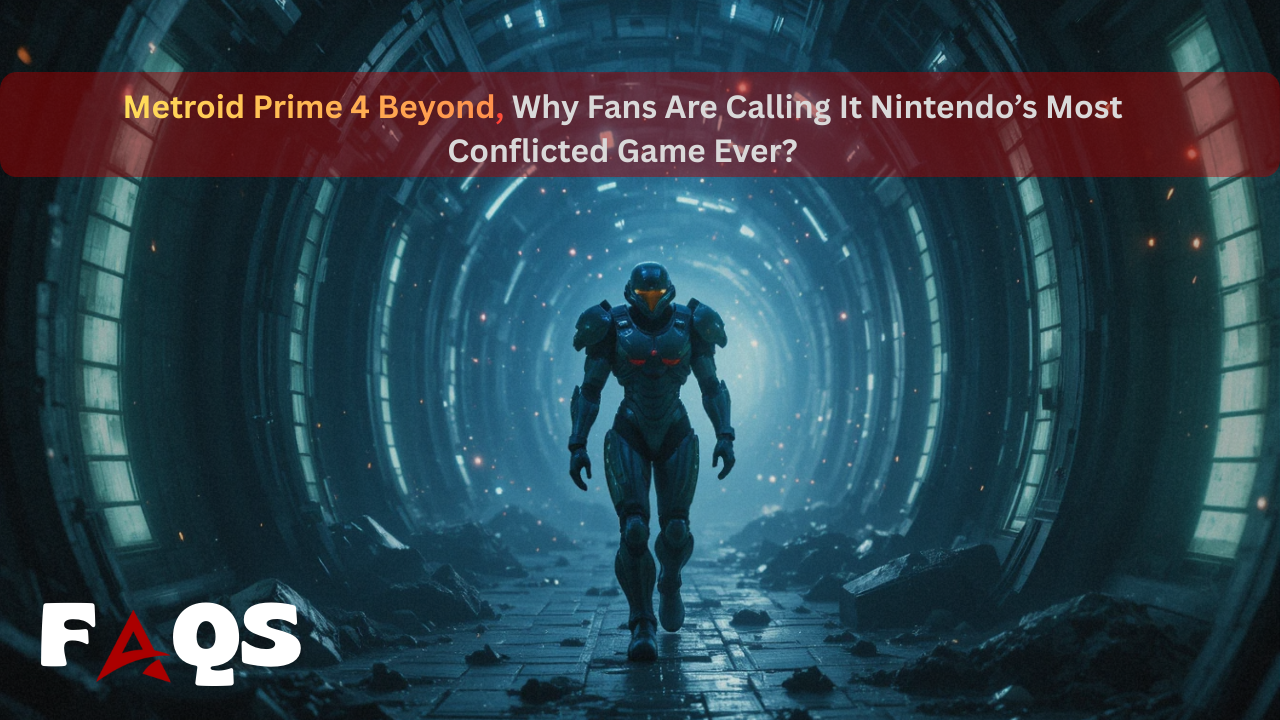
Metroid Prime 4 Beyond, Why Fans Are Calling It Nintendo’s Most Conflicted Game Ever?
Why the Hype Was Massive
When Nintendo revealed Metroid Prime 4 Beyond, expectations soared. The franchise had been dormant for years, and fans dreamed of a return to the atmospheric, exploration-heavy, first-person Metroidvania that defined the original Prime trilogy. Add to that the power of the next-generation hardware (Switch 2, presumably) higher fidelity, smoother performance, richer lighting and effects and many assumed we’d get a “Prime 4” that lifted the whole series into a new technical era.
In many ways, Beyond delivers on that promise
- Stunning graphics and environmental detail lighting, textures, effects, and atmospheric design evoke the best aspects of modern AAA games.
- Smooth engine performance for the most part: load times, frame rate stability (in many modes), and big open-ish environments feel technically solid.
- Ambitious scale: the world design attempts to combine the “open-area Metroidvania” model with first-person shooter/action mechanics, aiming for a “living world” feel.
So on paper and when you boot up the game Metroid Prime 4 Beyond looks like what many long-time fans hoped for.
The Design & Gameplay Problems That Frustrate Players
Yet beneath the beautiful shell lies a growing body of criticism from reviewers and regular players who argue that Beyond fails not because of technology but because of old and new design choices that clash badly. Some of the recurring complaints:
1. Weak Level Design & Pacing Issues
Where the original Metroid Prime games balanced tight level layouts, environmental storytelling, and thoughtful exploration, Beyond sometimes feels bloated or unfocused. Critics say:
- Certain areas drag: too many corridors or “empty filler zones” that don’t reward exploration.
- The balance between action-heavy segments and exploration gets skewed; some firefights feel shoe-horned into what should be atmospheric exploration.
- Key classic elements hidden item-morphing puzzles, back-tracking based on newly acquired abilities feel underused or simplified.
2. Narrative and Atmosphere Fell Short for Some Fans
Metroid has always been about mood, isolation, and discovery. Some players believe Beyond sacrifices too much of that spine-chilling tension:
- Enemies respawn too quickly, even in supposedly “calm” zones, undermining the sense of danger or solitude.
- The story while serviceable lacks the sparse, cryptic subtlety of earlier titles; cutscenes and dialogue sometimes feel overly explicit or ham-fisted.
3. UI/UX and Control Issues
Despite modern hardware, some elements reportedly feel “old-school in the wrong way”:
- Map navigation and fast-travel systems: players say that The map is cluttered, and fast-travel points can be sparse.
- Inventory & item management feels clunky compared to what a next-gen title should deliver leading to frequent menu breaks in the flow.
4. High Expectations vs. Reality Leading to Buyer’s Remorse
On launch and shortly after, many players (especially those owning Switch 2) expressed regret
- “I thought I was buying a next-gen classic, but it plays like a remake of something old.”
- “The tech is amazing, but I spend more time frustrated by design flaws than enjoying the world.”
- Some say that given the game’s flaws, older consoles or remasters of classic Prime games might have been more satisfying.
Why “A Technical Marvel” Might Not Be Enough to Save the Reputation
When a game looks amazing but feels mediocre, players react harshly. Beyond’s situation highlights a fundamental tension
- Graphics ≠ Gameplay Quality. A beautiful game doesn’t automatically translate to a great game.
- Legacy Expectations. Long-time fans have deep nostalgia for how Metroid used to feel and Beyond sometimes departs from those core feelings in ways that feel wrong.
- Modern Audience vs. Classic Fans. New players might appreciate the spectacle, but for fans of the old Metroid Prime rhythm subtle exploration, silent storytelling, methodical pacing Beyond can feel like a betrayal.
As one user comment put it (on a Reddit thread)
“It’s like giving a Ferrari engine to a shopping cart. It looks amazing until you try to steer.”
Lessons for Game Developers (and the Industry)
Metroid Prime 4 Beyond’s mixed reception offers broader lessons
- Never sacrifice core gameplay identity for technical bells and whistles. Fans turned to Metroid for its atmosphere and gameplay design upgrading graphics shouldn’t override that DNA.
- Next-gen hardware ≠ next-gen game design. Using powerful hardware to mimic old formulas only amplifies flaws.
- Player expectations evolve but so should design philosophies. Nostalgia can’t carry a game. Innovation must be meaningful.
- Transparency & messaging matter. If developers market a game as “next-gen experience,” but deliver “classic with polish,” players feel misled.
Is Beyond a Failure or a New Beginning?
Metroid Prime 4 Beyond is neither a catastrophic failure nor a flawless triumph. It sits somewhere in a challenging middle ground:
a game of contrasts gorgeous in places, frustrating in others.
For newcomers, it may still deliver a powerful, beautiful experience.
For longtime fans, it may feel like a compromise a missed opportunity to reinvigorate what made the original trilogy special.
If Nintendo and its developers take the feedback seriously learn from the mistakes, refine the design in patches or future projects Beyond could end up being a stepping stone toward a reinvented Metroid for the modern age.
But for now, the question remains
Is cutting-edge tech enough when the soul of the game feels hollow?
 LTAS OPINION
As Atlas, here is the grounded, unfiltered perspective

Metroid Prime 4 Beyond is a textbook example of what happens when technical ambition outruns game-design philosophy.
Nintendo clearly poured immense resources into the visual engine the lighting, environmental density, particle effects, creature animation, and biome rendering surpass anything previously seen in the franchise. On a purely technical level, this is the Metroid game fans have dreamed of for decades.
But technology cannot replace the identity of a series.
The original Metroid Prime trilogy had a soul silence, tension, labyrinthine puzzles, and a sense of alien loneliness that shaped every room. Beyond, instead, feels engineered for modern action-FPS audiences. Enemy density is higher, pacing is faster, and exploration is sometimes sacrificed for spectacle.
The tension between modern-game expectations and Metroid’s original DNA creates friction.
It is visually flawless yet spiritually conflicted.
If Nintendo chooses to iterate, patch, and redesign sections based on feedback, Beyond could evolve into a masterpiece. But in its launch state, it stands as a reminder:
“Technical genius without cohesive design becomes noise.”
FAQs
1. Why do some players say Metroid Prime 4 “feels like a different franchise”?
Because the game prioritizes cinematic set pieces and combat density over slow-burn environmental puzzles. This shift changes the emotional rhythm leaving older fans feeling displaced.
2. Does Metroid Prime 4 reward players who explore every corner of the map?
Not always. Unlike classic Prime titles, several regions feel visually rich but mechanically empty, causing players to question whether exploration is still the core mechanic.
3. Why do Switch 2 players specifically report buyer’s regret?
The hardware is so powerful that players expected a revolutionary design leap not just better graphics. The mismatch between visual evolution and gameplay stagnation creates disappointment.
4. Are the criticisms about level design fixable?
Yes. The game’s foundation is strong. Nintendo could address pacing, fast travel spacing, enemy respawn logic, and environmental puzzles through updates.
5. Is Beyond more fun for new players or returning Metroid fans?
New players often enjoy the spectacle more they’re not comparing it to the atmospheric precision of the older Prime trilogy.
Table of Contents
- Resident Evil Requiem Becomes 2026’s Highest-Rated Game – A Survival Horror Masterpiece or an Overhyped Sequel That Loses Steam?
- Black Ops 7 Sets a New Standard for Tactical FPS Combat – But Controversy and Matchmaking Frustrations Spark Debate
- Ghostrunner 2 Free on Epic Games, A Cyberpunk Masterpiece of Relentless Action – or a Brutally Punishing Game That’s Too Hard to Love?
- Code Vein II Is a Beautiful Evolution – But Its Uneven World Holds It Back! Or Does It Still Lack the Crown? (Feb 2026)
- Nioh 3 Review- A Brutal Soulslike Masterpiece That Perfects Samurai Combat – Or an Unforgiving Grind That Pushes Players Too Far?
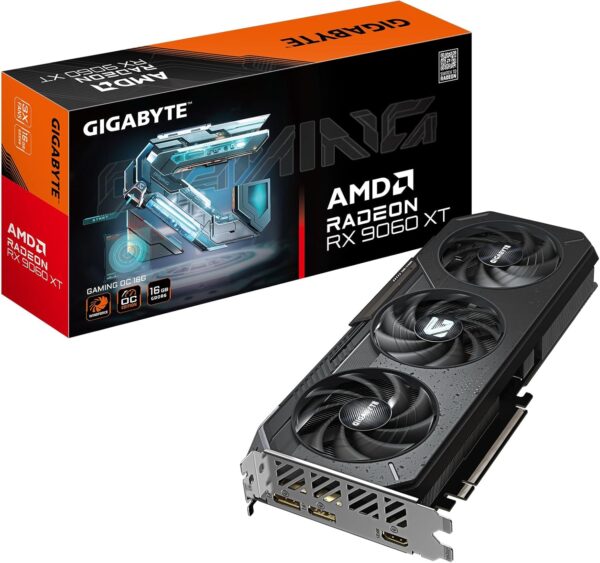
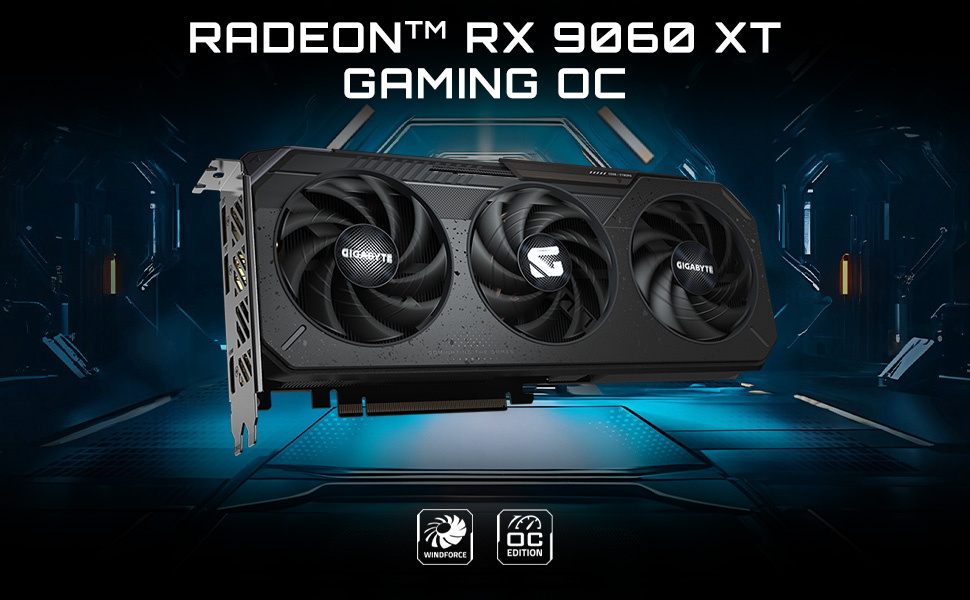
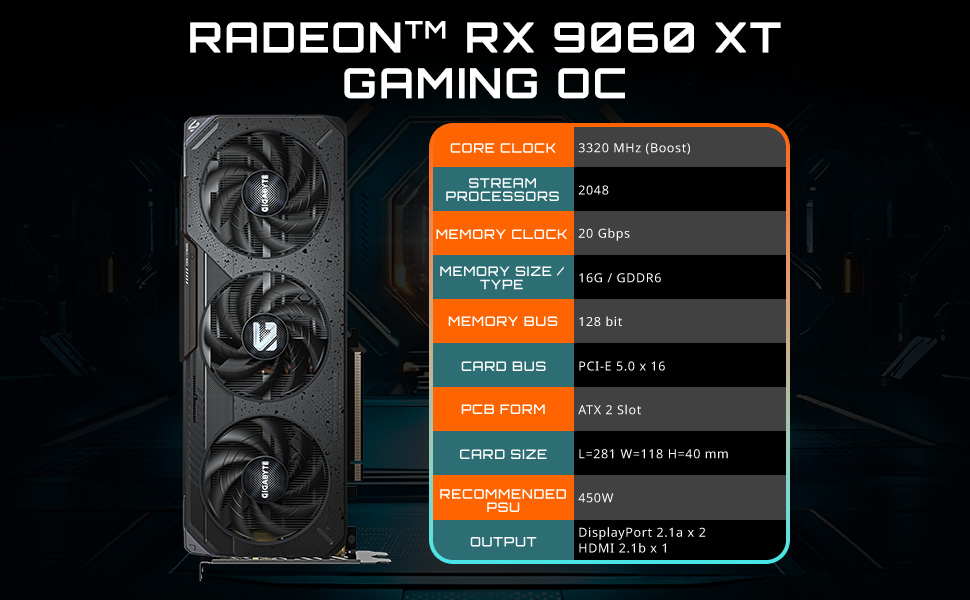
GIGABYTE Radeon RX 9060 XT Gaming OC 16G Graphics Card
What’s in the box
- GPU
- Manual




Leave a Reply