
Michael A. Gayed Warns of a Deflationary Shock If the FTSE Crashes 20%, These Are the 2 Stocks I’ll Buy First December Buying Plan

Introduction
Wall Street veteran Michael A. Gayed has raised alarm bells: he warns that the markets may be heading toward a deflationary shock, potentially triggered by a steep stock-market crash. (Traders Union)
With global economic headwinds mounting and valuations stretched, a 20% drop in the FTSE could become more than a hypothetical scenario. In this article, we dissect Gayed’s warning, explore what such a crash could mean for investors and, importantly, reveal which stocks I (Altas) would target first if the sell-off hits. We also answer lesser-asked questions and share an unfiltered “Altas Opinion.”
Who Is Michael A. Gayed & Why His Warning Matters
- Michael A. Gayed is known for his bold, often contrarian calls. He has repeatedly cautioned that defensive assets gold, utilities, long-term bonds moving up in unison while risk assets rally en masse is a classic signal of a looming market shift. (markets.businessinsider.com)
- In his recent note, he suggests a “deflationary shock” could be just what the economy needs to reset overpriced valuations and pave the way for more sustainable pricing. (Traders Union)
- Historically, such warnings have preceded significant corrections. Gayed’s previous analyses even flagged moments where markets looked eerily similar to pre-crash conditions of past bubbles. (markets.businessinsider.com)
Given this, his warning should not be ignored especially by investors with high exposure to risk assets or overvalued sectors.
What a 20% FTSE Crash Could Trigger
If the FTSE 100 or broader European/ global markets drop 20%, the ramifications could include:
- Massive drawdowns in large-cap equities, particularly high-valuation stocks.
- Deflationary pressure: asset-price collapse often drags down consumer confidence, spending, and corporate earnings possibly leading to lower prices (deflation) rather than inflation. This aligns with Gayed’s “deflationary shock” thesis. (Traders Union)
- Shift to safe-haven assets: historically, when panic arrives, investors rotate to gold, bonds, and defensive plays (utilities, stable dividend stocks) which Gayed notes already trending upward. (markets.businessinsider.com)
- Longer-term opportunity: if prices overshoot downward, valuations might become attractive offering entry points for long-term investors who can stomach volatility.
In short: a 20% crash could be painful but could also set the stage for strategic buying by those with resilient nerves and a long-term horizon.
The Two Stocks I’d Buy First if Crash Hits
Based on the current environment + Gayed’s signals + my own conviction (Altas Opinion), I’m eyeing these two types of stocks if the FTSE tanks ~20%:
| Stock Type | Why I Like It |
|---|---|
| Defensive / Dividend-Focused Blue-Chips | In a deflationary downturn, companies with strong balance sheets, stable dividends, and low volatility tend to outperform. These offer downside protection and yield something many risk-heavy growth names cannot guarantee. |
| Under-priced, value-oriented cyclicals with long-term cash flow potential | A crash often wipes out speculative excess. That’s when fundamentally sound cyclicals battered but with real value become bargains. Buying such firms at a discount can yield outsized returns over 3–5 years. |
Concretely, I would lean toward:
- Large-cap dividend payers in sectors like consumer staples, utilities or defensive industries (where cash flow and resilience matter more than growth hype).
- Cyclical firms that have been oversold, but possess strong fundamentals, manageable debt, and realistic long-term growth prospects.
⚠️ Important: I’m not naming specific tickers because markets are volatile, and what qualifies as “value” may change drastically if the crash deepens. Instead, focus on criteria (dividend stability, low valuation, cash flow, balance sheet strength).
 ltas Opinion Why This Could Be More Than Just a Correction

I believe this is not just another market wobble or short-term correction. A few reasons:
- Macro stress is building globally elevated interest rates, inflation fatigue, slowing growth in major economies. If demand tanks, a deflationary cycle could indeed unfold.
- Valuations remain stretched, especially in growth/hyped sectors. When sentiment turns, these tend to overshoot downward.
- Behavioral overreaction: In a panic, investors often flee not just overpriced assets but good assets too. That’s when disciplined investors who know what they hold can capture real value.
So yes I believe if a 20% crash in FTSE happens, it might mark the beginning of a multi-year “reset and accumulation” phase, not just a bounce.
Risks & What to Watch Out For
- Not all value or dividend-stocks are safe: high debt, weak cash flow or poor business models can still get battered.
- Timing the bottom is nearly impossible trying to catch the exact floor can lock you out of gains.
- Global macro factors (interest rates, inflation, geopolitical events) can derail even defensive stocks.
- Psychological pressure investors often panic-sell in crash. Discipline is key.
FAQs
Q1: If deflation hits, are dividends safe?
A: Dividends aren’t guaranteed. Companies may cut dividends if cash flow collapses. That’s why you must focus on firms with strong balance sheets, low debt, stable earnings not just high yield.
Q2: Should I move to cash or gold first when crash starts?
A: Historically, defensive assets like gold and high-quality bonds rally first but that doesn’t always beat value stocks over 3–5 years. A balanced approach (some in cash/gold, some in undervalued equities) often works best.
Q3: How to identify “value” vs “value trap” during crash?
A: Look beyond low stock price. Evaluate debt levels, cash flow stability, competitive positioning, and long-term demand for the company’s products/services.
Q4: Will a crash guarantee lower valuations of good companies?
A: Not always. In some cases, even high-quality firms drop irrationally. But history shows that over time, markets tend to correct offering long-term investors a chance to earn outsized returns.
Q5: Could central banks prevent a deflationary shock by aggressive stimulus?
A: Possibly but heavy intervention may cause distortions elsewhere (inflation rebound, asset bubbles in other sectors). That uncertainty is exactly why diversification matters.
Conclusion
Michael A. Gayed’s warning of a deflationary shock and a possible 20% crash in the FTSE should not be dismissed lightly. For disciplined investors with patience and foresight a crash could be a rare buying opportunity.
If I were investing now (with a long-term horizon), I’d target defensive blue-chips with strong dividends and undervalued cyclicals with real fundamentals. But above all: stay diversified, don’t chase hype, and prepare mentally for volatility.
Table of Contents
- Resident Evil Requiem Becomes 2026’s Highest-Rated Game – A Survival Horror Masterpiece or an Overhyped Sequel That Loses Steam?
- Black Ops 7 Sets a New Standard for Tactical FPS Combat – But Controversy and Matchmaking Frustrations Spark Debate
- Ghostrunner 2 Free on Epic Games, A Cyberpunk Masterpiece of Relentless Action – or a Brutally Punishing Game That’s Too Hard to Love?
- Code Vein II Is a Beautiful Evolution – But Its Uneven World Holds It Back! Or Does It Still Lack the Crown? (Feb 2026)
- Nioh 3 Review- A Brutal Soulslike Masterpiece That Perfects Samurai Combat – Or an Unforgiving Grind That Pushes Players Too Far?
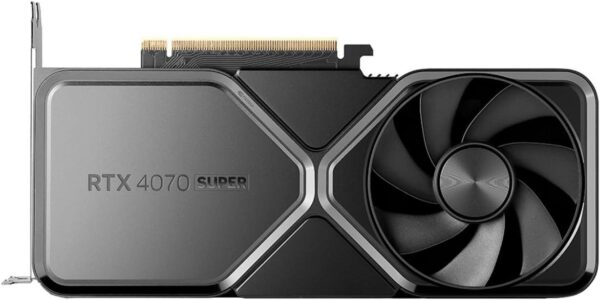
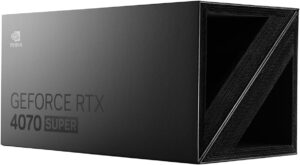
NVIDIA – GeForce RTX 4070 Super 12GB GDDR6X Graphics Card – Titanium/Black
Product Description
Get ready for stellar gaming and creating with the NVIDIA GeForce RTX 4070 SUPER. It is built with the ultra-efficient NVIDIA Ada Lovelace architecture. Experience fast ray tracing, AI-accelerated performance with DLSS 3, new ways to create, and more.
Product information




| Product Dimensions | 9.61 x 9.61 x 0.04 inches |
|---|---|
| Item Weight | 3 pounds |
| Manufacturer | Nvidia |
| ASIN | B0CT8LQZ47 |
| Customer Reviews |
4.0 out of 5 stars |
| Best Sellers Rank |
|
| Date First Available | May 13, 2024 |
Leave a Reply