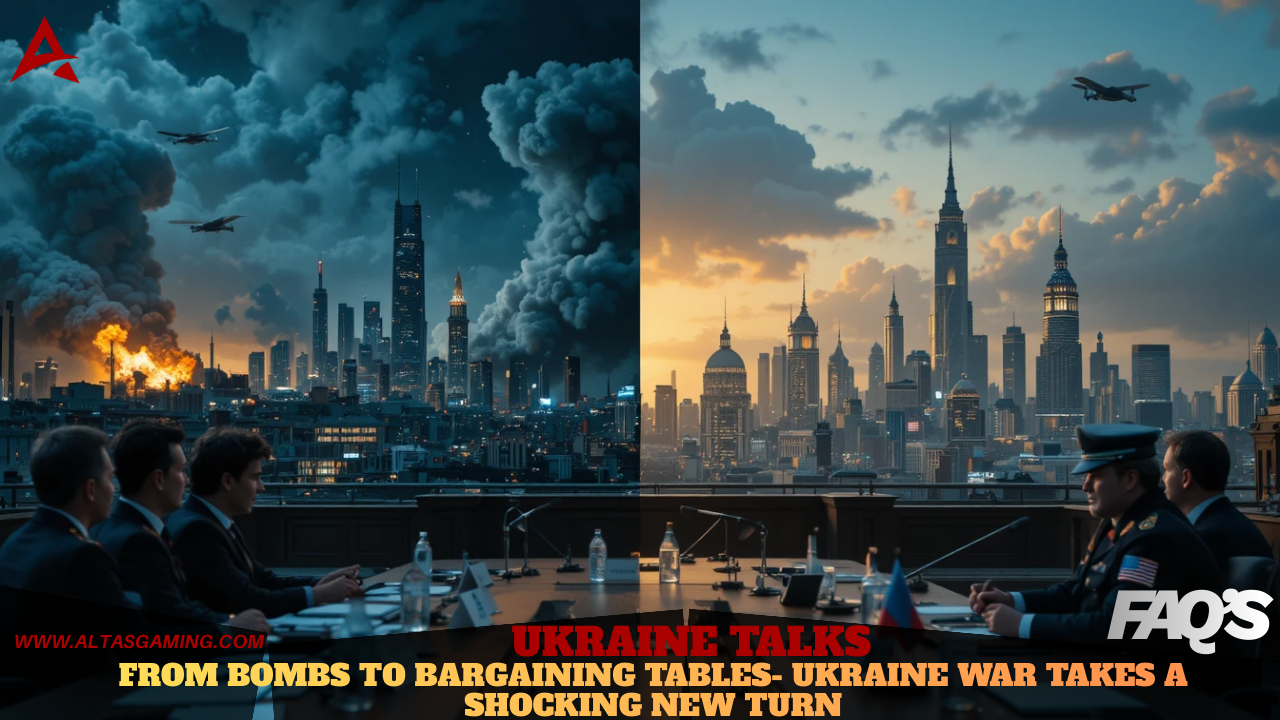
⚔️ War and Peace at the Same Time- Russia Strikes Kyiv as Ukraine, Russia, and U.S. Hold High-Stakes Talks in Abu Dhabi

While diplomats gathered in Abu Dhabi to discuss a possible end to the Ukraine war, missiles and drones were falling on Kyiv and Kharkiv.
In a stark reminder of how fragile peace efforts remain, at least one person was killed and dozens injured in overnight Russian attacks on Ukraine’s capital and northeastern regions just hours after trilateral talks involving Russia, Ukraine, and the United States resumed in the United Arab Emirates.
The contrast was brutal:
🔹 Peace talks in luxury conference halls.
🔹 Explosions in Ukrainian cities.
And behind the scenes, territorial disputes, Arctic tensions, and global power rivalries are shaping the future of the conflict.
💥 Deadly Strikes Amid Diplomacy
Russian forces launched a fresh wave of missile and drone attacks on Kyiv and Kharkiv overnight, targeting:
- Residential areas
- Energy infrastructure
- Strategic military zones
Ukrainian officials confirmed at least one fatality and multiple injuries, while emergency services rushed to damaged buildings.
The timing was no coincidence.
These strikes came just as negotiators from Kyiv, Moscow, and Washington prepared for the second day of direct talks in Abu Dhabi, aimed at exploring a Trump-backed peace framework.
🪖 What Are the Talks Really About?
Although officially framed as peace negotiations, the discussions revolve around one explosive issue:
🗺️ Territory.
Ukrainian President Volodymyr Zelenskyy stated clearly that territorial disputes would be central to any agreement. Russia, meanwhile, has shown little willingness to compromise on regions it occupies.
Key disputed areas include:
- Donbas region
- Crimea
- Eastern Ukrainian territories
For Moscow, these regions are not just land they are strategic buffers against NATO expansion.
For Kyiv, conceding territory would mean accepting the loss of sovereignty.
🌍 A Bigger Geopolitical Chessboard
The Ukraine war is no longer just a regional conflict. It has become part of a global power struggle.
🇺🇸 United States: Peace or Strategy?
The U.S. is pushing a peace plan, but analysts believe Washington’s goals are broader:
- Reduce military spending pressure
- Stabilize global energy markets
- Refocus on China and the Arctic
🇷🇺 Russia: Security Above All
Russian Foreign Minister Sergey Lavrov recently compared Crimea to Greenland, saying it is “no less important to Russia’s security.”
This statement reveals Moscow’s mindset:
Russia sees territorial control not as aggression but as survival.
🇨🇦 Canada and the Arctic Factor
Canada now finds itself caught between U.S. and Russian ambitions in the Arctic.
As tensions rise over Greenland and Svalbard, Canada has begun strengthening its Arctic military presence, fearing that great-power rivalry could spill into the polar region.
The Ukraine war is quietly reshaping global security from Eastern Europe to the Arctic Circle.
⚡ Energy War- The Hidden Battlefield
Beyond missiles and tanks, another war is raging against Ukraine’s energy infrastructure.
Ukrainian energy workers like Oleksandr Adamov risk their lives daily to keep power plants running as Russian drones and missiles target critical facilities.
Why energy matters:
- Weakening Ukraine’s economy
- Pressuring civilians during winter
- Undermining military logistics
This strategy shows that Russia is not just fighting on the battlefield but targeting the backbone of Ukraine’s survival.
📉 Markets, Trade, and Global Economy
The war’s ripple effects extend far beyond Europe.
💰 Global Markets
- Energy prices fluctuate with every escalation.
- Defense stocks rise during conflict.
- European economies face uncertainty.
🌐 Trade and Tariffs
- Sanctions against Russia continue to disrupt global trade routes.
- Countries dependent on Russian energy seek alternatives.
- New trade alliances are forming quietly behind the scenes.
⚔️ The Arctic Trade Route
With melting ice and rising tensions, the Arctic is becoming a new trade and military corridor making the Ukraine war part of a much larger global competition.
🔮 What Happens Next?
Experts see three possible scenarios:
1️⃣ Fragile Ceasefire
A limited agreement could pause fighting without resolving territorial disputes.
2️⃣ Prolonged Proxy War
If talks fail, the conflict could intensify with increased Western and Russian involvement.
3️⃣ Global Escalation
Arctic tensions, NATO expansion, and U.S.-Russia rivalry could widen the conflict beyond Ukraine.
Germany has already expressed doubts that Russia will abandon its “maximalist demands,” suggesting that meaningful compromise remains unlikely.
🎙️  lta’s Opinion (Exclusive Insight)
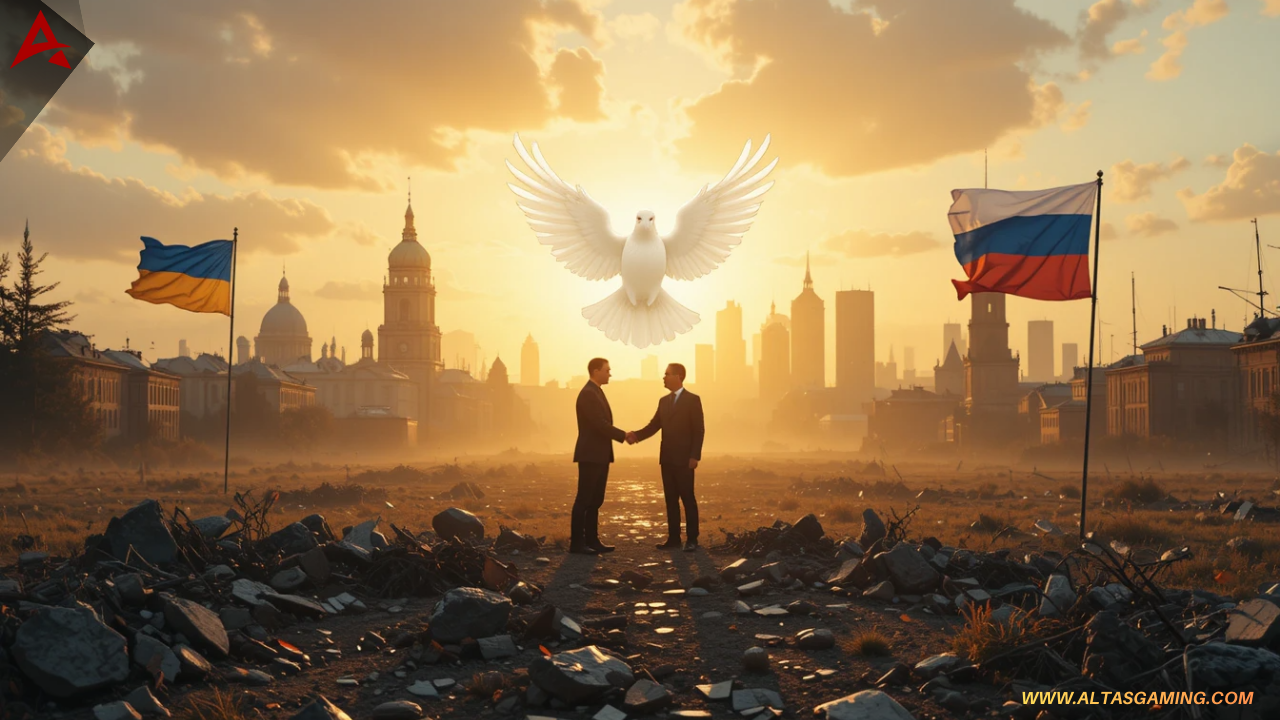
What we are witnessing is not peace negotiations it is power negotiation.
Russia is bombing Ukraine while talking about peace because it wants leverage at the table. The United States is pushing talks not purely for peace, but to reshape global priorities. Ukraine is fighting not just for territory, but for its future identity.
In my view, the most dangerous aspect of this moment is not the missiles it’s the illusion of diplomacy.
History shows that when wars are negotiated under pressure, they often freeze conflicts rather than end them.
The Ukraine war is evolving into something bigger:
a battle over territory, energy, the Arctic, and the future world order.
And that means even if a deal is signed, the conflict may only be entering its next phase.
❓ FAQ’s
Q1: Why does Russia attack Ukraine during peace talks?
Because military pressure strengthens Russia’s bargaining position in negotiations.
Q2: Could Ukraine realistically regain all occupied territories?
Militarily possible but politically difficult, especially without sustained Western support.
Q3: Why is the Arctic suddenly linked to the Ukraine war?
Because global powers see the Arctic as the next strategic frontier for military and trade dominance.
Q4: Is the U.S. genuinely interested in ending the war?
Partly yes, but strategic interests China, energy markets, and NATO stability also drive its actions.
Q5: Could Canada become involved in future geopolitical tensions?
Indirectly yes, especially as Arctic competition intensifies between the U.S. and Russia.
Q6: What is the biggest hidden risk of these talks?
A “false peace” that temporarily stops fighting but sets the stage for a larger conflict later.
Q7: Will energy infrastructure remain a primary target?
Yes. Energy systems are now central to modern warfare because they affect both civilians and military operations.
Table of Contents
- Is World War 3 coming Iran–Israel–USA Conflict 2026 The Complete Story, Hidden Tensions, and What Could Happen Next
- Taiwan Invasion by 2027 – But the Real War for AI, Chips, and Global Power Has Already Begun
- Resident Evil Requiem Becomes 2026’s Highest-Rated Game – A Survival Horror Masterpiece or an Overhyped Sequel That Loses Steam?
- Black Ops 7 Sets a New Standard for Tactical FPS Combat – But Controversy and Matchmaking Frustrations Spark Debate
- Ghostrunner 2 Free on Epic Games, A Cyberpunk Masterpiece of Relentless Action – or a Brutally Punishing Game That’s Too Hard to Love?
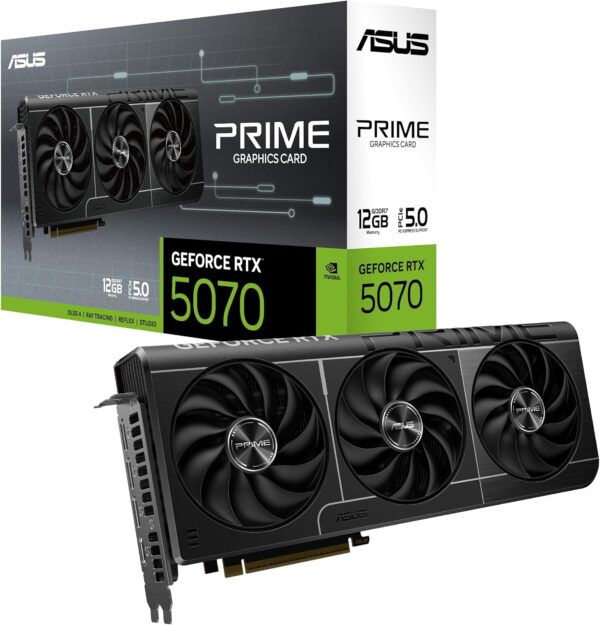
ASUS The SFF-Ready Prime GeForce RTX™ 5070 12GB
What’s in the box
- PRIME-RTX5070-12G Graphics card
- speedsetup manual
- ASUS Velcro Hook & Loop
- Thank you Card
- Adapter Cable (1 to 2)
-
From the manufacturer


2.5-slot Design
The Prime GeForce RTX 5070 features a 2.5 slot design with a carefully arranged layout for the shroud, heatsink and heat pipes to let the three Axial-tech fans leverage chassis side-panel ventilation and deliver optimal thermal performance.

Perfect PSU for the GeForce RTX 50 Series
Use the wattage calculator to estimate how much power you’ll need to fuel your rig, and then pick a compatible ROG, TUF Gaming or Prime power supply for ultimate performance.







Leave a Reply