
🚄 London–Berlin Direct Train Nears Reality Eurostar & Deutsche Bahn Push Toward a High-Speed Green Corridor

A major shift in European travel is approaching as Eurostar and Deutsche Bahn (DB) confirm that they are actively negotiating a direct high-speed rail service connecting London and Berlin. If finalized, it would mark the first time in history that passengers could travel between the two capitals without changing trains.
Set for the early 2030s, the new route promises faster, greener, and smoother travel across the UK and mainland Europe potentially reshaping business mobility, tourism, and environmental policy across the continent.
🛤️ A Rail Dream Revived- What’s Changing Now?
The concept of a London–Berlin train isn’t new. Past attempts stalled due to:
- security restrictions at the Channel Tunnel
- rolling stock certification issues
- post-Brexit border complexity
- commercial risk concerns
But today, conditions have changed dramatically:
✔ Europe is prioritizing low-carbon transport
✔ Passenger demand for flight alternatives is rising
✔ Eurostar has merged with Thalys, forming a larger high-speed network
✔ Deutsche Bahn is expanding its ICE international routes
These shifts have made the idea not only possible but profitable.
🌍 What the London–Berlin Route Could Look Like
Based on early planning discussions, a likely route would be:
London → Brussels → Cologne → Hannover → Berlin
Estimated travel times:
- London → Berlin: 6 hr 30 min – 7 hr
- London → Cologne: ~3 hr 45 min
- London → Brussels: ~2 hr
This would make rail competitive with flying when factoring in:
- airport transfers
- check-in
- security waits
- baggage handling
Many analysts believe the route could attract millions of passengers.
💶 Economic Boost Across Multiple Cities
The proposed line could ignite new:
- tourism flows (Berlin is the #1 most visited city by young UK travelers)
- business travel routes (London–Berlin startup & tech corridor)
- green jobs in rail engineering
- rail station expansions in Germany
Local businesses near stations hotels, cafés, car rentals—would benefit heavily.
♻️ A Massive Win for Green Travel
High-speed rail emits up to 95% less CO₂ than flying.
A London–Berlin flight emits ~300 kg CO₂ per passenger.
The train would emit ~15 kg.
The route could remove millions of short-haul flights from the sky annually.
Environmental groups are fully backing the project.
🔍 What’s Holding Back Full Approval?
Even with positive momentum, real challenges remain:
• Border & passport control
All checks must be handled smoothly without long queues.
• Tunnel security certification
DB’s ICE trains must meet updated Channel Tunnel standards.
• Capacity bottlenecks
London St Pancras has limited passport control and platform space.
• Investment negotiations
Eurostar and DB must agree on shared costs and revenue splits.
Still, both rail giants say the political will is stronger than ever.
 lta’s Opinion🗣️ “Europe’s New Golden Rail Age Is Coming”
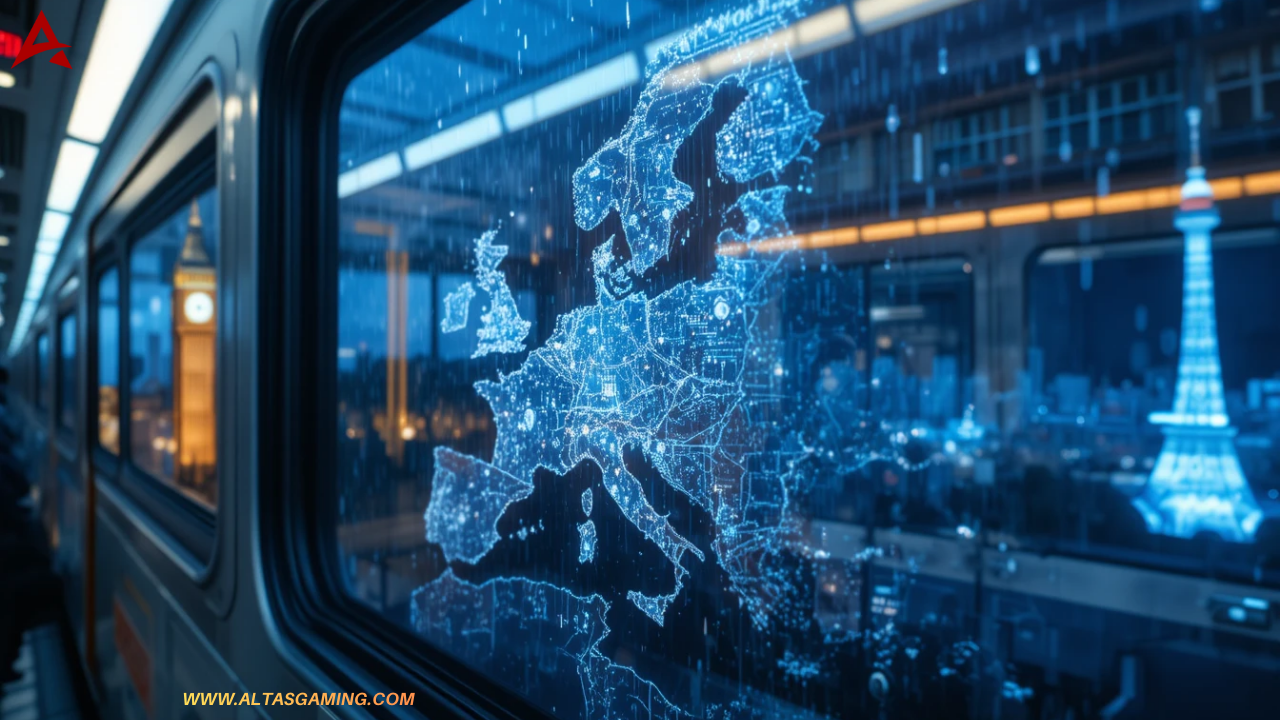
The negotiations between Eurostar and DB signal something bigger than a new route they represent a shift in Europe’s mobility philosophy.
Alta believes:
- Flights between nearby cities will become obsolete within 15 years.
- High-speed rail networks will define modern Europe, much like motorways did in the 20th century.
- The UK re-integrating into Europe’s transport ecosystem is a strategic necessity, regardless of politics.
- London–Berlin is just the beginning London–Madrid, London–Zurich, and London–Rome could follow later.
If executed correctly, this route could become a symbol of sustainability, cooperation, and 21st-century innovation.
❓ FAQs .
1. Will Eurostar or Deutsche Bahn operate the train?
Negotiations suggest a co-branded operation, with DB providing the train sets (ICE) and Eurostar handling the tunnel logistics.
2. Will WiFi, dining cars, and business class be available?
Early drafts mention:
- premium business seating
- onboard bistro with German & UK snacks
- high-speed satellite WiFi
- digital check-in with automatic seat upgrades
3. Can pets travel on the London–Berlin train?
Eurostar currently restricts pet travel. Discussions include creating a special “pet compartment” to allow cross-border animal travel without flights.
4. Will this make flying between London and Berlin unnecessary?
Not entirely, but flights could drop by 40–60%, particularly for business travelers and students.
5. Why the early 2030’s why not sooner?
Because:
- new ICE trains must pass safety certification
- border infrastructure must be upgraded
- platform allocation at St Pancras is saturated
6. Could this route be canceled like past plans?
Possible, but political support is far stronger now, and environmental pressure makes cancellation unlikely.
7. Will the ticket price be cheaper than flying?
Projected average price:
€100–€140 one way, similar to flights but more consistent year-round.
8. Will luggage limits be more generous than airlines?
Yes. Early concepts show:
- 2 large bags free
- no weight limit
9. Will security be like airport scans?
Security is required, but Eurostar plans AI-assisted rapid scanning to cut wait times by 70%.
10. Will this connect to future sleeper trains?
Yes there are discussions of a London-to-Berlin overnight sleeper option by 2035.
Table of Contents
- Iran War 2026 What Happened and Why Is It Important?
- Helldivers 2 Ultimate Survival Guide: Best Weapons, Builds, Missions & Pro Tips (2026)
- The PlayStation 6 – Everything Gamers Have Been Waiting For – Specs, Power, Features, and the Future of PS Gaming
- Global Crisis 2026 – The New World Order? How Nations Are Reshaping Global Power and Economy- What Happens After the Dollar Era?
- The Witcher 3: Wild Hunt – The Fantasy Masterpiece That Redefined Open-World RPGs

Leave a Reply