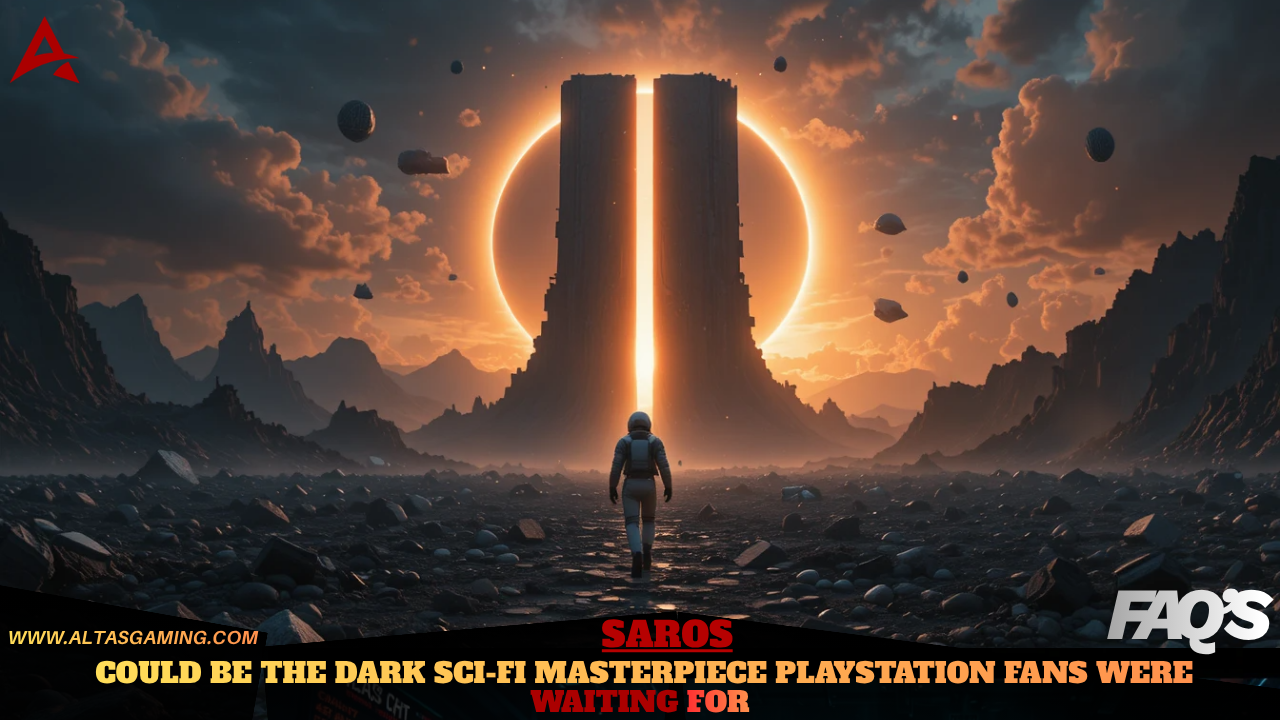
SAROS PS5 – The Complete Guide to Housemarque’s PS5 Masterpiece
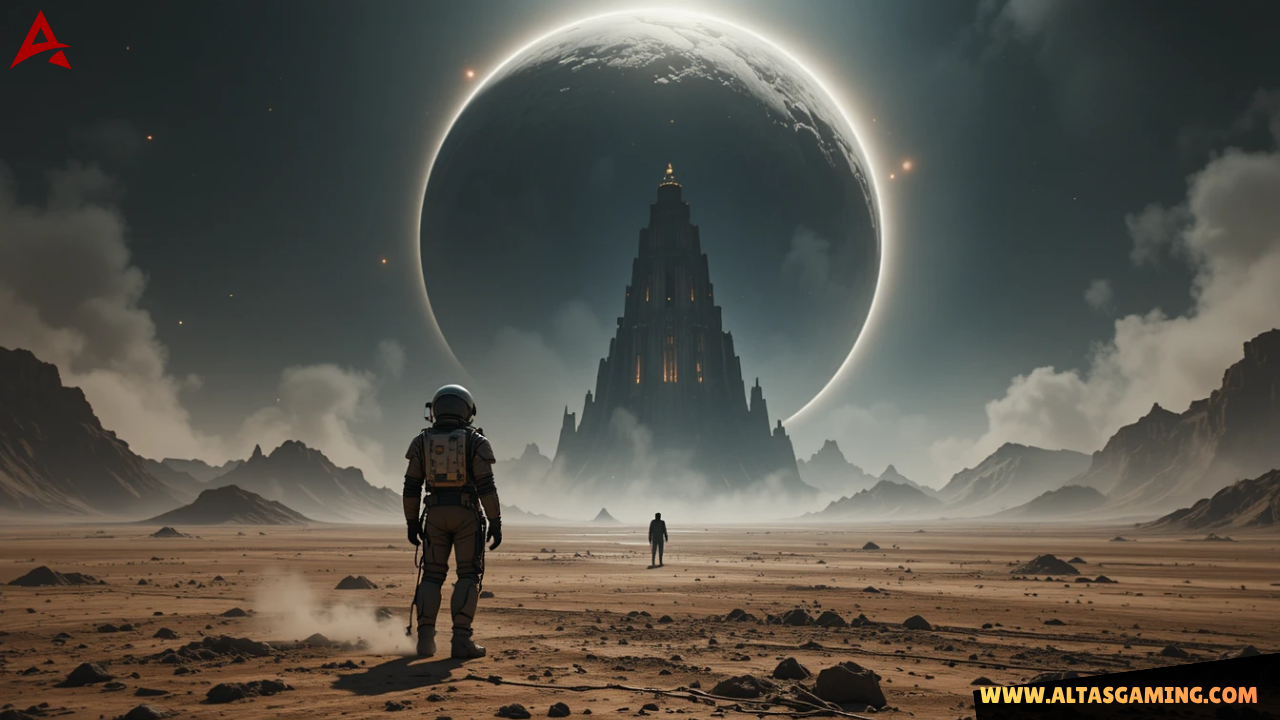
By Atlas Gaming Editorial | Released: April 30, 2026 | Developer: Housemarque | Publisher: Sony Interactive Entertainment
Metacritic: 88 | OpenCritic: 89 | Game Informer: 93 | Push Square: 9/10 | VGC: 5/5
Overview – A New PlayStation Legend Is Born
SAROS PS5 is the newest single-player, cinematic action game from Housemarque the Finnish studio that shook the PS5’s early library with Returnal in 2021 and has now returned with what many reviewers are already calling their best work yet. Published by Sony Interactive Entertainment and built from the ground up exclusively for PlayStation 5, SAROS launched globally on April 30, 2026, and immediately established itself as one of the most talked-about first-party PlayStation games of the year.
For anyone who played Returnal, SAROS will feel like a familiar spirit arriving in a significantly more evolved body. For anyone who bounced off Returnal’s notoriously punishing difficulty, SAROS represents a genuine olive branch same electrifying bullet-ballet combat DNA, more accessible structure, more cinematic storytelling, and a permanent progression system that means every death makes you meaningfully stronger. For complete newcomers to Housemarque’s style, SAROS is perhaps the single best entry point to one of gaming’s most distinctive studios.
The game is a third-person action roguelite set on an alien planet called Carcosa, where a player-controlled enforcer named Arjun Devraj attempts to unravel the mystery of a lost off-world colony swallowed by a permanent, ominous eclipse. Built in Unreal Engine 5 and running at a rock-solid 60fps on standard PS5 hardware, SAROS is both a technical showcase for the console and the clearest expression yet of what Housemarque set out to build when Sony acquired the studio back in 2021.
Quick Facts at a Glance: Developer: Housemarque | Publisher: Sony Interactive Entertainment | Release Date: April 30, 2026 | Platform: PlayStation 5 exclusively (PS5 Pro Enhanced) | Engine: Unreal Engine 5 | Genre: Third-Person Action Roguelite, Bullet-Hell | Rating: Not yet confirmed at PEGI/ESRB full detail check PlayStation Store for your region | Multiplayer: None strictly single player | File Size: 83.50 GB | Standard Edition Price: $69.99 / £69.99 | Digital Deluxe Edition Price: $79.99 / £79.99 | PC Version: Not confirmed as of launch
The World of Carcosa – Setting and Atmosphere
Everything in SAROS begins and ends with Carcosa. It is not just a backdrop it is the game’s central character, its most powerful storytelling tool, and its most dangerous enemy. Carcosa is a shape-shifting, hostile alien planet whose geography and environmental hazards physically transform after every death cycle. When Arjun dies and restarts a run, he returns to a Carcosa that has rearranged itself new paths through each biome have opened, new enemies have awoken, new secrets have surfaced, and the corrupting influence of the eclipse has spread further into the world’s crevices.
The planet is home to several distinct biomes, each with its own visual identity and set of environmental dangers. Players have reported traversing underground mechanical labyrinths, shattered alien ruins, dank corrosive swamps, and grand alien architecture all rendered in Unreal Engine 5 with a dark, neon-infused visual palette that critic after critic has described as stunning. One of the game’s most striking mechanics is the forced eclipse escalation: at certain points during a run, Arjun must trigger a solar eclipse, which dramatically changes the appearance and danger of the environment around him swamps become more corrosive, traps activate, ancient hostilities that were dormant awaken in the background. The visual transformation is striking and the mechanical consequences are real. It is both a literal event and a consistent metaphor for the story being told.
Carcosa is rich in lore told through audio logs, hologram recordings, environmental storytelling, and text entries scattered across each biome. The planet is soaked in the legacy of the three previous Echelon expeditions that came before Arjun’s thousands of people sent by the Soltari Corporation to establish a mining colony for a rare mineral called Lucenite, none of whom ever reported back. What happened to them, and what Carcosa truly is, forms the central mystery of the game. It is a mystery that rewards thorough exploration and multiple runs with increasingly revelatory layers of meaning.
The Soltari Corporation draws deliberate inspiration from the Weyland-Yutani of the Alien universe a ruthlessly extractive entity that sends human beings into impossible danger in service of resource acquisition, fully aware of the risks and entirely indifferent to them. This political dimension gives the world a thematic undercurrent that makes the cosmic horror feel grounded in recognisably human culpability.
Story – A Personal Mystery Inside a Cosmic Horror
Arjun Devraj is an enforcer sent to Carcosa as part of the fourth expedition by his employers, the Soltari Corporation. Carcosa is home to a rare mineral known as Lucenite, which Soltari hopes to exploit. Thousands have already been sent to the supposedly lifeless planet in an attempt to establish a mining colony, but none have ever reported back. With no contact from the previous expeditions, Arjun and his team are deployed to uncover what went wrong.
What begins as a corporate investigation spirals rapidly into something far more personal and far more disturbing. Arjun is not just a soldier following orders he is a man driven by grief and an unrelenting need for answers that the game gradually reveals throughout its run-based structure. The story is delivered through a combination of in-world exploration, audio logs, conversations with an ensemble cast gathered in a hub area, and cinematics that play between major story beats. It is deliberately fragmented players piece together what happened to the previous expeditions, what the eclipse actually represents, and what Arjun is truly searching for across multiple runs, with each death returning him to the hub with new understanding.
Saros sets up a gripping mystery story. The web that unfolds as the player picks up more text logs, audio messages, and speaks to the rest of the crew is Housemarque at its best. The story will inspire fans to argue over lore, character fates, and more for years.
The ensemble cast gathered at the hub includes Nitya Chandran, performed by Shunori Ramanathan, who serves as a key emotional anchor throughout the story. Their relationship with Arjun complex, sometimes contentious, ultimately essential is one of the game’s most discussed and divisive elements. Some reviewers found their dynamic to be the emotional core of the game’s second half; others felt the supporting cast generally needed more development time.
Where the narrative is most compelling is in its use of Carcosa itself as a storytelling device. The colours of enemy projectiles, the architecture of each biome, and the escalation pattern of the eclipse are all woven with thematic intention the planet is not just hostile, it is reflective. The eclipse itself is both a literal and metaphorical narrative device and gameplay mechanic, and this is one of multiple examples in Saros where Housemarque thrive at telling a mysterious story through complementary gameplay.
The most consistent critical note is that while the core mystery and Arjun’s personal arc are genuinely compelling, the wider ensemble of supporting characters does not always receive the same depth. Several reviewers noted that some of the peripheral crew members feel underdeveloped relative to the ambition the story clearly has for them. This does not undermine the main narrative it simply means the game occasionally asks players to invest emotionally in figures who have not yet earned that investment.
Characters and Cast – Led by a Career Performance
Arjun Devraj – Rahul Kohli. The lead performance in SAROS is one of the reasons the game has generated as much critical discussion as its mechanics. Rahul Kohli delivers what many would describe as a career-defining performance as Arjun Devraj. Kohli has always been capable of delivering emotionally impactful performances, even with more restrained characters. He has shown strong comedic timing and an ability to portray complex personalities through subtle delivery. All of those strengths come together in SAROS. Arjun is a character who rarely speaks unless necessary, but when he does, every line carries weight.
Kohli is best known to television audiences from his roles in Midnight Mass, The Haunting of Bly Manor, The Fall of the House of Usher, and Twilight of the Gods. His video game experience prior to SAROS includes Call of Duty: Modern Warfare III, Fortnite, and Stray Gods: The Roleplaying Musical but SAROS represents by far the largest and most dramatically demanding role of his gaming career. It is a performance that feels destined to earn a swath of award nominations.
Nitya Chandran – Shunori Ramanathan. Arjun’s most significant companion on Carcosa, Nitya’s relationship with Arjun forms the human core of the story’s second act. Ramanathan’s performance has been praised for its nuance and its willingness to make Nitya genuinely complicated rather than simply likeable.
The Ensemble. The wider cast of crew members gathered at the hub area brings a variety of perspectives on Carcosa and its dangers. Notably, Jane Perry the actress who voiced Returnal’s protagonist Selene provides what several reviewers described as a memorable supporting turn, a rewarding connection to the studio’s previous work for fans of the earlier game.
Gameplay – The Bullet Ballet Evolved

SAROS is built around Housemarque’s signature bullet-hell combat style, taken from the overhead twin-stick shooter tradition the studio mastered across decades and evolved into a third-person action format with Returnal. In SAROS, that formula receives its most refined and accessible treatment yet.
The core loop is straightforward in concept and deep in execution. Arjun battles through different biomes, each populated with organic and mechanical alien enemies at escalating intensity, with a major boss waiting at the end of each area. Within biomes are optional paths and side areas containing augments, weapons, and lore entries that reward exploration and allow players to build and customise their run in real time. Death resets the run but not the permanent progression every run makes Arjun meaningfully stronger for the next attempt.
The Soltari Shield and Projectile Absorption. The most distinctive new mechanic in SAROS is the Soltari Shield, activated by holding R1. Rather than simply blocking enemy fire, the shield absorbs hostile projectiles and converts their energy. Blue bullets can be absorbed, yellow ones can be dodged through, and red ones can be parried. If you are fully focused and adept enough at dodging and countering, you never need to take a step back. There is an incredible sense of momentum, and enemies die quickly enough that it feels like you are knocking down a new combat puzzle every few seconds rather than piling into bullet sponges.
Power Weapons. The energy harvested by the Soltari Shield powers Arjun’s Carcosan Power Weapons a category of right-arm weapons that use eclipse-fuelled energy to deliver devastating attacks. Activating a Power Weapon physically corrupts Arjun’s arm in a visually striking transformation. Power Weapons are customisable and represent one of the run’s primary build variables, offering meaningfully different combat styles depending on which one Arjun equips.
The DualSense Integration. SAROS makes exceptional use of the DualSense wireless controller’s adaptive triggers. Pulling L2 halfway activates an alt-fire mode on Arjun’s main weapon slower but significantly more powerful, especially effective against larger enemies. Pulling L2 all the way activates the Eclipse-driven Power Weapon. The haptic feedback system provides moment-to-moment physical feedback for every combat event absorbing projectiles, landing hits, sustaining damage creating a tactile rhythm that many reviewers cited as one of the game’s most distinctively PlayStation experiences.
Come Back Stronger – Permanent Progression. The tagline of SAROS is “Come Back Stronger,” and it accurately describes the game’s most significant quality-of-life improvement over Returnal. Resources called Lucenite and Halcyon collected during each run are retained permanently and used to upgrade Arjun’s stats, abilities, and equipment between runs. The upgrade tree includes both raw stat improvements and more meaningful ability modifications that change how combat feels and flows. Between this and the addition of Carcosan Modifiers which allow players to add protections or trials to create their own balance of difficulty Saros remains accessible to audiences, remedying the difficulty discourse that plagued Returnal.
Carcosan Modifiers. One of SAROS’s most cleverly designed systems, Carcosan Modifiers are optional buffs and disadvantages that players can apply to their run. A balanced mix of advantages and challenges must be active simultaneously the system prevents players from simply stacking every buff and trivialising the experience while still offering genuine customisation. This makes SAROS more replay-friendly than Returnal’s more rigidly structured difficulty.
Weapons. The game’s arsenal covers a wide range of playstyles, with each weapon offering distinct strengths and an alt-fire mode that changes the weapon’s function entirely. Options reported by reviewers include hand cannons with explosive rounds, weapons firing ricochet projectiles, grenade launcher modes, and slow-firing heavy round configurations. Weapons can be found and upgraded within runs, and the interplay between weapon choice, Power Weapon selection, and augment build creates a build depth that rewards experimentation across many hours.
Boss Fights. Boss encounters are a consistent highlight across all reviews. Each boss requires players to read a distinct attack pattern vocabulary and apply the full toolkit of shield absorption, dodging, parrying, and Power Weapon deployment. Exceptional boss design and meaningful progression systems give each run a satisfying sense of growth.
Traversal. Arjun’s Soltari combat suit allows him to dash, melee, jump, and navigate the vertical and horizontal complexity of each biome. Traversal upgrades unlocked through the permanent progression system expand access to locked rooms from previous biomes, rewarding players who return to earlier areas with new abilities.
Playtime. Reviewers have reported completing the main story and achieving the Platinum Trophy in approximately 21 hours with the epilogue included, though the roguelite structure means that players who explore thoroughly and engage with the full progression system will spend considerably more time in Carcosa. The game’s replayability extends naturally beyond the credits, particularly for players interested in discovering lore threads and alternate run builds.
Visuals and Technical Performance – PS5 Pushed Hard
SAROS was built from the ground up for PlayStation 5 hardware and it shows. Housemarque’s goal was to make the game a genuine technical showcase for the console, and across both standard PS5 and PS5 Pro, the game delivers on that ambition.
On standard PS5, SAROS runs at a rock-solid 60fps with only the most minor of frame rate fluctuations during the most particle-intensive combat moments. Near-instant loading speeds powered by the PS5’s SSD architecture mean deaths and transitions between areas are virtually seamless critical for a roguelite where friction between runs must be minimised to maintain momentum. The visual design combines dramatic lighting, neon-infused visual effects, and vast surreal alien landscapes to create a visual identity that is immediately distinctive and consistently arresting.
On PS5 Pro, SAROS benefits from PSSR PlayStation’s Spectral Super Resolution upscaling technology updated to the newest version of the PSSR upscaler released in March 2026. This provides an even sharper image; the base render resolution is increased before upscaling, and Housemarque’s technical director Seppo Halonen has confirmed that many small refinements in reflections and overall quality ensure that the upgrade is not merely more pixels but more fully rendered content at greater fidelity. The only moment where the PS5 Pro switches to 30fps is during key story cinematics, where maximum resolution and quality processing takes precedence over frame rate. For gameplay, 60fps is maintained throughout on both hardware versions.
3D Audio using the PS5’s Tempest 3D AudioTech engine is implemented throughout the game. With a compatible headset or 3D audio sound setup, players can hear the environment, hostiles, and the game’s score all around them in genuinely immersive fashion. Housemarque has described this as an evolution of their 3D audio work in Returnal.
The Score and Sound Design
SAROS was developed with audio support from PlayStation Creative Arts, and the result is a soundtrack that multiple reviewers singled out as exceptional. A hair-raising score of organs and strings carries each encounter with distorted riffs and soaring notes. The music escalates dynamically with combat intensity quiet and tense in exploration, building to a controlled frenzy during full engagements, and reaching genuine grandeur during boss encounters.
The sound design is meticulous in its environmental detail. The alien biology of Carcosa’s creatures has distinct audio signatures for different attack types, functioning both as atmosphere and as practical information attentive players can hear attacks coming before they are fully visible, which becomes increasingly important on higher difficulty settings. Every absorbed projectile, every Power Weapon discharge, every DualSense haptic event is matched with audio that reinforces the physical feedback loop the game builds between player and controller.
Critical Reception – What the World’s Reviewers Said
SAROS launched to near-unanimous critical praise. The game currently holds an 88 on Metacritic based on 89 reviews, placing it a couple of points ahead of Returnal’s own score of 86. On OpenCritic, it sits at 92% across 34 reviews. Those numbers make Saros one of the best-reviewed games of 2026 so far.
Game Informer awarded 93/100, writing that moving, shooting, and improving in Saros is an unequivocal joy and that they only wished they could write their review faster to get back to planet Carcosa. Push Square gave a 9/10, calling it a bold and confident realisation of 30 years of Housemarque and describing the action as truly phenomenal. VGC awarded a full 5/5, writing that sublime gameplay and a stellar central performance make SAROS one of PS5’s most memorable first-party games. Eurogamer gave a 4/5. Sirus Gaming gave a perfect 10/10, calling it a triumph in every sense. The Outerhaven concluded that Housemarque has come back stronger than ever, describing SAROS as their best game to date.
The clearest area of agreement among reviewers is that Saros is meaningfully more accessible than Returnal without abandoning what made that game special.
The primary criticisms are consistent and worth noting for transparency. IGN awarded a 7/10, arguing that the expanded story ambitions occasionally collapse under the weight of abstraction, and that the roguelite structure does not always balance repetition with forward momentum satisfyingly. Polygon raised a related concern that the permanent progression system may allow players to become powerful enough that the central tension of the genre largely disappears. Several user reviews on Metacritic from dedicated Returnal fans have argued that the game is noticeably easier than its predecessor and that some mechanics present in Returnal were stripped out, resulting in a less demanding experience for veterans. These represent a minority view the critical consensus is strongly positive but they are worth knowing about before purchasing, particularly for players who specifically valued Returnal’s notorious punishing difficulty.
How SAROS Compares to Returnal
Since SAROS is a spiritual successor to Returnal rather than a direct sequel different IP, different protagonist, different planet the comparison between the two is the most important context any prospective buyer needs.
Returnal (2021) was one of the PS5’s most critically acclaimed launch-era exclusives, scoring 86 on Metacritic and winning multiple Game of the Year awards. It was also notorious for its brutal difficulty curve, its minimal accessibility options, and a progression structure that felt genuinely unforgiving. Many players loved it completely; many others bounced off it and never returned.
SAROS takes everything that worked about Returnal the bullet-ballet combat system, the shape-shifting alien world, the atmospheric sci-fi horror, the run-based structure and rebuilds it with accessibility and cinematic ambition more firmly at the centre. The permanent Lucenite/Halcyon progression system means players are never truly reset to zero. The Carcosan Modifiers system allows difficulty customisation without removing challenge entirely. The storytelling is more explicitly cinematic, with a full ensemble cast, performance capture, and a narrative delivered more directly through characters rather than entirely through environmental logs. The result is a game that most reviews agree is mechanically superior to Returnal while being somewhat less atmospherically oppressive and noticeably more forgiving. Whether that is a gain or a loss will depend entirely on what the individual player valued about the original.
For those new to either game: SAROS is the recommended starting point in 2026. Returnal remains available and is also worth experiencing its relentless atmosphere and uncompromising design are genuinely distinctive and some players will prefer it. But SAROS is the more complete realisation of what Housemarque has always been trying to build.
Editions – Standard vs Digital Deluxe
SAROS is available in two editions, both launched April 30, 2026.
Standard Edition – $69.99 / £69.99. The Standard Edition contains the full base game. It is available both digitally through the PlayStation Store and physically through retail outlets including Amazon, Walmart, Best Buy, and GameStop. Players who pre-ordered the Standard Edition before launch also received the Hand of Shore Armor cosmetic set as a bonus. For the vast majority of players, the Standard Edition is the right choice all gameplay content is identical to the Deluxe Edition.
Digital Deluxe Edition – $79.99 / £79.99. The Digital Deluxe Edition is available exclusively through the PlayStation Store digitally. For the extra $10 it includes 48-hour early access to the full game (starting April 28 at 4 AM UTC, or 9 PM PT on April 27 for US West Coast players), plus three exclusive Enforcer armor sets for Arjun: Astra (inspired by Returnal), Onryo (inspired by Ghost of Yotei and Ghost of Tsushima), and Midgard (inspired by God of War). The Hand of Shore pre-order armor was also included. Importantly, all Deluxe Edition bonuses are cosmetic no gameplay advantages, no difficulty reductions, no exclusive combat content. The Digital Deluxe upgrade can also be purchased separately by players who own the physical Standard Edition, allowing them to access the cosmetics and early access window without repurchasing the full game.
Atlas Buying Advice: For most players, Standard Edition is the best value. The 48-hour early access matters if you are a day-one enthusiast who wants to be playing and discussing the game before the wider audience arrives for a single-player game with no competitive element, this is a personal preference rather than a practical advantage. The Returnal-inspired Astra armor is a genuinely nice touch for franchise fans. If you are a devoted Housemarque fan or a PlayStation collector, the Deluxe Edition at $10 more is reasonable value. For everyone else, Standard is the call.
PS5 Pro – Is It Worth the Upgrade?
SAROS is officially PS5 Pro Enhanced, and the enhancement is substantive rather than cosmetic. The PS5 Pro version uses the updated PSSR upscaler released in March 2026, with a higher base render resolution before upscaling, refined reflections, and overall quality adjustments that make the entire game render more sharply and cleanly than on standard PS5 hardware. The result is described by Housemarque’s technical director as an image that is barely distinguishable from native 4K during gameplay.
The trade-off is that PS5 Pro runs SAROS in a single graphical mode rather than the typical Fidelity/Performance split seen in other enhanced titles. This has surprised some reviewers given the Pro hardware’s capability, and a small number have noted they would have liked to see a 120fps mode for players with high-refresh-rate displays. However, given that standard PS5 already delivers a rock-solid 60fps experience, the absence of additional modes is a minor observation rather than a meaningful omission for most players.
The conclusion from reviewers is clear: SAROS is a beautiful game on standard PS5 and a more beautiful game on PS5 Pro. If you already own a PS5 Pro, SAROS is a genuine showcase for the hardware. If you own a standard PS5, the experience is still exceptional and there is no compelling reason to upgrade hardware specifically for this title.
Is There a PC Version?
As of the game’s April 30, 2026 launch, SAROS is a PlayStation 5 exclusive with no confirmed PC release date or announcement. Sony Interactive Entertainment has made no official statement regarding a PC port.
The context for this question is important. Sony’s broader platform strategy has evolved significantly over the past four years numerous previously PS5-exclusive first-party games have eventually received PC ports, including God of War, Spider-Man, Horizon Zero Dawn, Horizon Forbidden West, The Last of Us Part I, and most relevantly for SAROS, Returnal itself, which arrived on PC via Steam in February 2023 approximately two years after its PS5 launch. This pattern has led many players to reasonably assume that SAROS will follow a similar path.
However, Sony’s approach has become less predictable in recent years. Some high-profile exclusives most famously Bloodborne have still not received a PC release years after launch, to the ongoing frustration of PC gaming communities. SAROS’s director has reportedly avoided the PC question directly in interviews, and Sony’s current public communications for the game describe it only as a PlayStation 5 exclusive.
The Atlas Gaming assessment: based on Sony’s established pattern with Housemarque’s previous work, a PC version of SAROS is likely but cannot be assumed or planned around. If you are a PC-only player interested in the game, the most honest advice is to wait and watch for an official announcement, which may come six to eighteen months after launch if Sony follows the Returnal precedent. Do not pay for a PS5 specifically to play SAROS unless you intend to use the console for other games but if you already own a PS5, there is no reason to wait.
There is currently no Xbox version and no indication one is planned. SAROS is a Sony first-party title and will not come to Xbox platforms.
Where to Buy – All Platforms and Best Prices
PlayStation Store (Digital – PS5). The primary and most straightforward purchase option. Standard Edition is $69.99 / £69.99. Digital Deluxe Edition is $79.99 / £79.99. Both editions are available directly at store.playstation.com or through the PS5’s built-in store. Pre-order bonuses have now transitioned the Hand of Shore Armor may no longer be available as a new purchase bonus after launch, so check current store details.
Amazon (Physical – PS5). The physical Standard Edition is available on Amazon at $69.99 with free Prime shipping for eligible members. Physical copies are identical in gameplay content to the digital Standard Edition. No Deluxe Edition physical release exists – Deluxe is digital only.
Walmart (Physical – PS5). Physical Standard Edition available in-store and online at $69.99.
Best Buy (Physical – PS5). Physical Standard Edition available at $69.99, with occasional My Best Buy member discounts or gaming-specific promotional pricing. Check bestbuy.com for current deals.
GameStop (Physical – PS5). Physical Standard Edition available at $69.99 at GameStop retail locations and online. GameStop Pro members may have access to additional trade-in value or loyalty pricing.
Atlas Cheap Buying Tip: SAROS launched at full price on April 30, 2026. As a brand-new first-party Sony exclusive, it is unlikely to see a significant price reduction in the first three to six months after release. Sony first-party games historically maintain their launch price for longer than third-party titles. The best strategy for budget-conscious buyers is to watch for PlayStation Store flash sales, which Sony runs several times per year, and where first-party games sometimes appear at 20–30% off within the first year. Setting a PlayStation Store wishlist alert for SAROS is the most reliable way to be notified when a sale begins.
For second-hand physical copies, platforms like eBay, Facebook Marketplace, and local gaming stores will eventually have used disc copies available at reduced prices typically 3–6 months after launch. A used physical PS5 copy will still require the full game download given PS5’s disc architecture, but the physical disc acts as the licence key and the savings can be meaningful.
Free and Low-Cost Ways to Play
PlayStation Plus Catalogue – The Most Likely Free Path. SAROS is not currently available for free through PlayStation Plus in any tier. As a brand-new launch title priced at $69.99, it is a premium commercial release and Sony does not typically include day-one first-party games in the PS Plus catalogue at launch. However, the historical pattern for Sony’s first-party titles is instructive: games typically move to the PlayStation Plus Extra/Premium catalogue somewhere between 12 and 24 months after their original release date. Returnal, for example, appeared in the PS Plus catalogue approximately a year and a half after its launch. If SAROS follows a similar timeline, it could be available to PS Plus Extra or Premium subscribers at no additional cost sometime in late 2027 or 2028.
If you already pay for PlayStation Plus Extra or Premium, checking the games catalogue regularly is worthwhile. A PS Plus Extra subscription currently costs $14.99/month or $99.99/year in the US, and if you play multiple games from the catalogue, the value proposition is strong. SAROS’s eventual inclusion is not guaranteed but is historically likely.
PlayStation Plus Monthly Games. It is unlikely that SAROS will appear as a free monthly PS Plus game in the short term. Monthly free games at this tier tend to be older titles or smaller budget releases, not major $70 first-party launches from the same year.
Wait for a First-Party Sony Sale. PlayStation Store sales particularly the end-of-year sales, the mid-year promotional events, and the platform-specific Days of Play sale that Sony typically runs each June often include significant discounts on first-party titles. In the first year post-launch, SAROS is unlikely to drop below $49.99 at the most aggressive sale pricing, but from 2027 onward, deeper discounts become more probable.
PC – No Free Option Currently. Since there is no confirmed PC version of SAROS, there is no free PC access option to discuss. Any website or service claiming to offer a free PC download of SAROS is either a scam or malware. Avoid entirely.
Important Warning. There is no legitimate free version of SAROS available anywhere outside of potential future subscription service inclusion. Any link, torrent, or site claiming to offer a free full download of SAROS on PS5 or PC is not legitimate. Beyond the legal implications, such files routinely contain malware. Use the legitimate options above.
 tlas Gaming Verdict – 9.0 / 10

Story: 8.4 | Gameplay: 9.7 | Visuals: 9.5 | Audio: 9.3 | Characters: 8.8 | Value: 8.6 | PS5 Showcase: 9.8
SAROS is Housemarque at the peak of their powers, and that is an extraordinary thing to say about a studio whose previous peak was Returnal already one of the finest PS5 games released in the console’s first five years. What makes SAROS such a significant achievement is not that it matches Returnal. It is that it surpasses it in almost every mechanical and presentational dimension while simultaneously making the Housemarque experience available to a wider audience than ever before. That is a genuinely difficult balance to strike, and Housemarque has struck it.
The combat is the best they have ever made. The Soltari Shield absorption system is not merely a new mechanic it is a philosophical statement about how bullet-hell combat should evolve when given the resources and hardware of a first-party PS5 exclusive. The three-tier projectile system, where blue bullets are absorbed, yellow bullets are dodged through, and red bullets are parried, creates a combat vocabulary that takes seconds to understand and dozens of hours to fully express. When a run reaches its flow state Arjun dancing through enemy fire, absorbing energy, discharging Power Weapons, maintaining shield and weapon rhythm simultaneously SAROS produces a feeling of controlled mastery that very few games in any genre can match.
The permanent progression system is the right answer to Returnal’s divisive difficulty design. Every death in SAROS has meaning not just in the immediate run but in Arjun’s long-term growth, and this sense of cumulative progress transforms the roguelite structure from a source of frustration into a genuinely motivating feedback loop. The Carcosan Modifiers system is a clever solution to difficulty customisation that avoids the trap of making every hardship optional it maintains challenge while genuinely expanding the audience.
Rahul Kohli’s performance deserves to be discussed alongside the finest acting in gaming’s history. It is a performance of unusual restraint for a genre that tends toward melodrama Arjun speaks sparingly, and when he does, every line carries weight accumulated through dozens of hours of context. The mystery of Carcosa, the fragments of the previous expeditions, the relationship with Nitya it all builds toward a conclusion that reviewers who have reached it describe as satisfying and lingering.
The weaknesses are real. The supporting cast beyond Arjun and Nitya is underdeveloped relative to the story’s evident ambitions for them. Some of the peripheral biome environments have drawn criticism for visual monotony compared to the game’s most striking areas. And players who loved Returnal for its uncompromising difficulty will find SAROS a more forgiving experience something the studio clearly intended, but which represents a genuine tonal difference that veteran players should know about in advance.
These are the criticisms of a great game falling slightly short of perfection in specific areas. They do not change the fundamental conclusion: SAROS is one of the best games on PlayStation 5, one of the best games of 2026, and an essential purchase for anyone who owns the hardware.
Atlas Rating: 9.0 / 10 – Exceptional. Housemarque’s most accomplished game. A PS5 showcase and a new benchmark for action roguelite design.
Frequently Asked Questions
Do I need to have played Returnal to enjoy SAROS? No. SAROS is a completely separate IP with different characters, a different world, and a self-contained story. No prior knowledge of Returnal or any other Housemarque game is required. That said, players who have played Returnal will recognise the combat DNA immediately and will appreciate the evolution of the formula most fully. If you have never played Returnal and enjoy SAROS, it is absolutely worth going back to play it is still one of the PS5’s finest games. The two games are companions in spirit rather than sequels.
Is SAROS too difficult for casual players? SAROS is significantly more accessible than Returnal. The permanent Lucenite and Halcyon progression system means every run makes Arjun stronger even if it ends in death, and players are never truly reset to zero. The Carcosan Modifiers system allows players to adjust the challenge balance without fully removing it. Reviewers have specifically noted that SAROS remedies the difficulty discourse that surrounded Returnal. Players who found Returnal impenetrable should give SAROS a genuine opportunity it is a markedly different experience in terms of friction.
How long does SAROS take to complete? Reviews report completing the main story and achieving the Platinum Trophy in approximately 21 hours including the epilogue. However, the roguelite structure means that players who explore thoroughly, invest in all available lore, and experiment with different weapon and build combinations will naturally extend that playtime considerably. Post-credits replayability discovering threads missed on the first run, attempting different build strategies, engaging with the full Carcosan Modifier system adds further depth beyond the story completion.
Is there multiplayer or co-op in SAROS? No. SAROS is strictly a single-player experience with no multiplayer or co-op modes of any kind. This is consistent with Housemarque’s design philosophy for this style of game and consistent with Returnal’s structure.
Will SAROS come to PC? There is no confirmed PC version as of launch. Sony has not made any official announcement about a PC port. However, Returnal SAROS’s spiritual predecessor did receive a PC version approximately two years after its PS5 launch, and many of Sony’s first-party exclusives have followed a similar path. A PC version of SAROS is considered probable by the gaming community and some industry analysts, but it cannot be confirmed or planned around at this time. If and when an announcement is made, Atlas Gaming will cover it immediately.
Is there a physical edition of SAROS? Yes. The Standard Edition is available as a physical PS5 disc through Amazon, Walmart, Best Buy, and GameStop at $69.99 / £69.99. The Digital Deluxe Edition is digital-only through the PlayStation Store. Players who purchase the physical Standard Edition can separately purchase the Digital Deluxe upgrade from the PlayStation Store to access the additional cosmetics and early access benefits without buying the game twice.
What is included in the Digital Deluxe Edition and is it worth it? The Digital Deluxe Edition ($79.99) includes the full base game, 48-hour early access to play from April 28, and three exclusive Enforcer armor sets: Astra (Returnal-inspired), Onryo (Ghost of Yotei-inspired), and Midgard (God of War-inspired). All bonuses are purely cosmetic. For most players, the Standard Edition at $69.99 is the better value. The Deluxe Edition makes most sense for dedicated Housemarque fans, PlayStation collectors, and players who specifically want to be among the first to experience the game before the wider launch-day conversation begins.
Is SAROS available on PS4? No. SAROS is a PS5-exclusive title built from the ground up for PS5 hardware and requires a PlayStation 5 to play. There is no PS4 version, no backwards compatibility path from PS4, and no announced plans to release a PS4 version. A PlayStation 5 or PS5 Pro is required.
How does SAROS use the PS5 hardware specifically? SAROS uses near-instant SSD loading that makes deaths and area transitions virtually seamless, 4K resolution gameplay at 60fps on standard PS5, 3D Tempest Audio for spatial sound immersion, extensive DualSense adaptive trigger implementation (half-pull for alt-fire, full-pull for Power Weapons), detailed haptic feedback for every combat event, and on PS5 Pro enhanced PSSR upscaling with a higher base render resolution for an image approaching native 4K quality. It is one of the most technically comprehensive uses of PS5’s full feature set among currently available titles.
Disclosure: This article may be displayed alongside Google AdSense advertisements. All opinions, ratings, and information in this article are the independent work of the Atlas Gaming editorial team and have not been influenced by any advertiser, publisher, or developer. SAROS is a trademark of Sony Interactive Entertainment LLC. AtlasGaming.com is not affiliated with, endorsed by, or sponsored by Sony Interactive Entertainment or Housemarque. All trademarks are property of their respective owners. Prices and availability are accurate at time of research and may have changed always verify current pricing before purchase. All content on this page complies with Google AdSense Publisher Policies. Advertisements displayed alongside this article are contextually appropriate and family-safe.
© 2026 AtlasGaming.com – All Rights Reserved
Table of Contents
- Iran War 2026 What Happened and Why Is It Important?
- Helldivers 2 Ultimate Survival Guide: Best Weapons, Builds, Missions & Pro Tips (2026)
- The PlayStation 6 – Everything Gamers Have Been Waiting For – Specs, Power, Features, and the Future of PS Gaming
- Global Crisis 2026 – The New World Order? How Nations Are Reshaping Global Power and Economy- What Happens After the Dollar Era?
- The Witcher 3: Wild Hunt – The Fantasy Masterpiece That Redefined Open-World RPGs





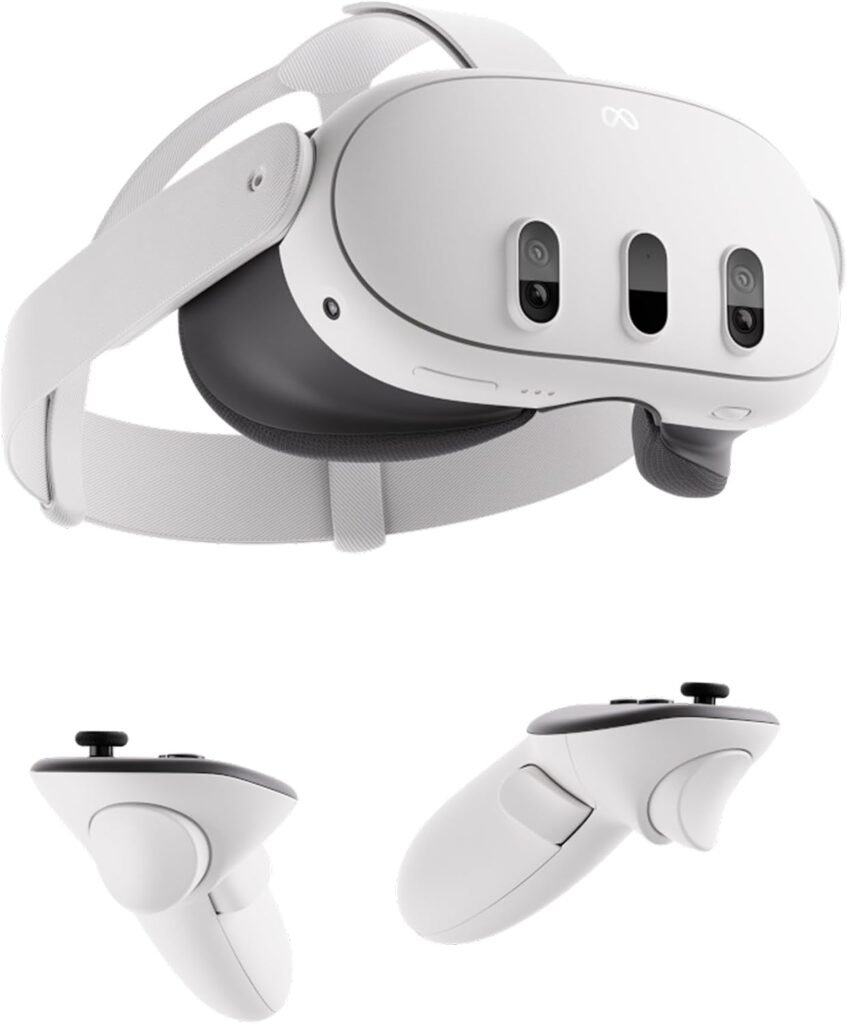





Meta Quest 3 512GB | VR Headset
Meta Quest 3 512GB | VR Headset
About this item
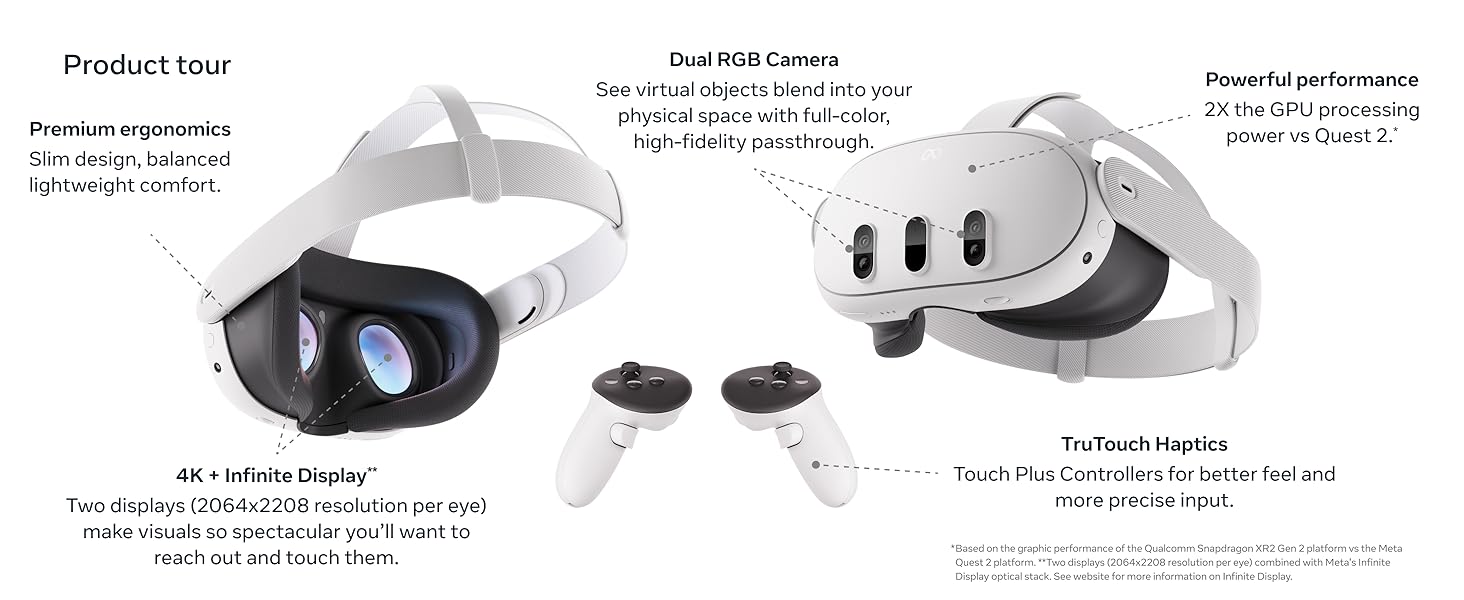
- NEARLY 30% LEAP IN RESOLUTION — Experience every thrill in breathtaking detail with sharp graphics and stunning 4K Infinite Display.
- NO WIRES, MORE FUN — Break free from cords. Play, exercise and explore immersive worlds— untethered and without limits.
- 2X GRAPHICAL PROCESSING POWER — Enjoy lightning-fast load times and next-gen graphics for smooth gaming powered by the Snapdragon XR2 Gen 2 processor.
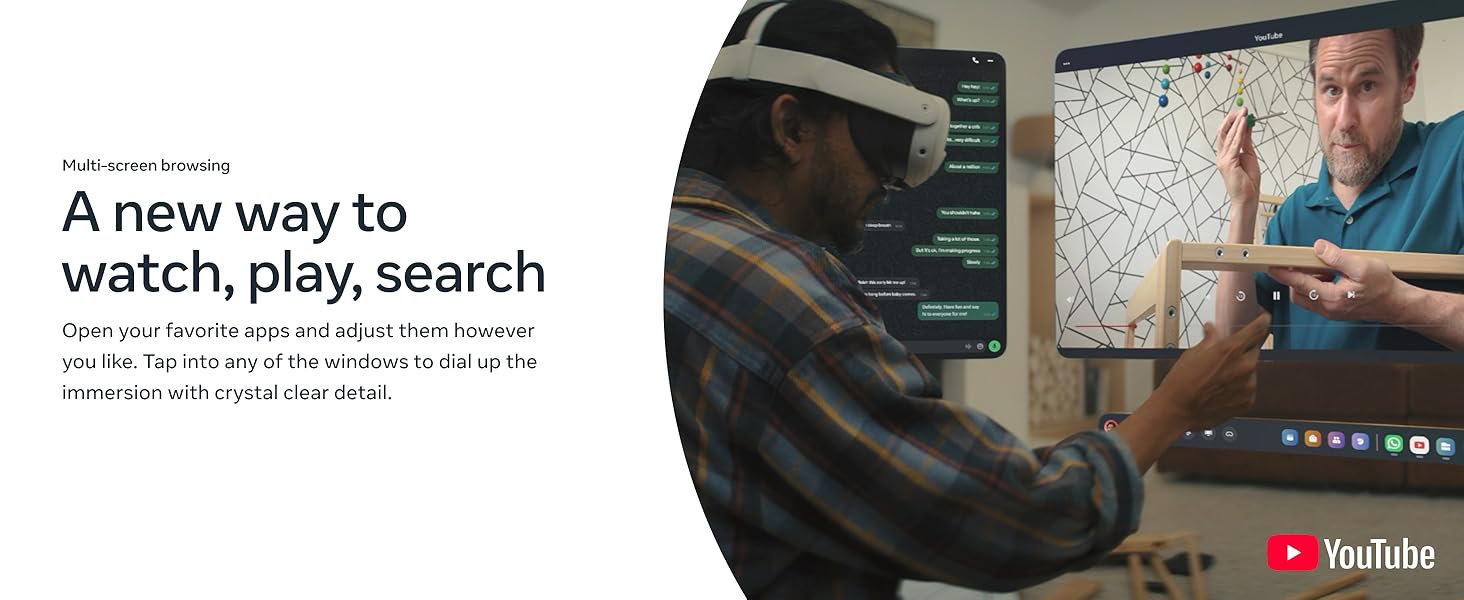
- EXPERIENCE VIRTUAL REALITY — Blend virtual objects with your physical space and experience two worlds at once.
- 2+ HOURS OF BATTERY LIFE — Charge less, play longer and stay in the action with an improved battery that keeps up.
- 33% MORE MEMORY — Elevate your play with 8GB of RAM. Upgraded memory delivers a next-level experience fueled by sharper graphics and more responsive performance.
- DUAL RGB COLOR CAMERAS — Bring together your real and digital worlds with full-color, high-fidelity Passthrough powered by two RGB color cameras.
- INSTANT ACCESS TO 40+ GAMES — Unlock a 3-month trial when you purchase Quest. Dive into a growing games catalog, monthly drops and more.
-
From the manufacturer


Product information
Product Dimensions 4.72 x 4.72 x 4.72 inches Item Weight 14.1 ounces ASIN B0CD1JTBSC Item model number 899-00585-01 Batteries 1 Lithium Ion batteries required. (included) Customer Reviews 4.5 out of 5 stars
Best Sellers Rank - #253 in Electronics (See Top 100 in Electronics)
- #1 in Standalone Virtual Reality Headsets
- #1 in Wearable Tech Virtual Reality Gear
Date First Available September 26, 2023 Manufacturer Meta Language English Product Description
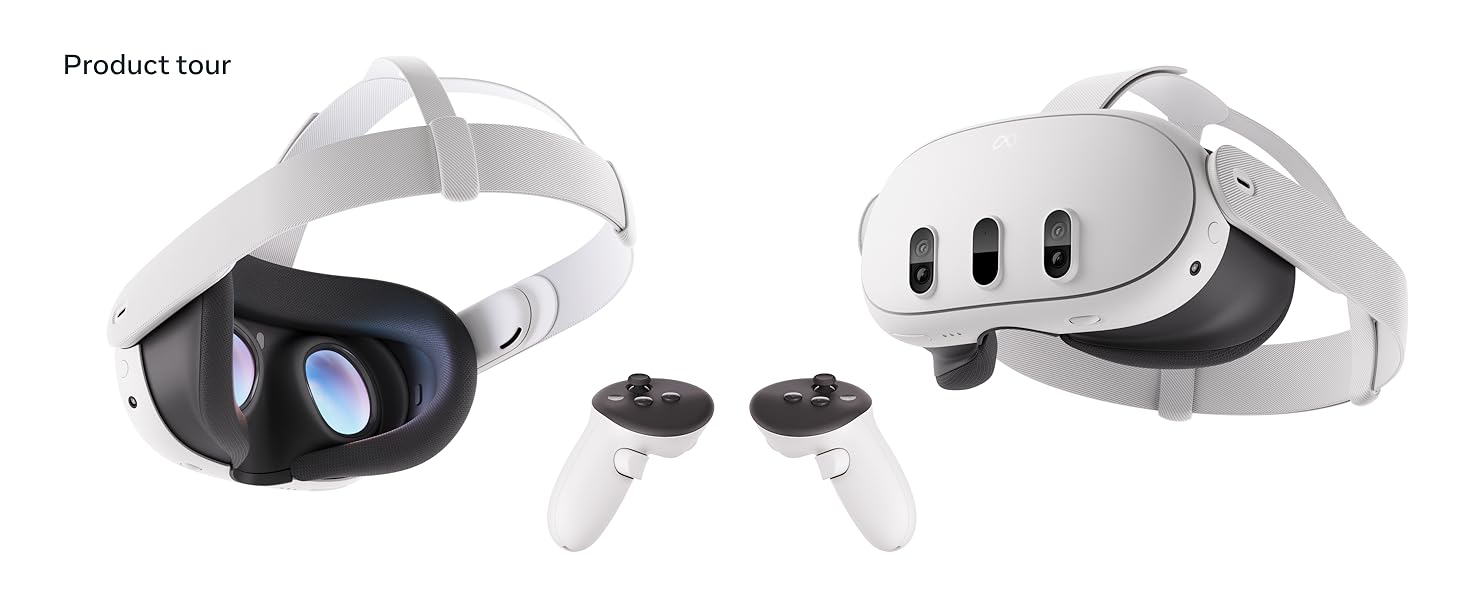
Get ready for the most powerful Meta Quest yet*. With mixed reality, stream shows on giant vibrant screens that you can adjust to the perfect size — all while you see the world around you. Dive into full immersion, where you’ll feel like you’re actually inside your favorite games, thanks to brilliant 4K resolution and rich spatial audio. With Infinite Display, enjoy the widest field of view of any Quest for the most immersive experiences yet. The slim, wireless design offers you premium comfort to move freely in workouts, or easily take your headset on the go. From complex games to vibrant movies, enjoy the ultimate experience with the power of Meta Quest 3. *Based on the graphic performance of the Qualcomm Snapdragon XR2 Gen 2 platform vs the Meta Quest 2 platform.




Leave a Reply