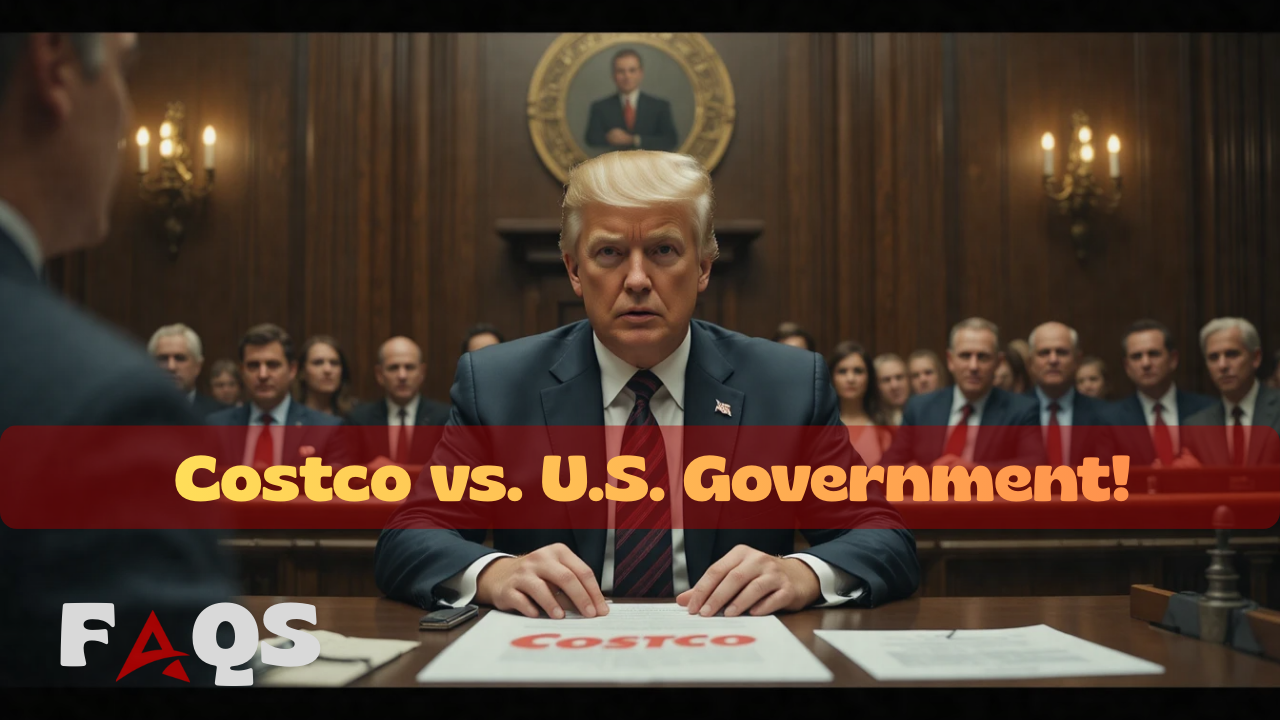
Costco vs. U.S. Government!
Costco has officially entered one of the biggest tariff-refund battles of the decade a fight that stretches back to the Trump administration’s Section 301 China tariffs and could determine how billions of dollars in duties are handled going forward.
This isn’t Costco’s first attempt to recover what the company calls improper or unfairly retained import fees. But the latest lawsuit filed just as the question of tariff-refund eligibility edges closer to the U.S. Supreme Court signals a crucial escalation, one that has major implications for retail giants, importers, trade policy, and the future of U.S.–China economic friction.
And Costco isn’t alone. During the Trump administration, several companies attempted to sue for “full refunds” of tariffs if policy changes occurred later. Costco now joins a wave of corporations that are arguing one core point
If tariffs are rolled back, declared unlawful, or reclassified, importers should receive their money back.
The federal government disagrees and that’s what puts the Supreme Court in the spotlight.
Why Costco Is Suing and Why Now
1. The Trump-Era Tariff Timeline Matters
Between 2018 and 2020, the Trump administration imposed sweeping tariffs on Chinese imports under Section 301. These tariffs applied to thousands of product categories many of which Costco imports in massive volume.
Retailers absorbed billions in additional costs.
Over time, some categories were modified, removed, or temporarily exempted, creating a messy legal environment for refunds.
2. Costco Claims the Government Owes Significant Refunds
Costco argues that
- Certain tariffs were legally invalidated or modified
- Refund eligibility was triggered retroactively
- The government failed to issue refunds even after regulatory changes
- Costco suffered “substantial financial harm”
The company wants a full refund of tariffs paid during specific periods.
3. A Supreme Court Review Is Possible
The core issue touches
- Administrative law
- Trade enforcement
- Agency discretion
- Importer rights
Multiple lower-court cases conflict, increasing the likelihood of Supreme Court interest.
If the Supreme Court rules in Costco’s favor, the decision could open the door to one of the largest refund waves in tariff history.
What This Means for U.S. Retail and Consumers
Retailers
Refunds could reduce cost burdens dramatically.
Major import-heavy chains Target, Walmart, Best Buy, and others would likely evaluate similar claims.
Consumers
If refunds reduce retailer costs, pricing relief on imported goods could follow.
Costco in particular is known for passing savings down the supply chain.
Government
A ruling against the U.S. could
- Reduce Treasury revenue
- Force re-examination of future tariff frameworks
- Set a precedent requiring more flexible refund systems
Larger Industry Context Costco Joins a Broader Corporate Pushback
During the Trump administration, some tech and manufacturing firms sued for tariff refunds if duties were reversed or deemed unlawful. Costco’s entry into this space is notable because
- It is a massive importer
- It spans countless product categories
- It adds pressure to trade agencies already overwhelmed with refund requests
This is now becoming the largest coordinated legal challenge to Trump-era tariffs yet.
 ltas Opinion
Costco’s lawsuit is not just about money it’s about power.
The retailer is signaling that major corporations no longer accept the idea that U.S. tariff policy can shift arbitrarily without financial accountability. This is a challenge to executive authority, trade-agency discretion, and the opacity of tariff enforcement.

Altas believes
- If Costco wins, large importers will gain leverage to challenge future trade policies.
- If the government wins, it strengthens executive power over tariffs even if classifications or rules change later.
- Either way, the decision will reshape how future administrations (including any future Trump administration) design tariffs.
This case is one of the clearest signs yet that U.S. corporations are preparing for ongoing volatility in U.S.–China trade policy no matter which party holds the White House.
FAQs
1. Could Costco’s refund victory force the U.S. to revise its tariff refund systems?
Yes. It could require agencies to implement automatic refund triggers when tariffs expire or are modified.
2. Could a Supreme Court ruling impact future tariffs under a second Trump administration?
Indirectly, yes. It might force clearer legal justification and stronger refund guidelines.
3. Does Costco risk political backlash for suing over Trump-era tariffs?
Absolutely but Costco is betting the financial stakes outweigh the political optics.
4. Could this lawsuit influence 2026 retail pricing?
If refunds are granted, retailers may lower prices on certain imports especially bulk consumer goods.
5. Would smaller importers benefit from a Costco victory?
Yes. A clear Supreme Court precedent would apply to companies of all sizes, not just industry giants.
Table of Contents
- Resident Evil Requiem Becomes 2026’s Highest-Rated Game – A Survival Horror Masterpiece or an Overhyped Sequel That Loses Steam?
- Black Ops 7 Sets a New Standard for Tactical FPS Combat – But Controversy and Matchmaking Frustrations Spark Debate
- Ghostrunner 2 Free on Epic Games, A Cyberpunk Masterpiece of Relentless Action – or a Brutally Punishing Game That’s Too Hard to Love?
- Code Vein II Is a Beautiful Evolution – But Its Uneven World Holds It Back! Or Does It Still Lack the Crown? (Feb 2026)
- Nioh 3 Review- A Brutal Soulslike Masterpiece That Perfects Samurai Combat – Or an Unforgiving Grind That Pushes Players Too Far?





Leave a Reply