Create Account
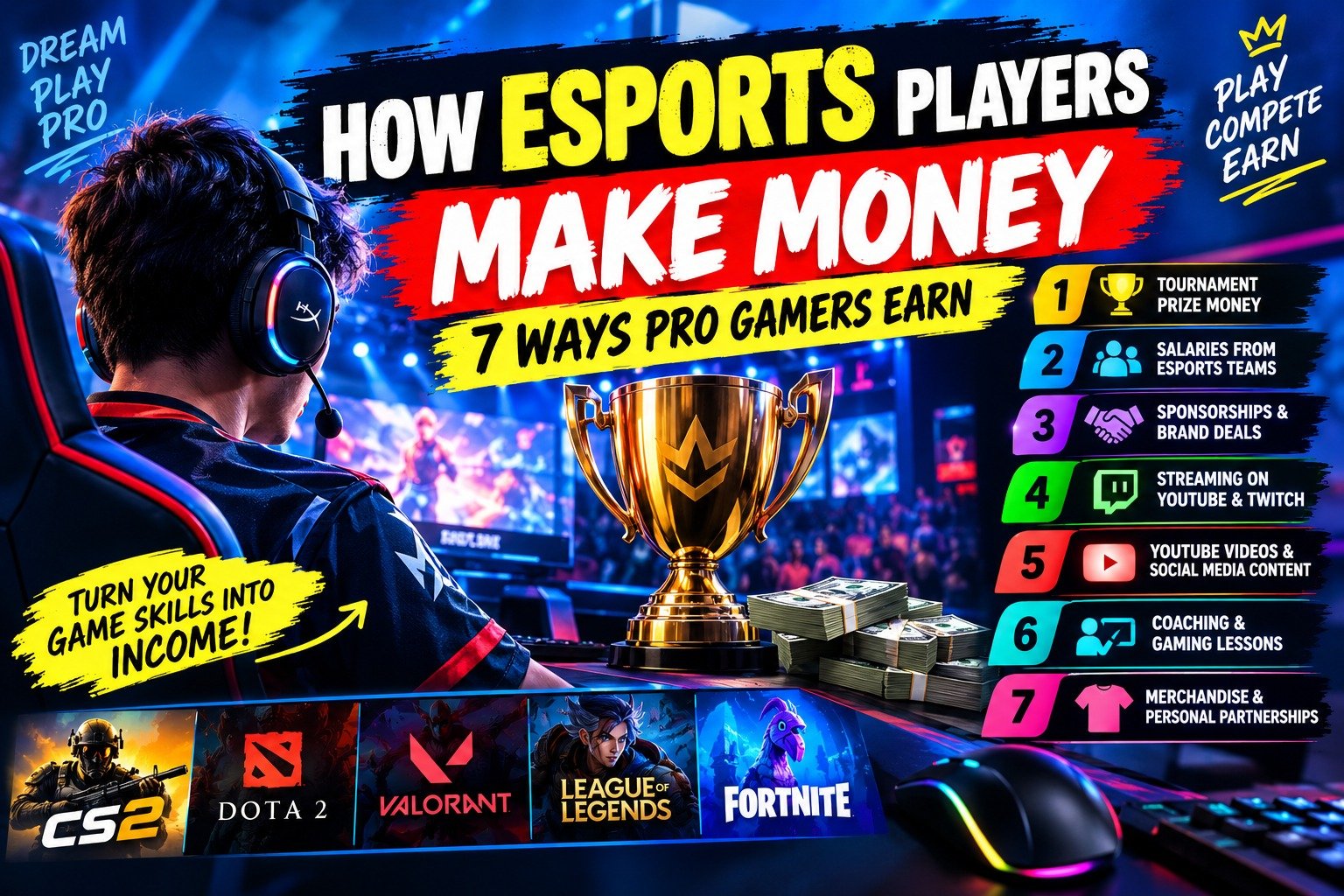
Esports Players Make Money

Gaming is no longer just a hobby. For some skilled players, it has become a professional career with opportunities to earn money through competitions, team contracts, sponsorships, and online content. But how do esports players make money, and can competitive gaming really become a full-time job?
The answer depends on the game, the player’s skill level, their audience, and the opportunities available in their region. While top professional players can earn substantial amounts, many beginners and amateur competitors make little or no money from tournaments.
In this guide, we explore seven ways esports players earn money and what aspiring gamers should understand before pursuing a professional career.
Tournament Prize Money
Tournament winnings are one of the most recognizable sources of esports income. Competitive games such as Counter-Strike 2, Dota 2, VALORANT, and League of Legends host events where players and teams compete for cash prizes.
Prize pools vary depending on the event, organizer, sponsors, and competitive scene. Major international tournaments may offer large rewards, while smaller community competitions may provide modest cash prizes or gaming equipment.
However, winning a tournament does not always mean one player receives the entire prize. In team competitions, the winnings may be divided among players, coaches, and organizations according to their agreements.
Tournament income is also unpredictable. Players can spend months preparing for competitions without earning any prize money.
Salaries From Esports Teams
Some professional esports players sign contracts with organizations that pay them a regular salary. This can provide more financial stability than relying entirely on tournament winnings.
A team may recruit players based on their competitive performance, experience, communication skills, and ability to work with teammates.
Depending on the contract, compensation may include a base salary, performance bonuses, travel support, accommodation, or other benefits.
However, not every esports team pays its players. Smaller organizations and amateur teams may offer limited support or operate without salaries. Players should carefully review contracts to understand payment terms, responsibilities, prize distributions, and contract length.
Sponsorships and Brand Deals
Sponsorships allow esports players to earn money by partnering with brands that want to reach gaming audiences.
Companies selling gaming keyboards, mice, headsets, monitors, gaming chairs, and other products may work with professional players or gaming creators.
These partnerships can take several forms:
- Paid promotional posts on social media.
- Product reviews or sponsored gaming videos.
- Brand appearances and advertising campaigns.
- Affiliate links that generate commissions from qualifying sales.
- Long-term partnerships with gaming companies.
A strong competitive reputation can help attract sponsors, but an engaged audience and professional online presence can also matter.
Players should disclose paid partnerships appropriately and avoid promoting products they do not trust.
Streaming on YouTube and Twitch
Some esports players earn additional income by broadcasting their gameplay online. They may stream practice sessions, competitive matches, tutorials, or casual games while interacting with viewers.

Depending on platform eligibility and available monetization features, income may come from advertising, subscriptions, viewer contributions, and sponsorships.
Streaming can help players build a community beyond their tournament results. It also gives fans an opportunity to learn from their strategies and follow their progress.
However, earning money from streaming is not automatic. New creators often need time to attract viewers, maintain a consistent schedule, and develop content that people want to watch.
YouTube Videos and Social Media Content
Esports players can also earn money by creating content outside live streams.
Examples include match highlights, gameplay guides, tournament analysis, reaction videos, training routines, and behind-the-scenes content.
YouTube advertising may generate revenue for eligible channels, while other opportunities can include sponsorships, affiliate marketing, and paid collaborations.
Short-form videos on platforms such as TikTok, Instagram, and YouTube Shorts can also help players reach new audiences. Whether these views generate direct income depends on the platform’s monetization rules and the creator’s eligibility.
For aspiring esports players, content creation can be a useful way to showcase gaming skills even before joining a professional team.
Coaching and Gaming Lessons

Experienced players may earn money by teaching other gamers how to improve.
Coaching can involve reviewing gameplay recordings, explaining strategies, helping players understand maps, improving team communication, or identifying mistakes during matches.
For example, a highly skilled VALORANT player might help learners improve their positioning, aiming routines, and decision-making.
The amount a coach can charge depends on their experience, reputation, demand, and the quality of their service. Strong competitive results can help establish credibility, but players should be honest about their qualifications.
Coaching is not limited to active professionals. Former competitors may also use their knowledge to support newer players.
Merchandise and Personal Partnerships
Players who build a recognizable personal brand may earn additional income by selling merchandise or developing partnerships with gaming-related businesses.
Merchandise might include branded clothing, accessories, posters, or other products connected to a player’s identity or community.

Some established competitors may also collaborate with gaming organizations on special products or promotional campaigns.
These opportunities generally require an audience that recognizes and supports the player. Selling merchandise also involves costs such as production, shipping, marketing, and customer service, so revenue does not automatically translate into profit.
How Much Money Do Esports Players Make?
There is no single salary that applies to all esports players. Earnings depend on the game, region, competition level, team contract, sponsorship opportunities, and audience size.
A beginner competing in local tournaments may earn nothing. A semi-professional player might receive occasional prize money or small payments, while an established professional may have a salary and several additional income sources.
At the highest level, some esports stars earn substantial sums through a combination of contracts, prize winnings, sponsorships, and content creation. These cases are not representative of the average player.
It is important to distinguish between tournament prize money, contracted salary, total revenue, and actual take-home income. Expenses, taxes, team agreements, and other costs can reduce the amount a player keeps.
How Can You Start Earning Money From Esports?
If you want to explore esports as a career, focus on building your skills and reputation before expecting consistent income.
Step 1: Choose one competitive game. Focus on a game with an active competitive scene that suits your interests and available equipment.
Step 2: Practice consistently. Work on mechanics, decision-making, communication, and teamwork instead of relying only on long gaming sessions.
Step 3: Enter smaller competitions. Community tournaments and online qualifiers can help you gain experience and understand competitive play.
Step 4: Build a gaming portfolio. Share highlights, achievements, gameplay analysis, and tournament results on your social media profiles.
Step 5: Connect with teams and players. Participate in communities, look for legitimate tryouts, and develop a reputation as a reliable teammate.
Step 6: Explore additional income streams. Once you have useful skills or an audience, consider coaching, content creation, streaming, or appropriate brand partnerships.
Remember that esports is highly competitive. Keep your education or another source of income in mind while you develop your skills, especially when you are just starting.
Final Thoughts
Esports players make money in several ways, including tournament prizes, team salaries, sponsorships, streaming, video content, coaching, and merchandise.
The most successful competitors often combine multiple income sources rather than depending on tournament victories alone. Even so, professional gaming remains competitive, and a large income is never guaranteed.
If you want to pursue esports, start by improving your gameplay, competing in legitimate events, and building your reputation. Focus on long-term progress rather than expecting quick earnings.
Which esports game would you choose to compete in professionally? Share your answer and follow Altas Gaming for more gaming guides, industry insights, and esports updates.
Table of Contents