🌍 Huawei’s Open-Source AI Software Tech War Move Is Reshaping the Global Chip Battle 2025
Huawei has just made one of the boldest, most aggressive, and geopolitically charged tech decisions of the year:
👉 It will open-source its AI chip optimisation software, including CANN and its new orchestration tool FlexAI, designed to dramatically boost efficiency of Huawei’s Ascend AI chips.
This doesn’t only affect China.
This affects the U.S., Europe, Middle East, Africa, Asia-Pacific, global AI companies, GPU markets, stock prices, and the entire semiconductor supply chain.
Below is a full, in-depth mega-analysis, including:
- 📌 How the conflict started
- 📌 China’s reaction
- 📌 U.S. response
- 📌 European and Asian positions
- 📌 Market share data
- 📌 Global AI chip landscape
- 📌 Company statements
- 📌 Technological impact
- 📌 Long-term consequences
- 📌 Who is right, who is wrong?
- 📌 Who wins? Who loses?
🧨 1. Origins of the Tech War How We Got Here
The current AI chip war did NOT start overnight.
⭐ Stage 1: U.S. Sanctions Begin (2019–2020)
- The U.S. placed Huawei on the Entity List.
- Restrictions limited 5G infrastructure exports.
- TSMC (Taiwan) was forced to halt chip manufacturing for Huawei.
⭐ Stage 2: AI Chip Restrictions (2022–2023)
- U.S. expanded sanctions to block China from accessing advanced Nvidia GPUs (A100, H100).
- This was the beginning of “AI containment”.
⭐ Stage 3: China Invests in AI Independence (2023–2025)
- China poured billions into domestic chip R&D.
- Huawei developed Ascend chips and Pangu AI models.
- Local cloud companies switched from Nvidia to Huawei.
⭐ Stage 4: 2025 — The Turning Point
Huawei now says:
“If we can’t buy the most advanced AI chips, we will build an ecosystem that can use every chip we have to its fullest potential.”
This is where the open-source revolution begins.
🔧 2. What Huawei Is Actually Open-Sourcing
✔ CANN (Compute Architecture for Neural Networks)
Huawei’s low-level AI acceleration engine.
Equivalent to:
- Nvidia CUDA
- AMD ROCm
- Intel OneAPI
CANN provides:
- Kernel-level acceleration
- Model compilation
- Device drivers
- High-level APIs
- Framework support (TensorFlow, PyTorch, MindSpore)
✔ FlexAI (The New Game-Changer)
A cluster-level resource management system that:
- Splits physical AI chips into virtual units
- Allows multi-tenant AI model training
- Boosts chip utilisation 30–70%
- Enables high performance in low-power environments
- Directly competes with Nvidia DGX software
✔ Model Training & Inference Tools
Huawei open-sourced:
- Pangu 3.0 base models
- Tokenizer
- Model optimizer
- Deployment toolkit
This makes Huawei’s stack developer-friendly, removing barriers to adoption.
🇨🇳 3. China’s Perspective “This Is About AI Sovereignty”
China sees AI as:
- A national security priority
- A technological independence goal
- A global leadership frontier
The U.S. blocking Nvidia GPUs forced China to:
- Build domestic chips
- Build domestic software
- Build domestic AI models
- Build a self-sustaining AI ecosystem
Huawei’s move is the largest open-source initiative in modern Chinese tech history.
Chinese officials described it as:
“A giant step toward national AI autonomy.”
🇺🇸 4. U.S. Perspective “This Is a Strategic Threat”
From Washington’s view:
- Open-sourcing AI acceleration tech reduces the effectiveness of sanctions.
- It strengthens China’s position in the global AI race.
- It threatens Nvidia’s market dominance.
- It encourages foreign developers to adopt non-U.S. AI platforms.
American analysts argue:
“Huawei is using open-source as a weapon to bypass restrictions.”
There are growing discussions that the U.S. may:
- Impose new sanctions
- Restrict cloud access
- Ban open-source contributions
- Penalize companies that use Chinese AI hardware
🇪🇺 5. Europe’s Position: Neutral, But Incentivized
Europe wants:
✓ AI independence
✓ Lower costs
✓ Green computing
✓ Diverse suppliers
Since Nvidia GPUs are costly and in short supply, many European AI labs and universities are interested in alternatives.
Huawei’s chip-efficiency boost could:
- Reduce operational costs
- Improve sustainability
- Lower reliance on U.S. suppliers
But political pressure may limit adoption.
🇯🇵 🇰🇷 🇸🇬 6. Asia-Pacific: A Mixed Reaction
Japan:
Careful strong ties with the U.S., but high AI costs push them to explore alternatives.
South Korea:
Strong semiconductor industry; may adopt parts of the software but avoid dependence on Chinese hardware.
Singapore:
Technical, open, neutral likely to experiment early.
India:
Strategic competitor to China but desperately needs cheaper AI compute may adopt open-source tools but not Huawei hardware.
🌍 7. Middle East: The Wild Card
Saudi Arabia, UAE, and Qatar are building massive AI and cloud stacks.
They may:
- Use American GPUs
- Use Chinese infrastructure software
- Build hybrid clusters
- Partner with both U.S. and China
For the Middle East, this is a business opportunity, not a political one.
📉 8. Market Share Impact Who Wins? Who Loses?
Winners:
- Huawei (Ascend chips become more powerful)
- Chinese cloud companies
- AI startups needing cheap compute
- Universities and research labs
- Governments seeking independence
- Open-source AI communities
Losers:
- Nvidia (dominance weakened)
- U.S. chip exporters
- Companies dependent on CUDA-only ecosystems
- Global developers locked into Nvidia SDKs
📈 9. Company Statements
Huawei
“Every country deserves independent AI computing capacity.
Open-source ensures technological freedom for all.”
Nvidia
(Not a direct statement but analyst summary)
Nvidia sees Huawei’s move as a direct attack on CUDA’s dominance.
U.S. Commerce Department
“We are evaluating the national security implications of open-source AI acceleration tools.”
China’s Ministry of Industry
“Open ecosystems strengthen global innovation, not weaken it.”
European AI Alliance
“Efficiency tools that reduce GPU waste are essential for Europe’s AI future.”
⚔️ 10. Who Is Right? Who Started This? What’s Fair?
Who started it?
- The U.S. started the sanctions.
- China responded by building its own stack.
Who is right?
It depends on perspective:
🇺🇸 U.S. Argument:
National security requires limiting China’s access to advanced AI chips.
🇨🇳 China’s Argument:
No country should control access to foundational technology.
🌍 Global View:
Open-source benefits everyone and accelerates innovation.
What’s fair?
This is not about fairness.
It’s about power.
🧠 11. Technical Impact Why This Actually Matters
Most AI chips today waste 40–60% of their capacity due to:
- Framework overhead
- Poor scheduling
- Fragmented workflows
- Inefficient batching
- Non-optimized kernels
FlexAI + CANN can:
- Maximize parallelism
- Reduce idle time
- Improve memory allocation
- Lower training costs
- Speed-up inference
This is NOT a small upgrade — this is a paradigm shift.
🔮 12. Future Consequences
✔ China will close the AI gap faster
✔ Huawei chips become more competitive
✔ Nvidia’s software monopoly weakens
✔ Global AI compute becomes cheaper
✔ Open-source ecosystems grow
✔ AI innovation becomes more globally distributed
✔ The U.S. may tighten sanctions
✔ The world might split into two AI ecosystems:
- U.S.–Nvidia–OpenAI–Microsoft GPU world
- China–Huawei–Pangu–Ascend ecosystem
This is a tectonic shift in the technology landscape.
🧩 13. Conclusion A Turning Point in the Tech War
Huawei’s decision to open-source AI optimisation tools is:
- A strategic masterstroke
- A technological advancement
- A political signal
- A global market disruption
- A direct challenge to Nvidia and U.S. dominance
- A major boost to China’s AI sovereignty
The implications will unfold over the next 5–10 years, and this moment will be remembered as one of the biggest turning points in the history of AI computing.
 ltas Opinion What Huawei’s Move Really Means
At Altas, we believe Huawei’s decision to open-source its AI optimization tool is more than a technical update it’s a turning point in the global tech war.

For years, the United States and China have battled for dominance over AI chips, semiconductor supply chains, and strategic computing power. By releasing this tool to the public, Huawei is attempting something bold:
Shift developer loyalty away from U.S. chip giants like Nvidia
Strengthen China’s position in AI software independence
Build a global community around Chinese AI frameworks
Reduce the impact of U.S. sanctions that block advanced chips
This move sends a message:
“If we can’t get your hardware, we will innovate our own ecosystem.”
The effects could be massive:
- More developers may choose Chinese AI hardware.
- Non-Western countries could adopt China’s open AI ecosystem.
- Global chipset pricing and market shares may shift.
- The AI industry may become more divided a dual-stack world.
The real question is not whether Huawei can compete with Nvidia today.
The question is:
Who will control the AI foundations of the next decade the U.S., or China?
Huawei’s open-sourcing strategy is a powerful first step in answering that.
❓ 14. Expanded SEO FAQs
Q1: Does this mean China can bypass U.S. AI chip sanctions?
Not fully but it reduces the impact by improving Chinese chip performance by 30–70%.
Q2: Will global developers switch to Huawei’s ecosystem?
Many research labs will test it because it’s open-source and free.
Q3: Could the U.S. ban Huawei’s open-source tech?
Technically no open-source cannot be banned without banning the entire internet.
Q4: Does this threaten Nvidia?
Yes. Nvidia’s advantage is software, not just hardware. Huawei is attacking that directly.
Q5: Which countries will adopt it first?
China, Singapore, UAE, Saudi Arabia, Pakistan, parts of Africa, and European research centers.
Table of Contents
- Resident Evil Requiem Becomes 2026’s Highest-Rated Game – A Survival Horror Masterpiece or an Overhyped Sequel That Loses Steam?
- Black Ops 7 Sets a New Standard for Tactical FPS Combat – But Controversy and Matchmaking Frustrations Spark Debate
- Ghostrunner 2 Free on Epic Games, A Cyberpunk Masterpiece of Relentless Action – or a Brutally Punishing Game That’s Too Hard to Love?
- Code Vein II Is a Beautiful Evolution – But Its Uneven World Holds It Back! Or Does It Still Lack the Crown? (Feb 2026)
- Nioh 3 Review- A Brutal Soulslike Masterpiece That Perfects Samurai Combat – Or an Unforgiving Grind That Pushes Players Too Far?
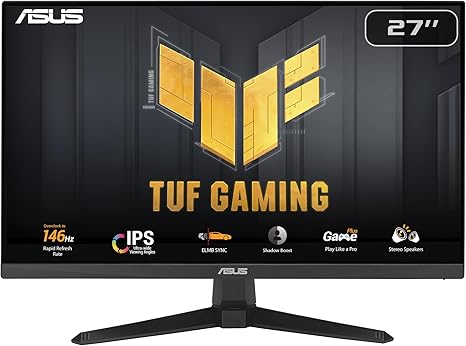
ASUS TUF Gaming 27” 1080P Monitor
| Brand | ASUS |
| Screen Size | 27 Inches |
| Resolution | FHD 1080p |
| Aspect Ratio | 16:9 |
| Screen Surface Description | Matte |

Leave a Reply