
📉 Nikkei Crashes Over 1,000 Yen, Market Shock as Yen Surges & BOJ Hints at Rate Hike
The Japanese stock market faced a dramatic correction today, with the Nikkei 225 closing at 49,303 yen, down 950 yen from the previous session. During early trading, the index fell more than 1,000 yen, sending waves of panic across investor circles and reigniting fears of volatility in Japan’s equity markets.
This sudden decline was driven by a combination of profit-taking, a rapid surge in the yen, and growing speculation that the Bank of Japan may raise interest rates in December, following remarks from BOJ Governor Kazuo Ueda.
Experts are calling this correction a “wake-up call” rather than a collapse, but it underscores the delicate balance Japanese markets face in the face of changing monetary policy and global economic uncertainty.
🔻 Why Did the Market Drop So Fast?
Analysts point to three major triggers behind the sudden crash:
1. Rising Yen Pressures Exporters
A strengthening yen immediately impacts Japan’s export-heavy economy. Companies like Toyota, Sony, Honda, and major semiconductor manufacturers face decreased profit margins when overseas earnings are converted back into yen.
- Export revenues drop for multinational corporations.
- Investors anticipate lower earnings forecasts, triggering stock sales.
- The automotive and electronics sectors were among the hardest hit, with share prices falling between 2–4% in a single session.
2. BOJ Rate Hike Concerns
Governor Kazuo Ueda’s comments about the risks of prolonged low interest rates caused markets to speculate on a potential December rate hike, ending years of ultra-loose monetary policy.
- Investors worry higher rates may reduce liquidity in equity markets.
- Rising rates could cool lending and business expansion.
- The sudden anticipation of policy tightening created immediate volatility in both equities and government bonds.
3. Profit-Taking at Year-End
With the Nikkei near record highs in recent months, many institutional investors used the uncertainty as a reason to lock in gains, selling large positions quickly.
- Year-end rebalancing in funds can amplify market movements.
- Foreign investors, who influence Japan’s equity flows, may repatriate profits before fiscal year-end.
4. Global Macroeconomic Influences
- Rising U.S. Treasury yields increased the appeal of the dollar, further strengthening the yen in contrast to the dollar.
- Concerns over global inflation trends and potential slowdown in China added pressure on Japanese equities.
💴 Yen Soars as Expectations Shift
The yen jumped sharply against the dollar, a move that has dual effects:
- Signals confidence in Japan’s economic stability investors buy yen anticipating stronger returns from domestic assets.
- Hurts exporters and multinational profits stronger yen reduces competitiveness abroad.
At one point, the yen surged 1.2% against the USD, the largest one-day gain in months. Currency strategists warn that a continued sharp appreciation could weigh heavily on Japan’s export-driven economy in Q1 2026.
📊 Sectoral Impact & Market Response
Sectors Hurt the Most
- Automotive & Electronics: Heavily reliant on overseas sales; profit margins shrink.
- Technology & Semiconductors: Export-heavy, susceptible to currency fluctuations.
Sectors That Could Benefit
- Banks & Financial Institutions: Higher interest rates increase lending profitability.
- Insurance Companies: Investment returns improve with rising yields.
Market Indicators to Watch
- Volatility in Nikkei futures over the next two weeks.
- Government bond yields and the yield curve.
- USD/JPY exchange rate trends.
🔮 Market Outlook: What Could Happen Next?
Industry analyst Hideyuki Suzuki comments:
“The shock is significant, but it doesn’t indicate a long-term trend reversal. Year-end performance will hinge on the BOJ’s December decision and upcoming U.S. inflation data.”
Other experts suggest:
- Short-term volatility is likely to continue through December.
- Mid-to-long-term recovery is possible if BOJ communicates a gradual and predictable policy path.
- Foreign investor behavior and global macro conditions will play a critical role.
 lta’s Opinion 🎙

This Nikkei correction is healthy and necessary. Markets had been running hot, powered by low-interest rates and global investor confidence. A pullback was inevitable, and BOJ’s signals merely accelerated it.
- Key Insight: Investors should differentiate between panic selling and structural risk. This is a liquidity-driven correction, not a collapse.
- Buying Opportunity: Those with long-term horizons may find value in undervalued stocks during this dip.
- Policy Communication Matters: Clear guidance from BOJ will reduce uncertainty, stabilize markets, and restore confidence.
From Alta’s perspective, investors should not panic measured corrections can often set the stage for strong rallies once clarity is restored.
❓ FAQ’s.
Q1. Does today’s 1,000-yen fall mean Japan is entering a bear market?
No. A single sharp decline, even dramatic, does not signal a bear market unless it persists over weeks or months.
Q2. Could the BOJ delay the December rate hike because of this crash?
It’s unlikely. BOJ policy is guided by inflation and economic fundamentals, not one day’s market fluctuation.
Q3. How long could the yen stay strong?
Short-term strength is expected; long-term trends will depend on BOJ and fiscal policies, and global currency movements.
Q4. Should investors exit Japanese equities immediately?
Not necessarily. Historically, sharp corrections near policy transitions often lead to strong rebounds once clarity is restored.
Q5. Which sectors may benefit if rates rise?
Financial sectors, including banks and insurance companies, usually gain from higher rates.
Q6. How do foreign investors react to sudden BOJ policy shifts?
Foreign institutional investors may temporarily reduce exposure, causing further volatility. Watching foreign inflows is key for understanding market dynamics.
Q7. Is this crash affecting government bonds too?
Yes. Japanese government bonds fell slightly as rates expectations rise, reflecting a correlated market movement.
Q8. Could this affect Japan’s GDP growth outlook?
Indirectly. Export-reliant companies may earn less in the short term, potentially affecting corporate profits and domestic investment.
Table of Contents
- Resident Evil Requiem Becomes 2026’s Highest-Rated Game – A Survival Horror Masterpiece or an Overhyped Sequel That Loses Steam?
- Black Ops 7 Sets a New Standard for Tactical FPS Combat – But Controversy and Matchmaking Frustrations Spark Debate
- Ghostrunner 2 Free on Epic Games, A Cyberpunk Masterpiece of Relentless Action – or a Brutally Punishing Game That’s Too Hard to Love?
- Code Vein II Is a Beautiful Evolution – But Its Uneven World Holds It Back! Or Does It Still Lack the Crown? (Feb 2026)
- Nioh 3 Review- A Brutal Soulslike Masterpiece That Perfects Samurai Combat – Or an Unforgiving Grind That Pushes Players Too Far?

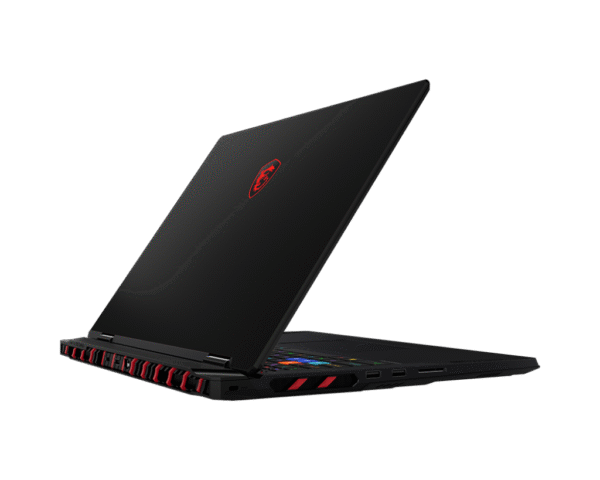
Raider A18 HX A9W
- Graphics Card
- RTX 5080RTX 5090
- Display
- 18″ UHD+ 120Hz Mini LED
- Processor
- Core Ultra 9-285HXRyzen 9 9955HX3D
- Memory (RAM)
- 64GB32GB
- Storage
- 2TB SSD4TB SSD
- Operating System
- Windows 11Windows 11 Pro
| General | |
| Brand | MSI |
|---|---|
| Model | Raider A18 HX A9WJG-052US |
| Color | Core Black |
| Processor & Chipset | |
| Type | AMD Ryzen 9 9955HX3D Processor |
| # of Cores | 16 |
| # of Threads | 32 |
| Base Clock | 2.5 GHz |
| Max. Boost Clock | 5.4 GHz |
| L3 Cache | 128 MB |
| Software | |
| Operating System | Microsoft Windows 11 Professional |
| Graphics | |
| GPU (Graphic Accelerator) | NVIDIA GeForce RTX 5090 Laptop GPU 24GB GDDR7 Powers Advanced AI (1824 AI TOPS) |
| Total Graphics Power (TGP) | 175W Maximum TGP w/ Dynamic Boost |
| Display | |
| Display | 18″ 4K UHD+ 120Hz Mini LED HDR 1000 (100% DCI-P3) Display |
| Resolution | 3840 x 2400 (16:9) |
| Memory | |
| Standard Memory | 64GB (2x 32GB) DDR5 5600MHz Memory |
| Maximum Memory | 2 Slots, Max Memory 96GB |
| Hard Drive & Optical Drive | |
| HDD Capacity | 2TB NVMe PCIe SSD Gen 4×4 |
| Storage Capability | 1x M.2 SSD slot (NVMe PCIe Gen 5) 1x M.2 SSD slot (NVMe PCIe Gen 4) |
| Interfaces/Ports | |
| Card Reader | Full size SD UHS-III |
| I/O Ports | 2x USB 4 w/ Support DP & PD 3.1 (Thunderbolt 4 Compatible) 3x USB 3.2 Type A (Gen 2) 1x HDMI v2.1 (8K@60Hz / 4K@120Hz) 1x RJ45 |
| Input Device | |
| Keyboard | SteelSeries Per-Key RGB w/ Anti-Ghost Key (99 Key) Multi Touch |
| Webcam Resolution | |
| Webcam | IR FHD w/ Shutter |
| Audio | |
| Audio | Dynaudio |
| Speaker | 4x 2W Speakers 2x 2W Woofer |
| Audio Ports | 1 Audio Combo (1/8″) |
| Network & Communication | |
| Network | Gigabit Ethernet LAN (Up to 2.5G) MTK Wi-Fi 7 BE1750 Bluetooth 5.4 |
| Power | |
| Battery Pack | 4 cell (99.9Whr) Li-Ion |
| AC Adaptor | 400W |
| Physical Characteristics | |
| Dimension (L x W x H) | 15.91″ x 12.09″ x 1.26″ |
| Unit Weight | 7.94 lbs |
| Warranty & Support | |
| Manufacturer Warranty | 1 Year Limited Warranty (Include 1 Year Global) |
Leave a Reply