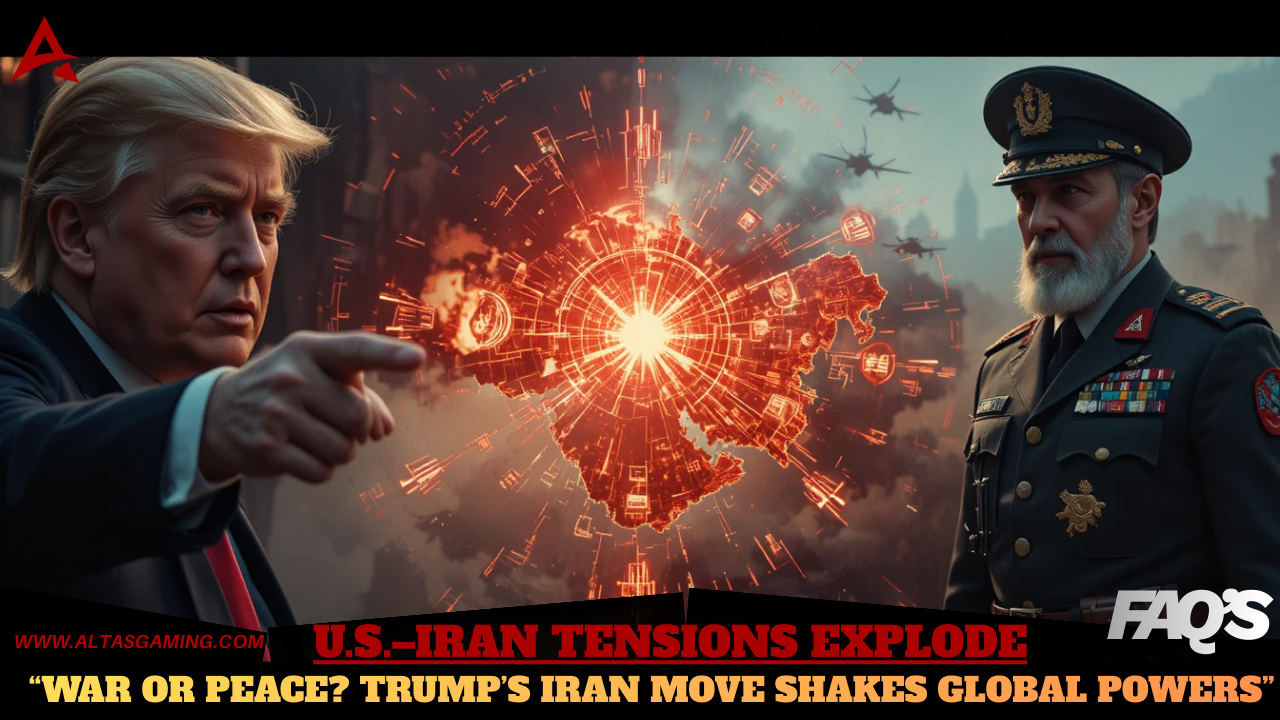
🔥 Trump Weighs Iran Strikes as China Warns of “Military Adventurism”- A New Flashpoint in Global Power Politics
Introduction- A Dangerous Moment in Global Geopolitics
Tensions between the United States and Iran have surged to alarming levels after reports revealed that former U.S. President Donald Trump is weighing potential military strikes against Iran. The move, according to sources, is aimed not only at countering Tehran but also at inspiring renewed protests inside Iran.
At the same time, China has issued a sharp warning against what it calls U.S. “military adventurism,” signaling that any escalation could have far-reaching geopolitical consequences. Iran, meanwhile, has vowed swift retaliation and has reportedly reinforced its military with 1,000 strategic drones raising fears of a wider regional conflict.
This unfolding crisis is not just about Iran and the U.S. It is about global power, alliances, energy markets, trade routes, and the fragile balance of world politics.
1) Trump’s Calculus- Military Pressure and Psychological Warfare
According to multiple sources, Trump’s strategy is twofold:
- Apply military pressure on Iran’s leadership.
- Trigger internal unrest by exposing vulnerabilities in Tehran’s power structure.
Analysts describe this approach as a mix of military deterrence and psychological warfare a tactic historically used to weaken adversaries without full-scale war.
Key motivations behind Trump’s strategy:
- Reinforcing U.S. dominance in the Middle East.
- Sending a message to rivals like China and Russia.
- Appealing to domestic political audiences.
- Countering Iran’s growing regional influence.
Some experts argue that Trump’s aggressive posture reflects a broader shift in U.S. foreign policy from diplomacy to coercive power politics.
2) Iran’s Response- Drones, Defiance, and Deterrence
Iran has rejected U.S. threats, calling them psychological warfare and political theater. Tehran insists it will not bow to pressure and has vowed immediate retaliation if attacked.
Major developments:
- Iranian military reportedly deployed 1,000 strategic drones.
- Iranian officials warned of “quick and decisive” retaliation.
- Tehran accused Washington of destabilizing the region.
Iran’s drone expansion signals a shift in modern warfare. Drones are cheaper, harder to detect, and capable of overwhelming traditional defense systems.
Why drones matter:
- They can target U.S. bases, allies, and infrastructure.
- They allow Iran to wage asymmetric warfare.
- They increase the risk of accidental escalation.
3) China’s Warning- A Signal to Washington and the World
China’s response was swift and unusually blunt.
Beijing warned against U.S. “military adventurism,” signaling that it views the situation not just as a regional conflict but as a threat to global stability.
Why China is involved:
- Iran is a key partner in China’s Belt and Road Initiative.
- China relies heavily on Middle Eastern energy supplies.
- Beijing opposes unilateral U.S. military actions.
- China sees the crisis as part of a broader U.S. strategy to contain its rise.
China’s warning reflects a deeper reality: the Iran crisis is becoming a proxy battlefield in the U.S.–China rivalry.
4) Russia and the Silent Power Game
While not as vocal as China, Russia is closely watching developments.
Moscow has historically supported Iran and opposes U.S. military intervention. Analysts believe Russia could:
- Provide diplomatic backing to Iran.
- Increase military cooperation.
- Use the crisis to weaken Western influence.
The Iran crisis is increasingly becoming a multipolar confrontation involving the U.S., China, Russia, and regional powers.
5) Middle East on Edge- Regional Fallout
A U.S.–Iran conflict would not remain limited.
Countries most at risk:
- Israel
- Saudi Arabia
- UAE
- Iraq
- Syria
- Lebanon
Iran-backed groups like Hezbollah and militias in Iraq could retaliate against U.S. interests and allies.
Potential consequences:
- Missile and drone attacks on U.S. bases.
- Disruption of oil shipping in the Strait of Hormuz.
- Escalation into a regional war.
6) Global Economic Impact- Oil, Trade, and Markets
The Iran crisis is already affecting global markets.
Oil markets:
- Oil prices are rising amid fears of supply disruptions.
- The Strait of Hormuz, through which 20% of global oil flows, is a key risk point.
Trade and tariffs:
- Increased geopolitical tensions could trigger new sanctions and tariffs.
- China–U.S. trade relations could worsen.
- Energy-dependent economies may face inflation.
Financial markets:
- Investors are moving toward safe-haven assets like gold and the dollar.
- Stock markets show increased volatility.
7) Public Opinion- What People Think
In the United States:
- Supporters see Trump’s stance as strong leadership.
- Critics fear unnecessary war and global instability.
In Iran:
- Nationalist sentiment is rising.
- Opposition groups are divided some oppose the regime but reject foreign intervention.
Globally:
- Many countries fear a new Middle East war.
- Public opinion is shifting toward diplomacy over confrontation.
Social media is flooded with debates about whether Trump’s strategy is bold or reckless.
8) Hidden Geopolitical Agenda- What’s Really Happening?
Experts believe the Iran crisis is part of a larger global power struggle.
Key hidden factors:
- U.S. efforts to reassert dominance amid China’s rise.
- Control over global energy routes.
- Testing alliances and rival powers.
- Domestic political calculations in the U.S.
Some analysts argue that Iran is being used as a pressure point in a broader confrontation between the West and the emerging multipolar world.
9) Future Scenarios- What Happens Next?
Scenario 1- Limited Military Strikes
- Targeted U.S. strikes on Iranian facilities.
- Iran responds through proxies.
- Conflict remains contained but tense.
Scenario 2- Regional War
- Direct confrontation between the U.S. and Iran.
- Israel and Gulf states get involved.
- Oil prices surge dramatically.
Scenario 3- Diplomatic Breakthrough
- Backchannel talks reduce tensions.
- Temporary de-escalation.
- Long-term rivalry continues.
Scenario 4- Global Power Clash
- China and Russia increase support for Iran.
- The crisis becomes a major front in the new Cold War.
10)  lta’s Expert Opinion ( Analysis)

Geopolitical analysts say the current crisis reflects a world entering a new era of confrontation.
According to Altas-style strategic analysis:
- The U.S. is testing its ability to shape global events through force.
- China is testing its ability to deter U.S. actions without direct conflict.
- Iran is testing asymmetric warfare strategies.
- The world is witnessing the rise of “hybrid warfare” a mix of military, psychological, economic, and technological battles.
Experts warn that even a small miscalculation could trigger a chain reaction of global instability.
FAQs- Key Questions People Are Asking
Q1: Is the U.S. really planning to attack Iran?
There is no official confirmation, but credible sources suggest Trump is seriously considering military options.
Q2: Why is China defending Iran?
China sees Iran as a strategic partner and opposes U.S. unilateral military actions.
Q3: Will this lead to World War 3?
While unlikely, analysts warn that escalating tensions between major powers increase global risk.
Q4: Why are drones so important in this conflict?
Drones allow Iran to challenge U.S. military power at low cost and high impact.
Q5: How will this affect oil prices?
Any conflict in the Gulf could push oil prices sharply higher.
Q6: Could protests actually destabilize Iran?
Protests alone are unlikely to topple the regime, but combined with economic pressure, they could weaken it.
Q7: What should investors watch?
Oil prices, gold, defense stocks, and global market volatility.
Final Conclusion- A World Standing at the Edge
The escalating confrontation between the U.S. and Iran, amplified by China’s warning and Iran’s military preparations, marks one of the most dangerous geopolitical moments in recent years.
This is not just a regional conflict it is a test of global power, alliances, and the future world order.
Whether the world moves toward war or diplomacy will depend on decisions made in Washington, Tehran, Beijing, and beyond.
One thing is clear: the era of quiet geopolitics is over. The world has entered a new phase of high-stakes confrontation.
Table of Contents
- Is World War 3 coming Iran–Israel–USA Conflict 2026 The Complete Story, Hidden Tensions, and What Could Happen Next
- Taiwan Invasion by 2027 – But the Real War for AI, Chips, and Global Power Has Already Begun
- Resident Evil Requiem Becomes 2026’s Highest-Rated Game – A Survival Horror Masterpiece or an Overhyped Sequel That Loses Steam?
- Black Ops 7 Sets a New Standard for Tactical FPS Combat – But Controversy and Matchmaking Frustrations Spark Debate
- Ghostrunner 2 Free on Epic Games, A Cyberpunk Masterpiece of Relentless Action – or a Brutally Punishing Game That’s Too Hard to Love?

Crucial Pro DDR5 RAM 64GB
About this item
- COOL BLACK LOOK & FEEL: Our DDR5 Pro Overclocking Memory features a black, aluminum heat spreader with a unique, origami-based design that is both cool to the touch and an aesthetic win for any rig
- ACCELERATED PERFORMANCE: 6400MHz at CL40 for stable overclocking performance and 25% lower latency for higher frame rates per second. Every millisecond gained in fast-paced gameplay counts
- INTEL & AMD COMPATIBLE: Compatible with Intel Core Ultra series 2 & 13-14th Gen desktop CPUs and above. Also, compatible with AMD Ryzen 9000 Series desktop CPUs and above (Verify compatibility with motherboard manufacturer)
- FLEXIBILITY: By supporting both Intel XMP 3.0 and AMD EXPO on the same module, Crucial offers you ultimate flexibility with your build
- MICRON QUALITY & RELIABILITY: With 45 years of memory expertise, Micron delivers cutting-edge engineering and superior component and module-level testing; including limited lifetime warranty.
-
Brand Crucial Computer Memory Size 64 GB RAM Memory Technology DDR5 Memory Speed 6400 MHz Compatible Devices Desktop -
Product information
Additional Information
Customer Reviews 4.6 out of 5 stars
Best Sellers Rank - #8 in Computer Memory
Warranty & Support
Amazon.com Return Policy:You may return any new computer purchased from Amazon.com that is “dead on arrival,” arrives in damaged condition, or is still in unopened boxes, for a full refund within 30 days of purchase. Amazon.com reserves the right to test “dead on arrival” returns and impose a customer fee equal to 15 percent of the product sales price if the customer misrepresents the condition of the product. Any returned computer that is damaged through customer misuse, is missing parts, or is in unsellable condition due to customer tampering will result in the customer being charged a higher restocking fee based on the condition of the product. Amazon.com will not accept returns of any desktop or notebook computer more than 30 days after you receive the shipment. New, used, and refurbished products purchased from Marketplace vendors are subject to the returns policy of the individual vendor.Manufacturer’s warranty can be requested from customer service. Click here to make a request to customer service.
From the manufacturer


Accelerated performance
– Lower latency for higher frame rates per second and smoother gaming
– Ideal for memory-intensive AAA games

Compatibility
Supports next-gen multi-core CPUs and stable overclocking with Intel XMP 3.0 and AMD EXPO

Flexibility
– Supports both Intel XMP 3.0 and AMD EXPO on the same module
– Keep your options open with ultimate flexibility for your build

Micron quality and reliability
– Micron delivers cutting-edge engineering
– Superior component and module-level testing for all Crucial DRAM products
Crucial DDR5 Pro Overclocking DRAM
DDR5 Pro OC UDIMM
DDR5 Pro OC UDIMM

DDR5 Pro UDIMM
Memory Size
16GB, 32GB
Memory Size
16GB, 32GB
Memory Size
16GB, 24GB
Memory Speed
6400MHz
Memory Speed
6000MHz
Memory Speed
6000MHz
Color
Black, White
Color
Black, White
Color
Black
Compatibility
Intel Core 12-14th Gen or AMD Ryzen 7000 Series CPUs and above
Compatibility
Intel Core 12-14th Gen or AMD Ryzen 7000 Series CPUs and above
Compatibility
12th Gen Intel Core or AMD Ryzen 7000 Series CPUs and above
Optimal For
DIYers, overclockers and dedicated gamers
Optimal For
DIYers, overclockers and dedicated gamers
Optimal For
For gamers, creatives and professionals who need DDR5 performance out of the box
Feedback
Would you like to tell us about a lower price?





Leave a Reply