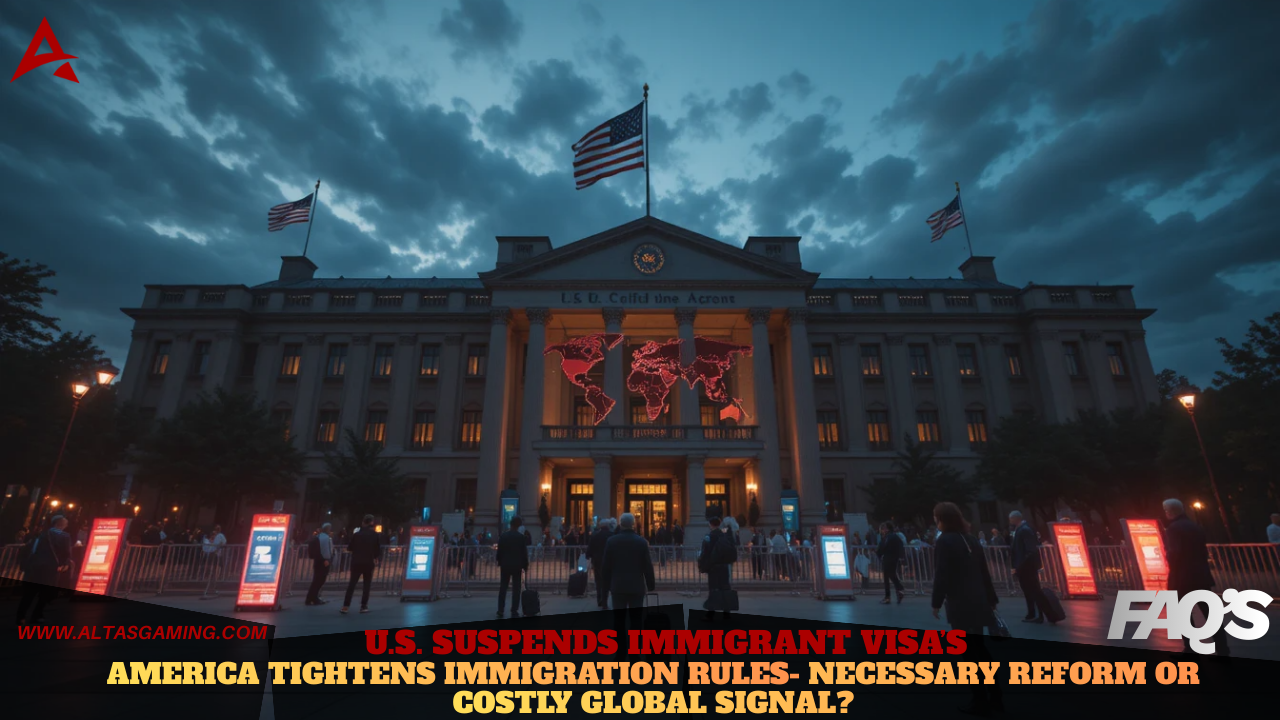
U.S. Suspends Immigrant Visa Processing for 75 Countries – A Deep Dive Into the List, Reasons, and Global Impact

Overview
The Trump administration has announced a sweeping suspension of immigrant visa processing from 75 countries, effective January 21, 2026, in one of the most expansive changes to U.S. immigration policy in years. The move halts the issuance of green cards and other permanent-residence visas for applicants from these nations, even if their applications were already in progress. The decision was formally communicated by the U.S. State Department as part of an intensified effort to tighten immigration screening and limit access to public benefits by incoming immigrants. (Reuters)
While non-immigrant visas (like tourist, student, and work visas) will continue to be processed, immigrant visas which allow permanent residence are now indefinitely suspended for the listed countries. (VisaVerge)
Why the Suspension Was Announced
The official rationale centers on the longstanding “public charge” rule, a doctrine that allows the U.S. government to deny visas to applicants who are likely to rely on government assistance a policy previously emphasized under the Trump administration in 2019, narrowed during the Biden years, and now revived in expanded form. Under the 2026 directive:
- Consular officers are instructed to consider a wide range of factors including health, age, income, education, language skills, and past public assistance use when evaluating visa eligibility.
- Applicants deemed likely to become dependent on government benefits may be denied immigrant visas regardless of sponsorship or family ties. (Reuters)
This policy follows broader immigration enforcement moves, including the revocation of more than 100,000 existing visas and tighter security checks, such as increased social media examinaion for applicants. (Reuters)
The Full List of 75 Countries Affected

Here are the nations whose immigrant visa processing will be suspended (alphabetical order):
- Afghanistan
- Albania
- Algeria
- Antigua and Barbuda
- Armenia
- Azerbaijan
- Bahamas
- Bangladesh
- Barbados
- Belarus
- Belize
- Bhutan
- Bosnia and Herzegovina
- Brazil
- Burma (Myanmar)
- Cambodia
- Cameroon
- Cape Verde
- Colombia
- Côte d’Ivoire
- Cuba
- Democratic Republic of the Congo
- Dominica
- Egypt
- Eritrea
- Ethiopia
- Fiji
- Gambia
- Georgia
- Ghana
- Grenada
- Guatemala
- Guinea
- Haiti
- Iran
- Iraq
- Jamaica
- Jordan
- Kazakhstan
- Kosovo
- Kuwait
- Kyrgyzstan
- Laos
- Lebanon
- Liberia
- Libya
- Moldova
- Mongolia
- Montenegro
- Morocco
- Nepal
- Nicaragua
- Nigeria
- North Macedonia
- Pakistan
- Republic of the Congo
- Russia
- Rwanda
- Saint Kitts and Nevis
- Saint Lucia
- Saint Vincent and the Grenadines
- Senegal
- Sierra Leone
- Somalia
- South Sudan
- Sudan
- Syria
- Tanzania
- Thailand
- Togo
- Tunisia
- Uganda
- Uruguay
- Uzbekistan
- Yemen (VisaVerge)
This list spans Africa, Asia, the Middle East, Latin America, the Caribbean, and Eastern Europe, including both politically complex nations and long-standing U.S. partners. (VisaVerge)
Who Is Not Affected
The suspension does not apply to:
- Tourist visas (B-1/B-2)
- Student visas (F-1, J-1)
- Work visas (H-1B, L-1, etc.)
- Visitors for business and study
- Dual nationals using a passport from a country not on the list
Applicants with already-issued visas in hand are also generally exempt from the new restrictions. (VisaVerge)
What This Means for Individuals and Families
For Prospective Immigrants
- Applicants from these countries may not receive immigrant visas until further notice.
- Cases already approved but not yet finalized will be refused.
- Some family-based petitions and long waits could be indefinitely extended.
For U.S. Citizens With Relatives Abroad
- American citizens seeking to bring spouses, children, or parents to the U.S. could face significant disruptions.
- Exemptions and waivers may be available only in narrow cases, such as urgent national service or critical interests.
Geopolitical and Global Impact
Diplomatic Fallout
This policy could strain U.S. relations with affected nations, many of which are key security partners or strategic allies including Kuwait and Pakistan. (The Tribune)
Migration Patterns
Experts predict potential shifts in global migration as people seek alternative destinations like Canada, the EU, or Gulf states for permanent relocation or employment opportunities.
Broader U.S. Image
The U.S. risks being seen as retreating from its historic role as a destination for family reunification, skilled immigrants, and refugees especially as other countries compete for global talent.
Criticism and Support
Supporters argue this policy:
- Protects U.S. taxpayers by preventing reliance on public welfare systems.
- Strengthens vetting to reduce fraud.
Critics counter that it:
- Blocks legal immigration pathways for hundreds of thousands of families.
- Targets nations with little correlation to public benefit usage.
- Could disproportionately affect refugees and skilled workers.
The suspension is expected to affect roughly 315,000 potential immigrants within the first year. (Sky News)
Forecast- What Comes Next
Short Term
- The suspension begins January 21, 2026 and remains indefinite.
- Legal challenges and advocacy campaigns are likely.
- Some countries may negotiate exemptions or review criteria.
Medium Term
- Visa backlogs could intensify.
- U.S. consular services may shift resources to non-immigrant processing.
- Global migration patterns may adapt amid tighter U.S. policies.
Long Term
- If paired with expanded legal pathways, the policy might reform immigration flows.
- Conversely, without reform, it could fuel migration pressures elsewhere.
 lta’s Opinion

From Alta’s perspective, the suspension reflects a fundamental tension in U.S. immigration policy: a desire to limit perceived economic burden versus the need to maintain America’s historic role as an inclusive destination. While the policy may satisfy domestic political constituencies focused on controlling public expenditure, it risks undermining soft power and economic dynamism by deterring talent, entrepreneurs, and families with long-term ties to the U.S. Ultimately, without complementary reforms that streamline legal immigration, the suspension could become both an economic and diplomatic liability.
Frequently Asked Questions (FAQ’s)
❓ When does the suspension start?
The pause in immigrant visa processing takes effect January 21, 2026. (Reuters)
❓ Does it affect all types of visas?
No it applies only to immigrant (permanent) visas. Temporary visas for tourism, work, or study are still being issued. (VisaVerge)
❓ Are dual nationals exempt?
Dual nationals may be exempt if they use a passport from a country not on the list. (VisaVerge)
❓ Will this policy be permanent?
The suspension is indefinite until the State Department completes a review and announces changes. (Reuters)
❓ How many people will it affect?
Estimates suggest about 315,000 legal immigrants could be barred from processing within a year. (Sky News)
Conclusion
The suspension of immigrant visa processing for 75 countries marks a major shift in U.S. immigration policy, with deep implications for families, global mobility, and diplomatic relations. While aimed at tightening public benefits eligibility and screening, its broad reach makes it one of the most consequential immigration actions in recent U.S. history – reshaping how the world views entry into the United States.
Table of Contents
- Resident Evil Requiem Becomes 2026’s Highest-Rated Game – A Survival Horror Masterpiece or an Overhyped Sequel That Loses Steam?
- Black Ops 7 Sets a New Standard for Tactical FPS Combat – But Controversy and Matchmaking Frustrations Spark Debate
- Ghostrunner 2 Free on Epic Games, A Cyberpunk Masterpiece of Relentless Action – or a Brutally Punishing Game That’s Too Hard to Love?
- Code Vein II Is a Beautiful Evolution – But Its Uneven World Holds It Back! Or Does It Still Lack the Crown? (Feb 2026)
- Nioh 3 Review- A Brutal Soulslike Masterpiece That Perfects Samurai Combat – Or an Unforgiving Grind That Pushes Players Too Far?

ASUS ROG Astral GeForce RTX™ 5090 OC Edition Gaming
What’s in the box
- ROG-ASTRAL-RTX5090-O32G-GAMING graphics card
- speedsetup manual
- ROG Graphics card holder
- ROG Velcro Hook & Loop
- ROG Magnet
Product information
| Brand | ASUS |
|---|---|
| Series | ROG-ATRAL-RTX5090-O32G-GAMING |
| Item model number | ROG-ATRAL-RTX5090-O32G-GAMING |
| Item Weight | 5 pounds |
| Product Dimensions | 14.1 x 5.9 x 3 inches |
| Item Dimensions LxWxH | 14.1 x 5.9 x 3 inches |
| Color | BLACK |
| Manufacturer | ASUS |
| ASIN | B0DS2WQZ2M |
From the manufacturer


Perfect PSU for the ROG Astral GeForce RTX 50 Series
Pair with the ROG Thor III and ROG Strix Platinum Series PSU and enjoy reliable power for your card. GPU-First enhances voltage stability by up to 45%, even during demanding gaming sessions and overclocking scenarios, helping to ensure peak performance for a more consistent gaming experience.





From the brand

















Leave a Reply