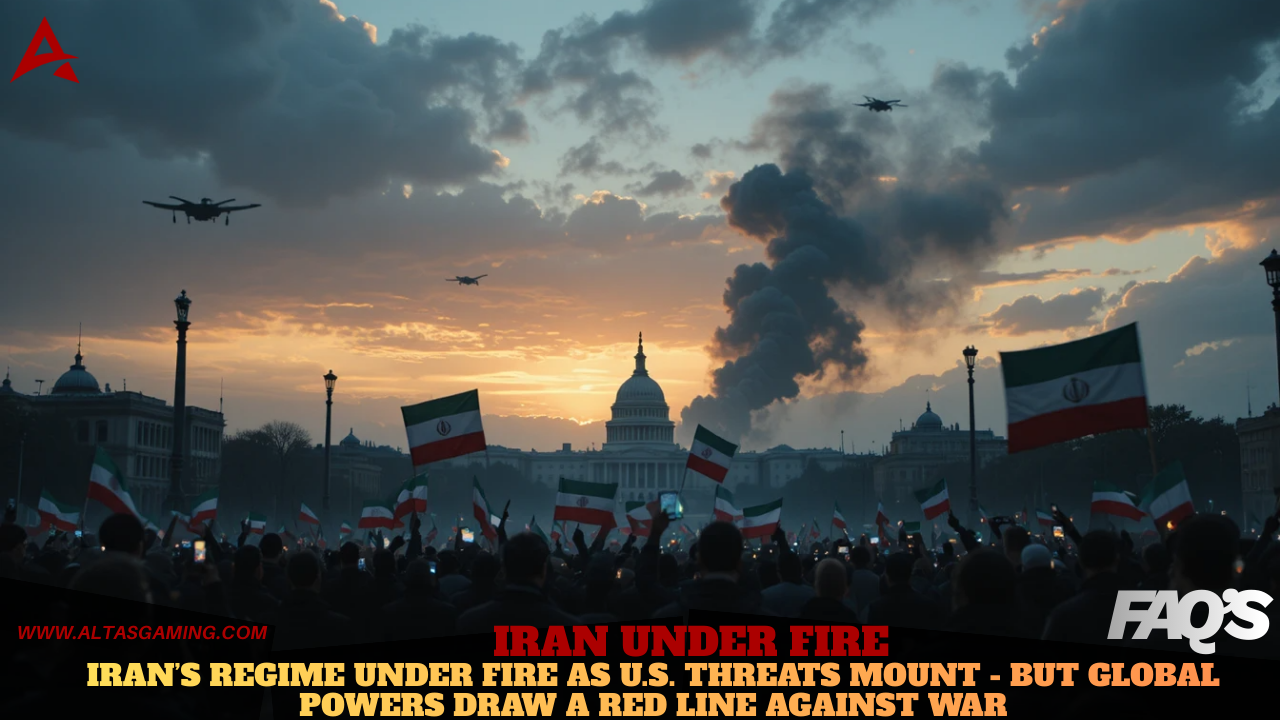
Russia, China Unlikely to Back Iran Against U.S. Military Threats – Iran in Crisis as Global Powers Weigh In

Iran Under Fire! Tensions between the United States and Iran have surged in early 2026 as widespread protests against the clerical regime have been met with brutal crackdowns, thousands of deaths, and threats of possible U.S. military intervention. Despite public sympathy between Teheran and traditional partners like Russia and China, analysts now say neither ally is likely to offer meaningful military support if the U.S. takes hostile action a calculation that could reshape the geopolitical landscape of the Middle East and beyond. (AL-Monitor)
🇺🇸 U.S. Military Threats and International Condemnation
At a recent United Nations Security Council meeting, the U.S. reaffirmed that “all options are on the table” to end Iran’s violent crackdown on demonstrators which human rights groups have described as massacre-level repression. (Reuters)
President Donald Trump has publicly warned that Iran will face serious consequences if the killings continue, even as evidence suggests the violence has somewhat eased and the Iranian government has controversially halted plans to execute a young protester previously poised for execution. (Reuters)
Despite these threats, Iran’s government has repeatedly warned that it would retaliate against U.S. bases in the region should Washington take military action. Diplomats say some U.S. personnel were advised to leave a key air base in the Gulf due to Tehran’s threats. (Geo News)
🇮🇷 Iran’s Domestic Turmoil- Protests, Crackdowns, and Blackouts
The unrest in Iran often described as the most significant since the 1979 Islamic Revolution began in late December 2025 amid a deep economic crisis and political dissatisfaction. Protests spread rapidly across cities and provinces, driven by soaring inflation, currency collapse, and repression of civil liberties. (The Guardian)
Independent estimates by human rights groups suggest the death toll from protests and government repression ranges into the thousands, with many more wounded or detained. (Wikipedia)
To suppress information, the Iranian government imposed a near-total internet blackout, severely limiting both domestic communication and international reporting on unfolding events. (Wikipedia)
🪖 Iran’s Military Position and Threat Responses
Even as protests have abated under heavy force, some Iranian military figures have publicly stated that the Islamic Revolutionary Guard Corps (IRGC) is on “highest alert” and prepared to respond to any United States aggression. Former IRGC commander Mohsen Rezaei has warned that Tehran could deliver a “crushing response” to any U.S. intervention. (PressTV)
Iran has also directly warned neighboring countries that U.S. action could trigger strikes on U.S. bases, raising the stakes for regional security. (Geo News)
🇷🇺🇨🇳 Why Russia and China Are Reluctant to Support Iran Militarily
Despite longstanding ties, both Russia and China are unlikely to back Iran against U.S. military action for key strategic reasons, analysts say:
- Neither country’s bilateral treaties with Iran include an obligation to provide direct military support if Iran is attacked. (AL-Monitor)
- Moscow prioritizes its own geopolitical interests especially negotiations with Washington over the war in Ukraine over confrontation in the Middle East. (AL-Monitor)
- China may offer political, economic, and technological backing, but is unlikely to risk military escalation with the U.S. over Iran. (AL-Monitor)
Analysts note that Russia and China could issue condemnations and provide limited material aid, but would avoid direct military engagement against American forces, prioritizing stable relations with Washington and their broader strategic goals. (AL-Monitor)
🌍 International Diplomacy and Regional De-Escalation
Meanwhile, Middle Eastern governments including Turkey, Saudi Arabia, and others have called for de-escalation, warning that military action in Iran could destabilize the entire region and disrupt oil markets. (Reuters)
The Security Council itself has echoed calls for “maximum restraint,” urging all parties to avoid actions that would cause further loss of life or a wider regional war. (Reuters)
📉 Geopolitical and Economic Impacts
The current standoff has already had major global impacts:
Oil Markets
Tensions involving Iran, a major oil producer, can trigger price volatility. Even talk of U.S. strikes or regional escalation tends to push oil prices higher, affecting global energy costs and inflation expectations.
Regional Alliances
The lack of outright military support from Russia and China may weaken Iran’s strategic position potentially isolating Teheran further if tensions escalate.
Diplomatic Prestige
How major powers respond whether they emphasize diplomacy or military posturing will affect their international standing and influence in future Middle Eastern crises.
🧠  lta’s Opinion- Restraint Over Reaction

We are witnessing a geopolitical crisis where powerful rhetoric is matched by cautious diplomacy.
Despite Trump’s warnings and initial threats of military action, the lack of explicit backing from Russia and China signals that world powers are wary of a direct U.S.–Iran confrontation. Both Beijing and Moscow appear committed to economic and diplomatic ties without risking direct conflict with the United States.
This suggests that Washington despite its “all options on the table” posture may find limited international support for military escalation, making a negotiated outcome or regional diplomatic strategy more likely than a full-blown war.
❓ Frequently Asked Questions (FAQ’s)
Q1: Why would Russia and China avoid backing Iran militarily?
Analysts say both powers prioritize relations with the United States and have no treaty obligations to defend Iran militarily, opting instead for political and economic support. (AL-Monitor)
Q2: Are protests in Iran still ongoing?
Though large demonstrations have subsided due to government crackdowns and internet blackouts, sporadic unrest and localized clashes continue. (The Guardian)
Q3: Has military action by the U.S. begun?
As of now, no full-scale military strike has been launched, though U.S. forces have repositioned assets and warned of potential consequences. (washingtonpost.com)
Q4: What is “all options on the table”?
This phrase means the U.S. might consider sanctions, cyber operations, or military actions, but not all approaches are imminent or certain. (Reuters)
Q5: How many protesters have died?
Human rights groups estimate thousands killed, though exact numbers are hard to verify under restricted information conditions. (Wikipedia)
🧭 Final Takeaway
The Iran crisis of 2025–2026 is one of the most complex geopolitical flashpoints of the decade: internal protests, brutal crackdowns, economic collapse, and U.S. threats have intersected with global power politics. Yet even shared alliances and historic partnerships such as those between Iran, Russia, and China are proving cautious in the face of possible direct conflict with the United States.
This moment underscores a larger truth: war is not inevitable but neither is peace and the world’s great powers are deeply invested in preventing escalation while closely watching Tehran’s internal fate.
Table of Contents
- Iran War 2026 What Happened and Why Is It Important?
- Helldivers 2 Ultimate Survival Guide: Best Weapons, Builds, Missions & Pro Tips (2026)
- The PlayStation 6 – Everything Gamers Have Been Waiting For – Specs, Power, Features, and the Future of PS Gaming
- Global Crisis 2026 – The New World Order? How Nations Are Reshaping Global Power and Economy- What Happens After the Dollar Era?
- The Witcher 3: Wild Hunt – The Fantasy Masterpiece That Redefined Open-World RPGs

ASUS TUF Gaming 27” 1080P Monitor
| Brand | ASUS |
| Screen Size | 27 Inches |
| Resolution | FHD 1080p |
| Aspect Ratio | 16:9 |
| Screen Surface Description | Matte |
Leave a Reply