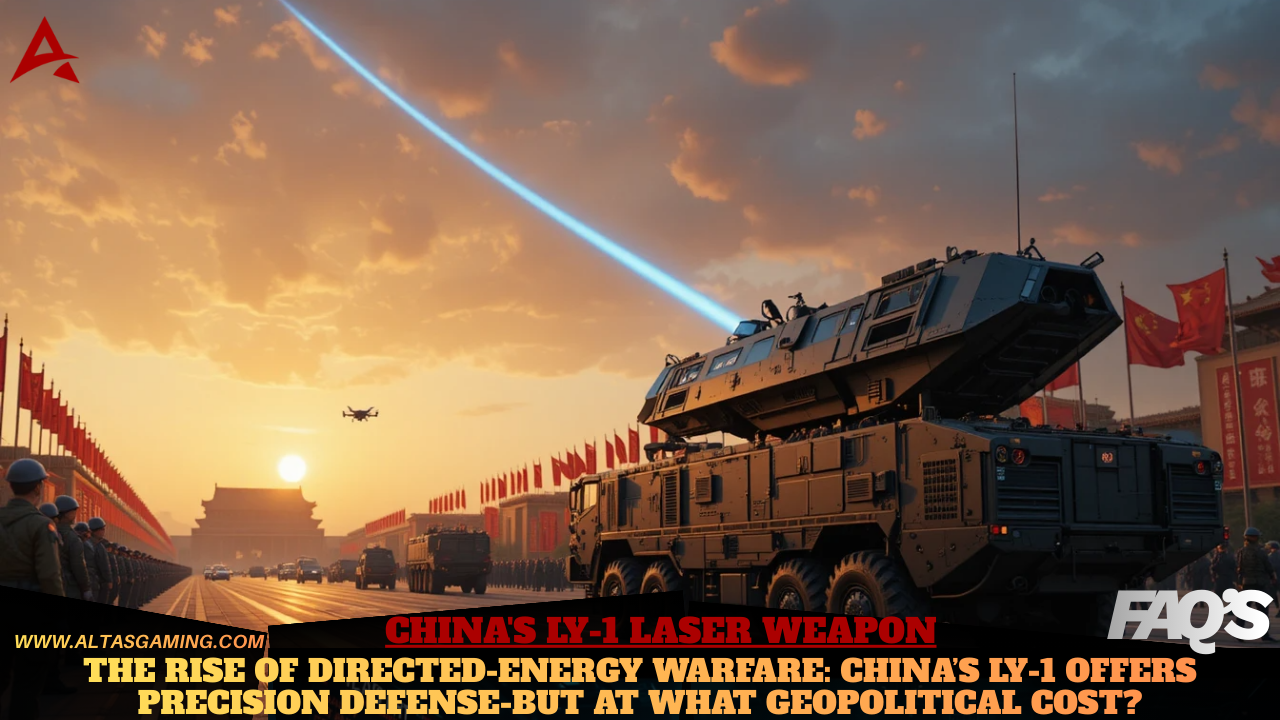
Unveiling China’s LY-1 Laser Weapon- A Silent Beam Reshaping Modern Warfare and South Asia’s Naval Balance
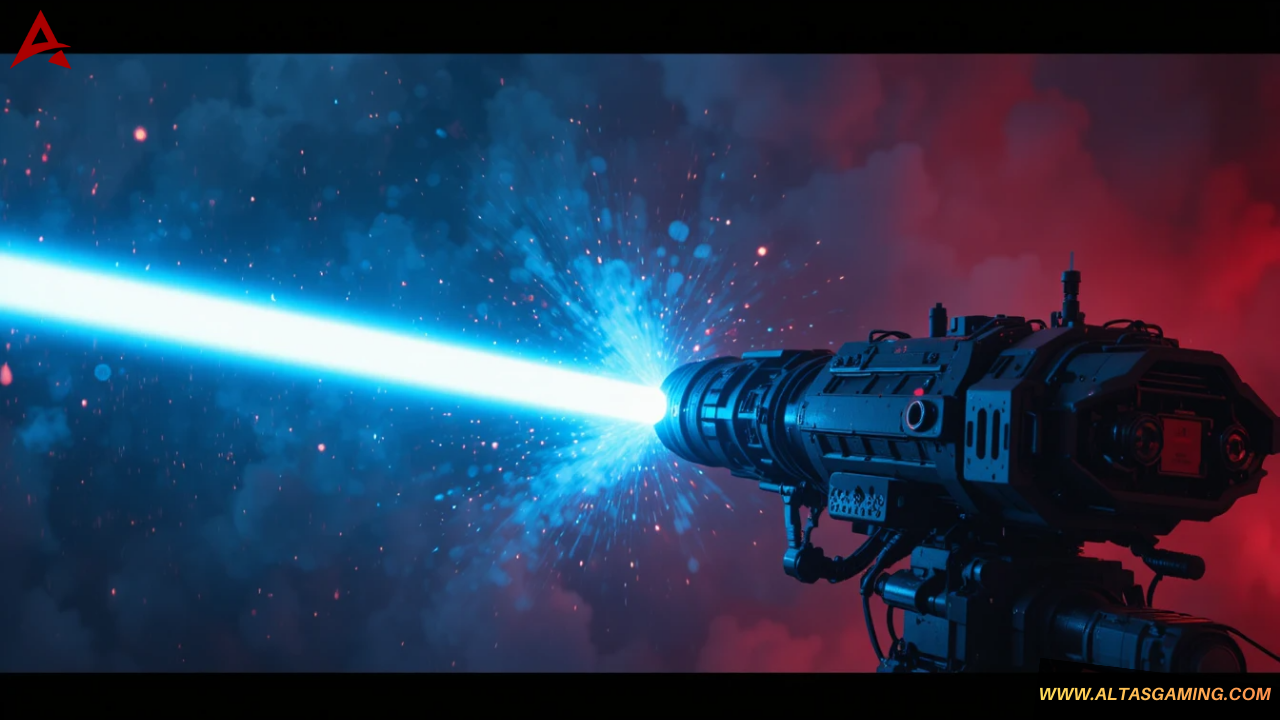
China’s September 3, 2025 military parade was more than a display of tanks and missiles it was a technological statement. Among hypersonic systems and stealth aircraft, one platform drew exceptional strategic attention: the LY-1 high-power directed-energy laser weapon.
Unlike traditional missile systems, the LY-1 represents the next evolution of warfare silent, precise, nearly instantaneous, and extremely cost-effective per shot.
And now, Pakistan is reportedly eyeing the system, signaling potential ripple effects across South Asia’s maritime security landscape.
The LY-1 Directed-Energy System- What We Know
The LY-1 is a high-energy laser weapon system (HEL) designed primarily for:
- Counter-drone operations
- Missile interception (short-range threats)
- Air defense against UAV swarms
- Shipborne defensive deployment
At the 2025 parade in Beijing, China reportedly deployed five different laser defense systems to protect the event from potential drone threats a real-world demonstration of operational readiness.
Military journals describe the LY-1 as a “last line of defence”, particularly in naval environments where rapid interception of incoming threats is critical.
Technological Configuration- Why LY-1 Matters
While official specifications remain classified, defense analysts highlight several probable features:
- Solid-state high-energy laser module
- Advanced thermal management system
- Rapid tracking radar integration
- AI-assisted targeting
- Shipborne stabilization capability
- Near-zero per-shot cost compared to missile interceptors
Unlike traditional air-defense missiles costing hundreds of thousands (or millions) per launch, laser systems cost only the energy required to fire.
That economic advantage alone makes directed-energy weapons strategically disruptive.
Tactical Utility- How It Changes the Battlefield
The LY-1 excels in:
1. Counter-Drone Warfare
Drone swarms have become a defining feature of modern conflict (Ukraine war being a major example). Laser systems provide:
- Instant engagement
- No ammunition reload
- Reduced logistical strain
- Silent neutralization
2. Missile Defense (Short-Range)
Although lasers struggle against hypersonic speeds, they are highly effective against:
- Low-flying drones
- Small UAVs
- Loitering munitions
- Some cruise missiles
3. Naval Deployment
A shipborne LY-1 would act as a close-in defense shield particularly valuable in crowded maritime zones like:
- The South China Sea
- Arabian Sea
- Indian Ocean
China’s Strategic Significance
By showcasing LY-1 publicly, China sent multiple signals:
- Technological maturity in directed-energy systems
- Confidence in domestic military R&D
- Warning to adversaries relying on drone saturation tactics
- Deterrence messaging amid US-China tensions
Chinese officials have repeatedly highlighted the vulnerability posed by drone swarms and satellite-linked warfare systems. Directed-energy weapons help neutralize that asymmetry.
Pakistan’s Strategic Pivot- A Silent Beam in the Arabian Sea?
Reports suggest Pakistan is evaluating the LY-1 for naval integration.
If acquired, the impact could be significant:
- Enhanced protection against drone swarms
- Countermeasure against missile threats
- Cost-effective naval defense upgrade
- Shift in South Asia’s maritime deterrence dynamics
Given India’s investments in advanced air and naval systems, including drone technologies, Pakistan’s potential acquisition may be seen as a balancing move rather than escalation.
Geopolitical Implications
1. Regional Balance of Power
Laser weapons reduce reliance on expensive interceptor missiles, potentially leveling defensive capabilities.
2. Arms Race in Directed Energy
The US, China, Israel, and now potentially regional players are accelerating laser programs.
3. Trade & Sanctions Impact
Defense cooperation between China and Pakistan may:
- Increase Western scrutiny
- Affect export controls
- Influence future defense trade alignments
4. Maritime Security Tensions
Laser deployment at sea could alter tactical calculations in disputed waters.
Public Reaction & Global Perception
Public opinion remains divided.
Supporters argue:
- Lasers reduce collateral damage.
- They are defensive systems.
- They offer cost-effective security.
Critics warn:
- They accelerate arms competition.
- Risk miscalculation in tense regions.
- Lack global regulation framework.
Defense analysts view LY-1 not as an offensive breakthrough but as a defensive multiplier.
What Happens Next?
Short-Term Forecast (1–2 Years)
- Expanded testing on naval vessels
- Integration with AI tracking
- Increased export discussions
Mid-Term (3–5 Years)
- South Asia maritime recalibration
- Wider global laser proliferation
- Emergence of counter-laser countermeasures
Long-Term
Directed-energy systems may become standard on:
- Warships
- Strategic infrastructure
- Urban defense grids
 lta’s Strategic Opinion

The LY-1 is not just a weapon it’s a cost revolution.
Modern warfare is shifting from expensive projectile interception to energy-based defense. Countries that master directed energy will gain a massive defensive advantage, especially against drone-heavy warfare models.
However, without international agreements regulating laser weapons, we may see a silent arms race accelerating faster than policymakers can manage.
In South Asia, if Pakistan integrates LY-1 effectively, it could stabilize certain threat perceptions but also push neighbors to invest in counter-technologies.
The future battlefield may not be louder it may simply be brighter.
Frequently Asked Questions (FAQ’s)
What is the LY-1 laser weapon?
A Chinese high-power directed-energy laser system designed to intercept drones and short-range threats.
Can it destroy satellites?
Publicly, it is designed for drone and air-defense roles. There is no confirmed evidence it is a satellite weapon.
Why is Pakistan interested?
It could strengthen naval defenses against drones and missile threats at lower operational cost.
Are laser weapons cheaper than missiles?
Yes. After installation, each shot costs primarily electricity rather than expensive interceptor ammunition.
Could this trigger an arms race?
Potentially. Directed-energy proliferation may accelerate regional defense competition.
Are lasers effective against hypersonic missiles?
Currently limited. Laser effectiveness depends on power output and target speed.
Final Assessment
China’s LY-1 laser system represents a significant technological milestone in modern defense strategy. Its deployment and possible export signal a shift toward energy-based warfare.
Whether this development stabilizes or destabilizes regional security will depend not only on technology but on diplomacy, doctrine, and strategic restraint.
The era of silent beams has begun.
Table of Contents
- Iran War 2026 What Happened and Why Is It Important?
- Helldivers 2 Ultimate Survival Guide: Best Weapons, Builds, Missions & Pro Tips (2026)
- The PlayStation 6 – Everything Gamers Have Been Waiting For – Specs, Power, Features, and the Future of PS Gaming
- Global Crisis 2026 – The New World Order? How Nations Are Reshaping Global Power and Economy- What Happens After the Dollar Era?
- The Witcher 3: Wild Hunt – The Fantasy Masterpiece That Redefined Open-World RPGs

FORGE GM320 Lightweight Gaming Mouse
FORGE GM320 Lightweight Gaming Mouse
About this item
- Durable Mouse Switches – Years of gaming with switches rated for over 20 Million clicks
- Precise Optical Mouse Sensor – Up to 12,800 DPI to deliver accurate tracking
- Adjustable DPI – 6 DPI presets to adjust your accuracy for every situation
- 1KHz Report Rate – Experience smoother and more responsive data transmission
- Symmetrical Design – Suitable for both palm and claw grip styles, and friendly for left-handed users.
-
Product information
Additional Information
Customer Reviews 4.5 out of 5 stars
Best Sellers Rank - #1,383 in Computer Mice
Warranty & Support
Amazon.com Return Policy:You may return any new computer purchased from Amazon.com that is “dead on arrival,” arrives in damaged condition, or is still in unopened boxes, for a full refund within 30 days of purchase. Amazon.com reserves the right to test “dead on arrival” returns and impose a customer fee equal to 15 percent of the product sales price if the customer misrepresents the condition of the product. Any returned computer that is damaged through customer misuse, is missing parts, or is in unsellable condition due to customer tampering will result in the customer being charged a higher restocking fee based on the condition of the product. Amazon.com will not accept returns of any desktop or notebook computer more than 30 days after you receive the shipment. New, used, and refurbished products purchased from Marketplace vendors are subject to the returns policy of the individual vendor.
From the manufacturer


YEARS OF GAMING
Indulge in a comfortable experience with robust switches engineered to endure over 20 million actuations, delivering steadfast performance through countless hours of clicking.

PRECISE CONTROL
Rely on an advanced optical sensor with up to 12,800 DPI sensitivity, delivering precise tracking for quick adjustments in fast-paced games and meticulous fine-tuning in design work —all achieved with pinpoint accuracy for superior results.

SWIFT ADAPTION
Instantly cycle through 6 DPI presets to fine-tune your accuracy for intense gaming sessions and intricate designing tasks, offering excellent control and capturing every detail in any scenario.

1000HZ REPORT RATE
Experience a blazing-fast 1000Hz report rate — up to eight times faster than standard 125Hz mice — for near-instant response to every movement and click.
 Manufacturer’s warranty can be requested from customer service. Click here to make a request to customer service.
Leave a Reply