Create Account
Digital Games vs Physical Games
Introduction
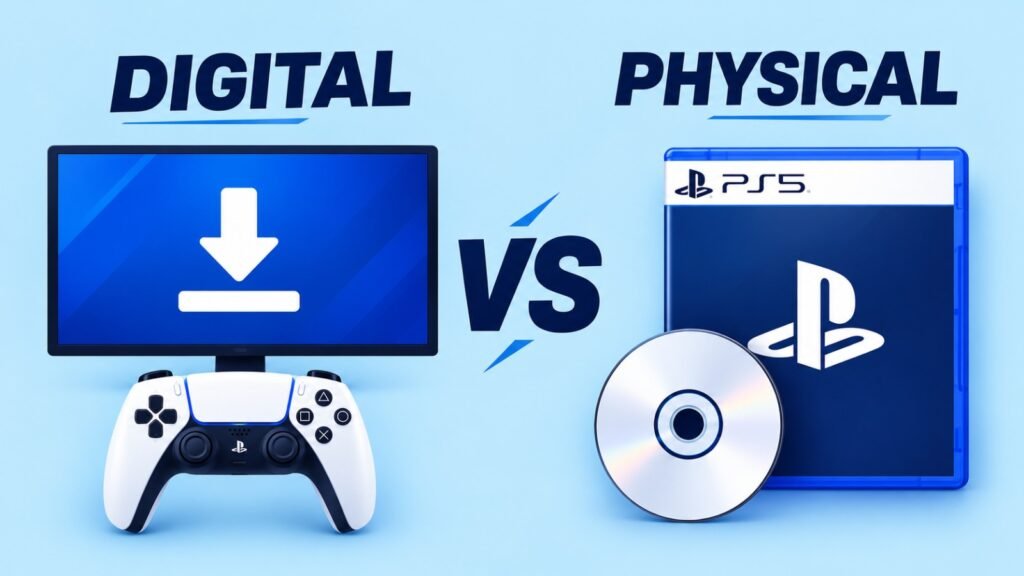
Buying a video game used to mean visiting a store, choosing a box, and bringing a disc or cartridge home. Today, gamers can purchase games online and download them directly to a PC or console. Both options offer access to the same gaming experiences, but they differ in convenience, cost, storage, and ownership.
So, when comparing digital games vs physical games, which option offers better value? The answer depends on how you play, how much you want to spend, and whether you prefer building a digital library or collecting physical copies.
What Are Digital Games?
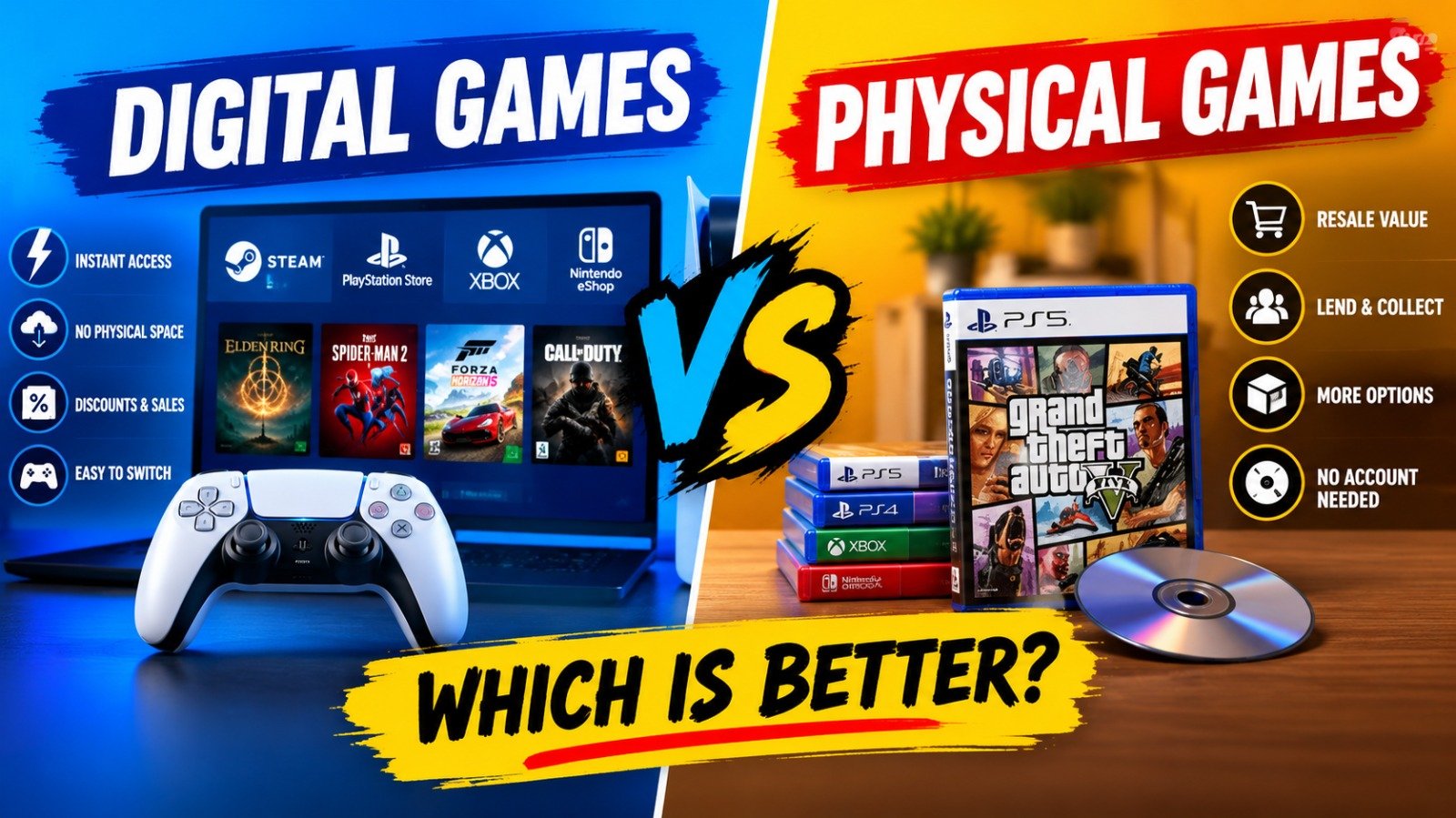
Digital games are purchased or accessed online through platforms such as Steam, the PlayStation Store, the Xbox Store, and the Nintendo eShop. After purchasing a game, players can download it to a compatible device and launch it through their account.
Digital games do not require a physical disc or cartridge. Your purchases are generally associated with your account, making it easier to access your library across compatible devices. However, access depends on platform rules, account status, and game compatibility.
Advantages of Digital Games

Instant access
You can purchase a game from home without visiting a store. If preloading is supported, you may also download a game before its official release and begin playing when it becomes available.
No physical storage required
Digital games do not take up shelf space. Your collection stays organized in your gaming library, although the games still require storage space on your device.
Convenient game switching
Players can switch between installed digital games without changing discs. This is especially useful for gamers who regularly play several titles.
Online sales and discounts
Digital storefronts frequently offer seasonal sales, promotional prices, and discounts on older games. Comparing prices across sales can help you save money.
Disadvantages of Digital Games
Digital games depend on your account and the platform’s licensing rules. You generally cannot resell a digital purchase like a physical disc, and lending it to another person may be restricted.
Large games can also require significant storage space and lengthy downloads. A slow internet connection or limited data package can make downloading expensive or inconvenient.
What Are Physical Games?

Physical games come on discs or cartridges that players purchase from retailers or other sellers. They can be stored on shelves, collected, and sometimes sold or exchanged after use.
For console gamers, physical copies can provide flexibility that digital purchases do not. However, a physical disc does not always contain every file needed to play a game. Some titles require additional downloads, updates, or an internet connection.
Advantages of Physical Games
Resale value
One major advantage is the ability to sell a physical copy after finishing a game, provided the game’s format and any applicable restrictions allow it. The money recovered can help fund another purchase.
Lending and collecting
Physical games can often be lent to friends or family, depending on compatibility and game requirements. Collectors can also keep special editions, artwork, boxes, and other physical items.
Access beyond a digital storefront
A physical copy is not dependent on finding the game in a digital store every time you want to install it. However, future access can still depend on working hardware, disc condition, game updates, and online services.
More purchasing options
Gamers can compare prices between retailers, second-hand shops, and online marketplaces. Older physical games may sometimes be cheaper than their digital versions.
Disadvantages of Physical Games
Physical copies need storage space and can be scratched, damaged, or lost. You also need compatible hardware with a disc drive to play disc-based games.
Changing games requires swapping discs, and some modern titles still need substantial downloads. Physical ownership therefore does not guarantee that every part of a game will work offline.
Digital Games vs Physical Games: Key Differences
| Feature | Digital Games | Physical Games |
|---|---|---|
| Buying | Purchased online | Purchased from retailers or sellers |
| Access | Usually linked to an account | Requires the disc or cartridge when applicable |
| Storage | Uses device storage | Uses device storage and physical space |
| Resale | Usually cannot be resold | Often can be resold |
| Convenience | Easy to download and switch | Requires handling and storing copies |
| Internet | Usually needed to download; some games need it to play | May need downloads or online access |
| Collecting | Digital library | Boxes, discs, cartridges, and editions |
Which Option Is Cheaper?
Neither format is always cheaper. Digital stores can offer significant discounts, while physical games may have competitive launch prices, retailer deals, and second-hand options.
The best choice depends on the total cost rather than the advertised price alone. Consider download data, available storage, delivery fees, the possibility of reselling a disc, and whether your console requires an additional purchase for a disc drive.
If you frequently finish games and resell them, physical copies may offer better long-term value. If you keep your games permanently and prefer not to manage discs, digital purchases may be more convenient.
Are Digital Games Replacing Physical Games?
Digital distribution has become increasingly important, especially on PC, where downloading games is common. Console gaming still has an audience for physical discs and cartridges, particularly among collectors and players who value resale.
The industry is changing, but the future is not identical across every platform. For example, PlayStation announced in July 2026 that production of physical discs for new games releasing on PlayStation consoles would end starting in January 2028. This announcement concerns new releases after that date and does not mean existing physical games immediately stop working.
The shift highlights an important question for gamers: how much control do they want over their collections, and how comfortable are they with account-based access?
Digital vs Physical Games: Which Should You Choose?
Choose digital games if you value convenience, want to switch games quickly, prefer an organized online library, and regularly find good digital discounts.
Choose physical games if you enjoy collecting, want the option to resell or lend games, and prefer shopping across different retailers. Make sure your console has a compatible disc drive before buying discs.
You can also combine both formats. Buy physical copies of games you may want to resell, and choose digital versions when an online sale offers better value.
Final Verdict
Digital games vs physical games is not a contest with one universal winner. Digital purchases make gaming convenient, while physical copies can offer resale opportunities, collectability, and more ways to shop.
Before buying your next game, compare the price, check your device’s compatibility, and think about how long you plan to keep it. The smartest choice is the format that fits your budget and gaming habits.
What do you prefer: digital downloads or physical discs? Share your choice and why in the comments.
Table of Contents