✈️ Air Power Arms Race 2026- From China’s PL-15 Missile to F-35 Dominance – How Global Fighter Jets Are Redefining Modern Warfare
Introduction- A New Era of Air Combat
The global military aviation landscape is undergoing a dramatic transformation. From China’s advanced PL-15 missile upgrades to NATO’s rapid fighter modernization and India’s push for indigenous jet engines, air power has become the defining factor in modern geopolitics.
Recent developments including the alleged role of PL-15 missiles in downing Rafale jets, Denmark’s F-16 retirement, the mass production of F-35 fuselages, and the rise of fifth-generation fighters signal a new arms race in the skies.
This article explores not just the headlines, but the deeper technological, geopolitical, and strategic implications shaping the future of aerial warfare.
1) China’s PL-15 Missile- The Weapon Changing Air Combat
Who Is Fan Huitao?
Chinese scientist Fan Huitao and his team have been credited with pushing China’s air-to-air missile technology into a new generation. Working on a rigorous “711 schedule” (7 days a week, 11 hours a day), his team accelerated the development of the PL-15 missile.
Why PL-15 Matters
The PL-15 is considered one of the most advanced beyond-visual-range (BVR) air-to-air missiles in the world.
Key features:
- Extended range (estimated 200–300 km)
- Active AESA radar seeker
- Dual-pulse rocket motor
- Network-centric targeting
- High resistance to electronic countermeasures
Impact on Rafale and India
Reports suggest that PL-15 missiles may have played a role in engagements involving India’s Rafale jets.
However, India has not abandoned the Rafale program because:
- Rafale remains one of the most balanced multirole fighters
- Superior electronic warfare systems
- NATO-level interoperability
- Proven combat record
- Strategic dependence on Western technology diversification
👉 Strategic Insight:
The PL-15 doesn’t make Rafale obsolete it forces India to upgrade tactics, radar systems, and missile defense capabilities.
2) Rafale- The Fighter That Challenged Stealth Jets
Despite being overshadowed by stealth aircraft like the F-35 and F-22, the Dassault Rafale has surprised analysts and pilots worldwide.
Why Rafale Is Still Relevant
- Advanced electronic warfare suite (SPECTRA)
- Multirole capabilities
- High maneuverability
- Sensor fusion
- Carrier-based operations
During training exercises, Rafale has reportedly challenged stealth fighters using:
- superior situational awareness
- pilot tactics
- electronic warfare superiority
👉 Key Lesson:
Stealth alone does not guarantee dominance data, tactics, and pilot skill matter more than ever.
3) India’s “Fund Kaveri Engine” The Fight for Self-Reliance
What Is the Kaveri Engine Project?
The Kaveri engine is India’s ambitious attempt to build an indigenous jet engine for fifth-generation fighters.
Objectives:
- Reduce dependence on foreign engines
- Support AMCA (Advanced Medium Combat Aircraft)
- Strengthen defense sovereignty
Why It Matters Geopolitically
India’s reliance on foreign engines from:
- France (Safran)
- US (GE)
- Russia (Saturn)
creates strategic vulnerabilities.
👉 Hidden Reality:
Without an indigenous engine, India cannot fully control its future fighter jet program.
4) Denmark Retires F-16 – Enter the F-35 Era
Denmark’s decision to retire its F-16 fleet marks a major shift in European air power.
Why F-35 Replaces F-16
- stealth capabilities
- network-centric warfare
- AI-assisted combat systems
- NATO integration
Denmark’s move reflects a broader NATO strategy to counter:
- Russian air power
- Chinese technological advances
5) F-35 Production Milestone- 1,500th Fuselage
Northrop Grumman’s production of the 1,500th F-35 fuselage highlights the industrial scale of the US military machine.
Why This Matters
- F-35 is becoming the backbone of Western air forces
- Economies of scale reduce long-term costs
- Standardization across allied nations
👉 Strategic Insight:
The US is not just building jets it’s building a global military ecosystem.
6) Singapore Airshow 2026- A Showcase of Air Power
The Singapore Airshow 2026 is more than an exhibition it’s a geopolitical signal.
Featured aircraft:
- F-35A Lightning II
- Sukhoi Su-30MKM
- J-20 (Chinese stealth fighter)
- Rafale
- Eurofighter Typhoon
Why Singapore Matters
Asia is becoming the epicenter of air power competition between:
- US and allies
- China
- Russia
- India
7) Global Fighter Jet Competition- Who Dominates the Skies?
Top Combat Aircraft in Service Today
- F-22 Raptor (USA)
- F-35 Lightning II (USA/NATO)
- J-20 Mighty Dragon (China)
- Rafale (France)
- Su-57 (Russia)
- Eurofighter Typhoon (Europe)
- F-15EX (USA)
Can China’s J-20 Rival F-35 and F-22?
The real question is not stealth but:
👉 Data dominance and network warfare.
Modern air combat is about:
- AI
- satellites
- drones
- data links
- electronic warfare
8) Forgotten Legends- The F-14 Tomcat and WWII Fighters
The F-14 Tomcat 21 concept represented what could have been the ultimate naval fighter.
Similarly, some obscure WWII fighters outperformed famous aircraft due to:
- superior design
- tactical innovation
- pilot training
👉 Lesson from History:
Technology wins wars but strategy decides outcomes.
9) Geopolitical Implications- Air Power as Global Leverage
China vs US
- China focuses on missiles and electronic warfare
- US focuses on stealth and networks
India vs China
- India seeks technological independence
- China already has domestic ecosystems
NATO vs Russia
- NATO invests in F-35 and integrated systems
- Russia relies on missiles and air defense
Trade and Tariff Angle
Military aviation is also an economic battlefield:
- defense exports
- sanctions
- technology restrictions
- supply chain wars
10) Future Forecast- What Comes Next?
Short-Term (2026–2030)
- AI-driven fighter jets
- hypersonic missiles
- drone-wingman systems
- indigenous engines in Asia
Mid-Term (2030–2040)
- sixth-generation fighters
- quantum radar
- space-based combat integration
Long-Term
- pilotless fighter jets
- fully autonomous air warfare
👉 Expert Opinion:
The next war will be decided before the first shot is fired through data, cyber warfare, and satellites.
11)  tlas Opinion- The Hidden Truth About Modern Air Wars

Modern fighter jets are no longer just weapons they are political tools.
Countries buy jets to:
- strengthen alliances
- signal power
- deter enemies
- influence global politics
The PL-15 vs Rafale debate is not about one missile or one jet it’s about who controls the future of air dominance.
12) FAQ’s
Q1: Is the PL-15 better than Western missiles?
Not entirely, but it challenges Western dominance in BVR combat.
Q2: Why didn’t India abandon Rafale?
Because Rafale offers strategic balance and proven performance.
Q3: Is F-35 unbeatable?
No. It is powerful, but vulnerable to electronic warfare and advanced missiles.
Q4: Can India build its own fighter engine?
Yes, but it will take decades and massive investment.
Q5: Will stealth fighters become obsolete?
Not obsolete, but less dominant without data superiority.
Q6: Who leads the global air power race?
The US still leads, but China is closing the gap rapidly.
Q7: Are missiles more important than jets now?
Increasingly yes missiles define modern air combat outcomes.
Q8: Will sixth-generation fighters change everything?
Yes. They will integrate AI, drones, and space warfare.
Table of Contents
- Is World War 3 coming Iran–Israel–USA Conflict 2026 The Complete Story, Hidden Tensions, and What Could Happen Next
- Taiwan Invasion by 2027 – But the Real War for AI, Chips, and Global Power Has Already Begun
- Resident Evil Requiem Becomes 2026’s Highest-Rated Game – A Survival Horror Masterpiece or an Overhyped Sequel That Loses Steam?
- Black Ops 7 Sets a New Standard for Tactical FPS Combat – But Controversy and Matchmaking Frustrations Spark Debate
- Ghostrunner 2 Free on Epic Games, A Cyberpunk Masterpiece of Relentless Action – or a Brutally Punishing Game That’s Too Hard to Love?
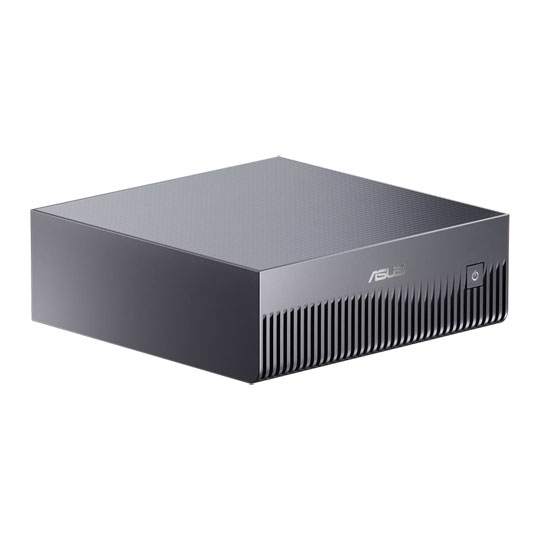
ASUS Ascent GX10 Supercomputer
ASUS Ascent GX10 Supercomputer
Compact Desktop AI Supercomputer, powered by the NVIDIA® GB10 Grace Blackwell Superchip and NVIDIA DGX™ Spark. Seamless integration and deployment, revolutionizing AI
- Extreme AI Performance: Powered by NVIDIA® GB10 Grace Blackwell Superchip delivering 1 petaFLOP of AI performance and 128GB memory for 200B model fine-tuning.
- Developer-Optimized Platform: Tailored for AI researchers and developers with full-stack compatibility and streamlined workflows.
- Scalable Architecture: Featuring NVIDIA® NVLink™-C2C for ultra-fast CPU-GPU memory communication and NVIDIA® ConnectX-7 networking to support dual GX10 system stacking, unlocking superior scalability and performance.
- Advanced Thermal Design: Engineered cooling ensures sustained high performance and reliability in an ultra small form factor.
- Minimal Footprint, Maximum Efficiency: High-density compute power in a compact system designed for labs, offices, and edge environments.
- Full Stack AI Solution: The GB10 and NVIDIA AI software stack provide a full stack solution for AI development and deployment.
The ASUS Ascent GX10, powered by the NVIDIA GB10 Grace Blackwell Superchip and the NVIDIA AI software suite, delivers a complete platform for AI creation and execution. Its streamlined, space-saving design ensures easy integration and rapid deployment, bringing exceptional AI performance to visionaries seeking top-tier results. Equipped with cutting-edge AI tools and NVIDIA® ConnectX®-7 networking, this compact server boosts AI potential while supporting your unique innovations.
RevolutionaryAI PerformanceOn Your Desktop
The revolutionary ASUS Ascent GX10 AI Supercomputer, driven by the cutting-edge NVIDIA® GB10 Grace Blackwell Superchip (featured in the NVIDIA DGX Spark), delivers petaflop-scale AI computing power to the workstations of developers, researchers, and data scientists. Built to advance local AI innovation, this powerful system combines exceptional performance with sophisticated features to accelerate progress in AI development.
Compact.Powerful.Scalable.
Compact Size 150 x 150 x 51mm
Unparalleled AI PerformanceUp to 1 petaFLOP of AI performance using FP4Delivers 1 petaFLOP of AI performance to drive demanding AI computing tasks.128 GB LPDDR5x Coherent Unified System MemoryEmpowers advanced model development, experimentation, and efficient inferencing with ample and reliable memory capacity.
Up to1 petaFLOPof AI Performance
Using FP4
128GCoherent Unified
System Memory

Cutting-Edge ArchitectureNVIDIA GB10 Grace Blackwell Superchip:At the core of the ASUS Ascent GX10 is a high-performance Blackwell GPU, boasting fifth-generation Tensor Cores and FP4 support.High-Performance 20-Core Arm CPU:Optimises data preprocessing and workflow orchestration, speeding up model tuning and real-time inference.NVLink™-C2C Technology:Delivers a cohesive CPU and GPU memory architecture offering fivefold the bandwidth of PCIe 5.0.
Use, train & experiment withLarge-scale AI models

Support for AI Models 200 Billion ParametersDesign, refine, and infer cutting-edge AI reasoning models right from your desktop.
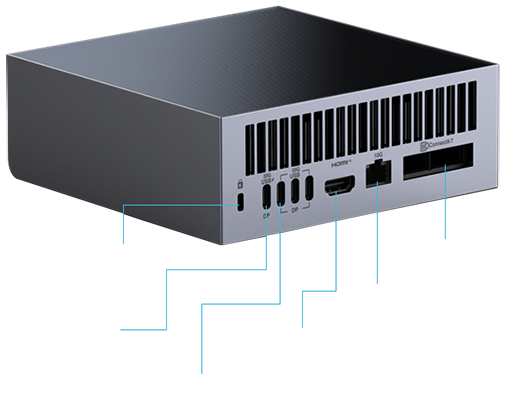
Integrated NVIDIA® ConnectX®-7 Network TechnologyConnect two ASUS Ascent GX10 units to tackle larger-scale models, including Llama 3.1 with 405 billion parameters.
Next-Gen AI Networking with:NVIDIA® ConnectX-7
The ASUS Ascent GX10 features NVIDIA® ConnectX-7, providing ulta-high-speed networking for fast data transfer and minimal latency when handling distributed AI workloads.
 ULTRA-FAST AI DATA THROUGHPUTWith bandwidth of up to 200Gb/s, data moves lightning-fast between nodes – perfect for large-scale, distributed AI tasks.
 SECURE, INTELLIGENT NETWORKINGIntegrated hardware acceleration for TLS, IPsec, and MACsec secures data in transit while eliminating CPU overhead.
 PRECISION-CRITICAL PERFORMANCESupport for IEEE 1588v2 PTP delivers microsecond-precision time sync for time-critical AI and edge computing workloads.
Integrated AI Software Stackfor Seamless Development
The ASUS Ascent GX10 uses NVIDIA® ConnectX-7 to provide ultra-fast networking, ensuring rapid data transfer and low-latency communication for distributed AI workloads.
PRELOADED AI FOR INSTANT DEVELOPMENTNVIDIA DGX OS (Ubuntu-based) – Optimised AI environment, ready to use.
NVIDIA AI Software Stack – Preloaded frameworks, SDKs, and tools for fast deployment.
OPTIMISED AI TOOLS & AI FRAMEWORKSCUDA, PyTorch, TensorFlow, Jupyter – Optimised for AI model development & inference.
NVIDIA TensorRT – High-performance AI inference engine.
NVIDIA NIMs & Blueprints – Prebuilt AI workflows & microservices.
INDUSTRY-LEADING AI MODEL SUPPORTDeepSeek R1 – AI inference optimised up to 70B parameters.
Llama 3.1 – Generative AI up to 405B parameters (dual-GX10).
Meta, Google models – Broad compatibility with industry-leading AI frameworks.
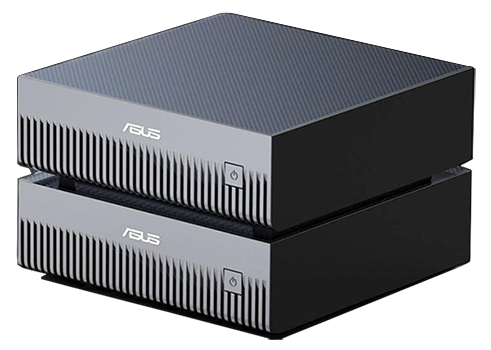
Optimised Cooling DesignEnsures sustained AI performance under heavy workloads.Compact Form FactorDelivers high-density AI computing in a small footprint.
Leave a Reply