Nvidia $20 Billion AI Power Grab, Why the Groq Deal Could Reshape Silicon Forever
Introduction
A Moment That Freezes the AI Industry
When news broke that Nvidia is acquiring key assets of AI chip startup Groq for roughly $20 billion, paired with a sweeping technology licensing agreement, Silicon Valley did not celebrate it paused.
This was not another startup buyout.
This was a statement of dominance.
Nvidia, already the uncontested leader in AI acceleration, signaled that it intends not only to lead the AI revolution, but to define its boundaries.
Groq Explained The Startup That Refused to Play Nvidia’s Game
Groq’s Core Philosophy
Groq was built on a radical belief
AI performance should be predictable, not probabilistic.
While GPUs excel at massive parallelism, they suffer from:
- Scheduling unpredictability
- Memory bottlenecks
- Latency spikes
Groq’s Tensor Streaming Processor (TSP) was designed to eliminate those weaknesses.
What Made Groq Different
Groq chips focused on
- Deterministic execution (same performance every time)
- Single-core architecture (no thread chaos)
- Compiler-first design
- Extreme inference speed with low power
For real-time AI financial trading, autonomous systems, defense simulations Groq wasn’t just faster.
It was more trustworthy.
Groq’s History From TPU Roots to Industry Disruptor
Groq was founded by Jonathan Ross, one of the original minds behind Google’s TPU. Unlike many AI startups chasing hype, Groq

- Stayed mostly private
- Avoided aggressive marketing
- Focused on engineers, not headlines
This quiet strategy earned Groq a cult following among
- AI system architects
- Low-latency developers
- Enterprises needing guaranteed response times
Groq never wanted to replace Nvidia outright it wanted to rewrite the rules.
That made it dangerous.
Why Nvidia Couldn’t Ignore Groq Any Longer
1. AI Has Shifted From Training to Inference
Training models makes headlines.
Inference makes money.
Every chatbot reply, recommendation, fraud check, and AI decision requires inference billions of times per day.
Groq’s architecture excels exactly where GPUs struggle:
- Consistent real-time performance
- Lower cost per inference
- Reduced energy consumption
Nvidia needed that advantage or needed to neutralize it.
2. Groq Threatened Nvidia’s “Full Stack” Vision
Nvidia’s true power is not hardware alone it’s
Groq offered an alternative future
- Simpler compilers
- Less dependency on GPU complexity
- A cleaner software–hardware relationship
That future could fracture Nvidia’s dominance.
3. Buying Groq Is Cheaper Than Fighting Groq
At $20 billion, the deal seems massive. But consider the alternative
- Years of internal R&D
- Risk of Groq partnering with cloud rivals
- Loss of inference market leadership
In AI, speed beats savings.
Deal Structure Why Assets + Licensing Matters
This is not a traditional acquisition.
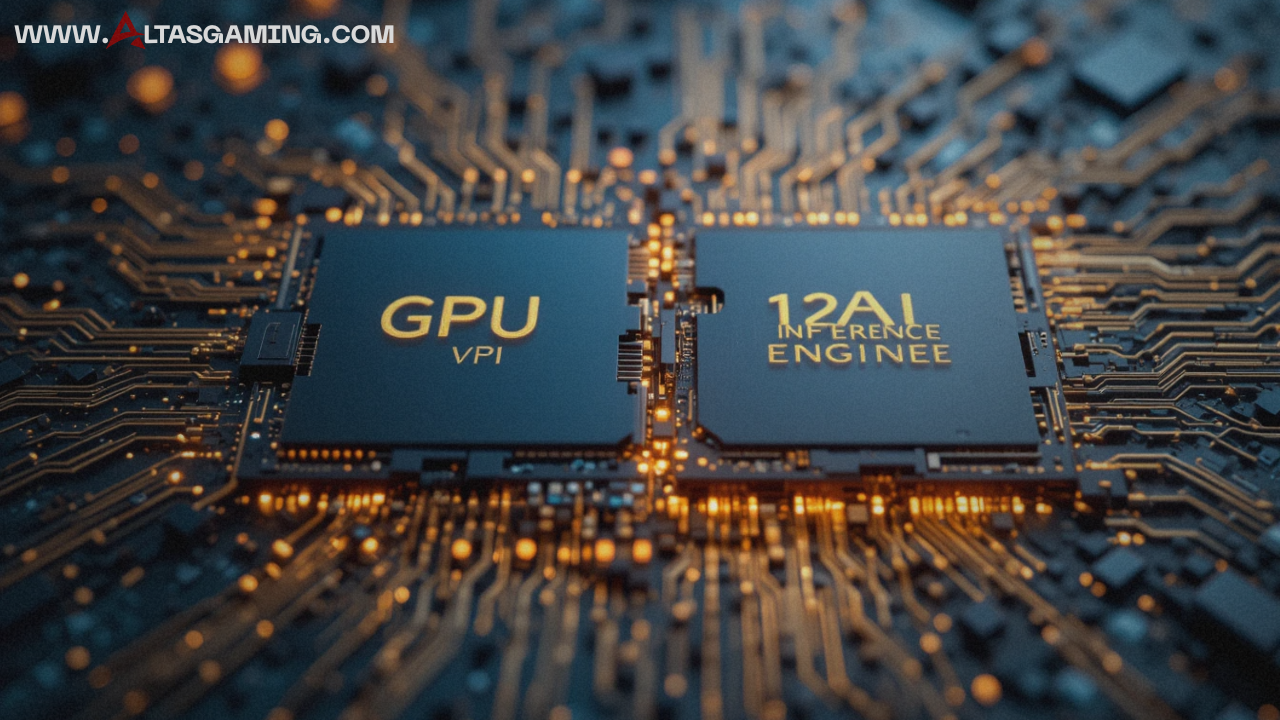
By combining
- Asset acquisition
- IP control
- Technology licensing
- Talent integration
Nvidia gains
- Freedom to integrate Groq ideas selectively
- Minimal disruption to CUDA
- Legal insulation from full merger complications
It’s a surgical takeover, not a hostile one.
Market Impact A New Phase of AI Consolidation
Who Wins
- Nvidia (expanded dominance)
- Enterprise customers (more efficient inference)
- Investors (long-term moat expansion)
Who Loses
- Independent AI chip startups
- Cloud providers seeking Nvidia alternatives
- Open hardware ecosystems
The AI industry is entering its consolidation era.
 LTAS OPINION
At Altas, we see the Groq deal as both brilliant and troubling.
Brilliant because
- Nvidia is securing the future of inference
- Architectural diversity strengthens its platform
- It neutralizes a genuine technological threat
Troubling because
- Innovation is being absorbed, not competed against
- AI power is concentrating into fewer hands
- The industry risks losing architectural experimentation
This deal doesn’t kill innovation but it moves innovation behind closed doors.
Nvidia is no longer just an AI leader.
It is becoming an AI gatekeeper.
Long-Term Consequences No One Is Talking About
- Regulators may begin viewing AI chips as critical infrastructure
- Future AI startups may design to be acquired, not to disrupt
- Software ecosystems may become more closed, not open
This is how technology empires mature.
What Comes Next
Expect
- Groq-style inference features inside Nvidia platforms
- New enterprise AI offerings focused on latency guarantees
- Increased scrutiny of Nvidia’s next acquisition
The AI war isn’t slowing down.
It’s becoming more controlled.
FAQs
Q1: Could Groq technology slow Nvidia’s innovation pace?
Only if Nvidia integrates it poorly otherwise, it accelerates it.
Q2: Will developers notice Groq tech directly?
Most likely indirectly, through faster and cheaper inference services.
Q3: Does this reduce competition in AI hardware?
Yes but it also raises the technical bar for new entrants.
Q4: Is Nvidia overpaying?
Not if inference becomes the dominant AI revenue stream.
Q5: Is this Nvidia’s most important deal ever?
Strategically, it may surpass even CUDA’s early expansion.
Table of Contents
- Resident Evil Requiem Becomes 2026’s Highest-Rated Game – A Survival Horror Masterpiece or an Overhyped Sequel That Loses Steam?
- Black Ops 7 Sets a New Standard for Tactical FPS Combat – But Controversy and Matchmaking Frustrations Spark Debate
- Ghostrunner 2 Free on Epic Games, A Cyberpunk Masterpiece of Relentless Action – or a Brutally Punishing Game That’s Too Hard to Love?
- Code Vein II Is a Beautiful Evolution – But Its Uneven World Holds It Back! Or Does It Still Lack the Crown? (Feb 2026)
- Nioh 3 Review- A Brutal Soulslike Masterpiece That Perfects Samurai Combat – Or an Unforgiving Grind That Pushes Players Too Far?

Legion 5i Gen 10 Core Bundle
- Legion 5i Gen 10 Intel (15″) with RTX™ 5070
- Lenovo Legion M410 Wireless RGB Gaming Mouse
- 3Y Premium Care with Onsite upgrade from 1Y Courier/Carry-in


Leave a Reply