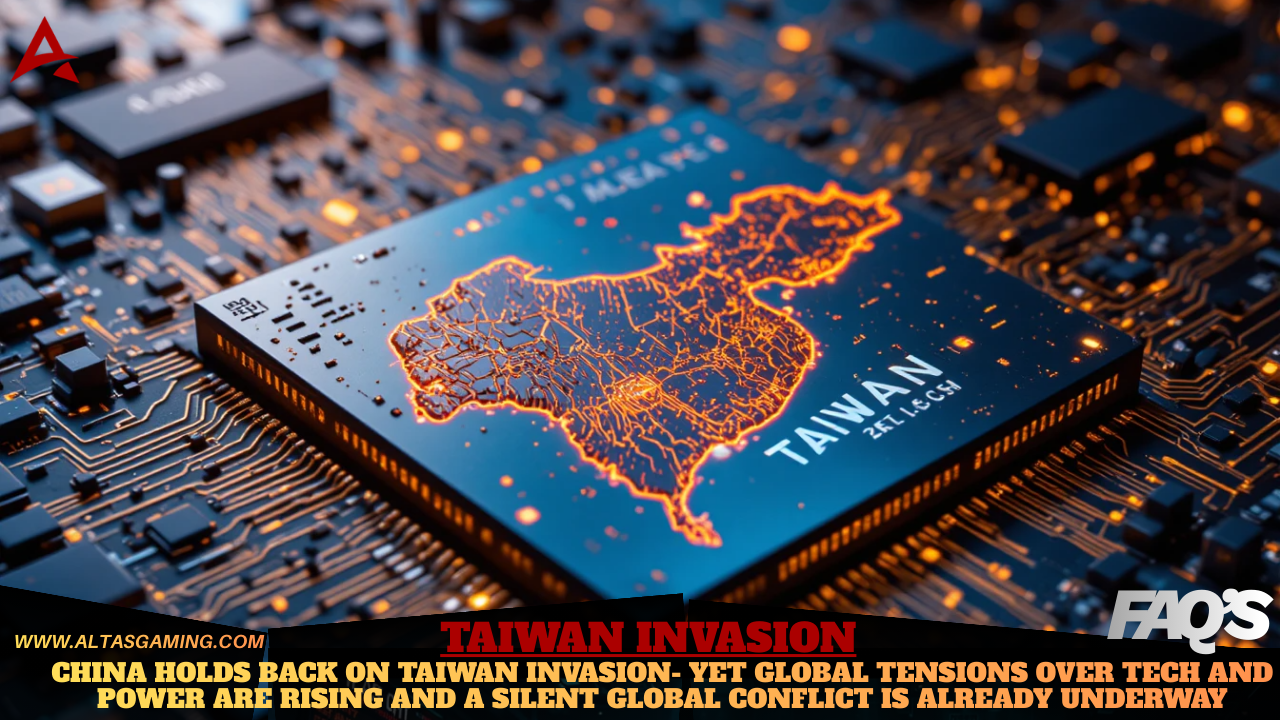
US Intel Downplays 2027 Taiwan Invasion Risk- ‘But the Real Battle Over Chips, AI, and Power Is Already Underway
Introduction- No War in 2027 Or Just a Different Kind of War?
Recent assessments from U.S. intelligence agencies suggest that China is not expected to invade Taiwan by 2027, easing fears of an imminent military conflict. Officials indicate that Beijing still prefers “reunification without the use of force.”
But this headline masks a deeper reality.
The struggle over Taiwan is no longer just about territory it is about semiconductors, artificial intelligence, energy security, and global dominance. While a full-scale invasion may not be imminent, a multi-layered geopolitical contest is already intensifying, reshaping global markets, alliances, and the future of technology.
The Official Assessment- Why the U.S. Sees No Immediate Invasion
U.S. intelligence now believes that China’s leadership is:
- Prioritizing economic stability over military escalation
- Avoiding a war that could trigger global sanctions and economic collapse
- Exploring non-military pathways to influence Taiwan
This marks a shift from earlier warnings that suggested 2027 as a potential flashpoint.
However, analysts stress this does not mean tensions are decreasing only that the methods are changing.
China’s Strategy- Pressure Without War
China’s approach toward Taiwan is evolving into a hybrid strategy combining multiple tools:
1. Economic Leverage
China continues expanding global influence through investment and trade networks. Its “Global Expansion 3.0” strategy focuses on:
- Strategic infrastructure investments
- Supply chain control
- Technology partnerships
2. Cognitive and Information Warfare
China is intensifying cognitive operations:
- Disinformation campaigns
- Political influence strategies
- Social media manipulation
The goal: shape public opinion in Taiwan without firing a shot.
3. Diplomatic Pressure
China consistently:
- Warns the U.S. to avoid “interference”
- Frames Taiwan as an internal matter
- Seeks international support to isolate Taiwan diplomatically
Taiwan’s Response- Firm Resistance Under Pressure
Taiwan has taken a clear stance:
- Rejecting China’s “energy-for-unification” proposals
- Strengthening ties with the U.S. and allies
- Investing heavily in defense and resilience
The rejection of China’s energy-linked reunification offer is particularly significant.
It shows Taiwan understands that dependence can be a geopolitical weapon.
The Hidden Factor- Middle East Conflict and Energy Politics
The ongoing Middle East tensions (including the Iran-related conflict) are reshaping the Taiwan situation in unexpected ways.
Key Impacts:
- Energy supply disruptions increase global vulnerability
- China positions itself as a mediator and energy stabilizer
- Taiwan becomes more exposed to energy security risks
This creates a new dimension:
👉 Energy geopolitics is now directly tied to Taiwan’s future
The Real Battlefield- Chips, AI, and Data
At the center of this global tension lies one company:
TSMC
Why TSMC Matters:
- Produces over 90% of the world’s advanced chips
- Essential for:
- AI systems
- Military technology
- Smartphones and data centers
If Taiwan Is Disrupted:
- Global AI development could slow dramatically
- Tech giants would face massive supply shortages
- Defense systems worldwide could be affected
This raises a critical question:
👉 Is the Taiwan conflict really about land or about control of the future of AI?
Is This a War for Technology and Data?
Increasingly, experts believe the Taiwan issue is part of a larger technological war.
Key Elements:
- Control over semiconductor supply chains
- Dominance in AI development
- Data infrastructure leadership
The U.S. and China are competing to define:
- Who builds the next generation of AI
- Who controls global digital systems
- Who leads the 21st-century economy
Taiwan sits at the center of all three.
Global Economic Risks- What Happens If Conflict Escalates?
Even without invasion, rising tensions could cause:
1. Supply Chain Disruption
- Chip shortages
- Electronics price spikes
- Manufacturing slowdowns
2. Financial Market Shock
- Stock market volatility
- Investor uncertainty
- Currency fluctuations
3. Trade Fragmentation
- New tariffs and export controls
- Regional economic blocs
- Reduced globalization
Forecast- What Comes Next?
Short-Term (1–2 Years)
- Continued military signaling without conflict
- Increased cyber and information warfare
- Stronger U.S.–Taiwan cooperation
Medium-Term (3–5 Years)
- Intensified competition over AI and semiconductors
- Expansion of alternative chip manufacturing outside Taiwan
- Rising geopolitical polarization
Long-Term (5–10 Years)
- Possible peaceful status quo or sudden crisis trigger
- Global tech system divided into competing blocs
- Taiwan remains the world’s most strategic hotspot
 lta’s Opinion- The War Has Already Begun-Just Not With Missiles
From an Altas perspective, focusing only on invasion timelines misses the bigger picture.
The conflict over Taiwan is already happening.
But it’s being fought through:
- Technology
- Economics
- Information
- Energy
A military invasion would be the last step not the first.
The real battle is about who controls the infrastructure of the future:
- Chips
- AI
- Data networks
And in that sense, Taiwan is not just a territory it is the center of global power transition.
FAQ’s
❓ Is China going to invade Taiwan in 2027?
Current U.S. intelligence suggests no immediate invasion is expected, but risks remain long-term.
❓ Why is Taiwan so important globally?
Because of its dominance in semiconductor manufacturing, especially through TSMC.
❓ How would a Taiwan conflict affect AI?
It could severely disrupt AI development globally, due to chip shortages.
❓ What is China’s current strategy?
A mix of economic pressure, diplomacy, and information warfare rather than direct military action.
❓ Is this a Cold War-style situation?
Yes many experts describe it as a new technological Cold War between the U.S. and China.
Final Thought
The absence of an imminent invasion should not be mistaken for peace.
The Taiwan question has evolved into something far more complex:
👉 A silent global struggle over technology, power, and the future of intelligence itself.
And whether or not a war ever begins, the outcome of this competition will shape the world for decades to come.
Table of Contents
- Iran War 2026 What Happened and Why Is It Important?
- Helldivers 2 Ultimate Survival Guide: Best Weapons, Builds, Missions & Pro Tips (2026)
- The PlayStation 6 – Everything Gamers Have Been Waiting For – Specs, Power, Features, and the Future of PS Gaming
- Global Crisis 2026 – The New World Order? How Nations Are Reshaping Global Power and Economy- What Happens After the Dollar Era?
- The Witcher 3: Wild Hunt – The Fantasy Masterpiece That Redefined Open-World RPGs
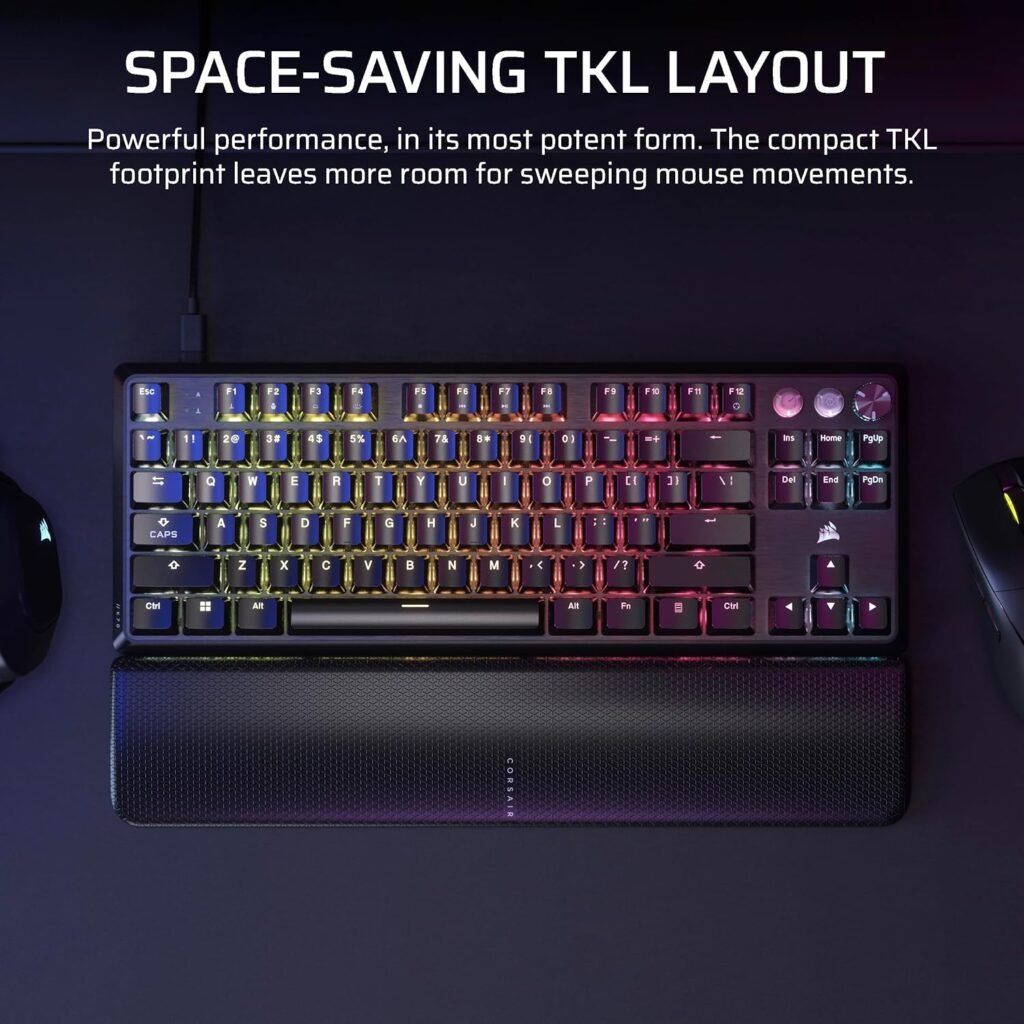
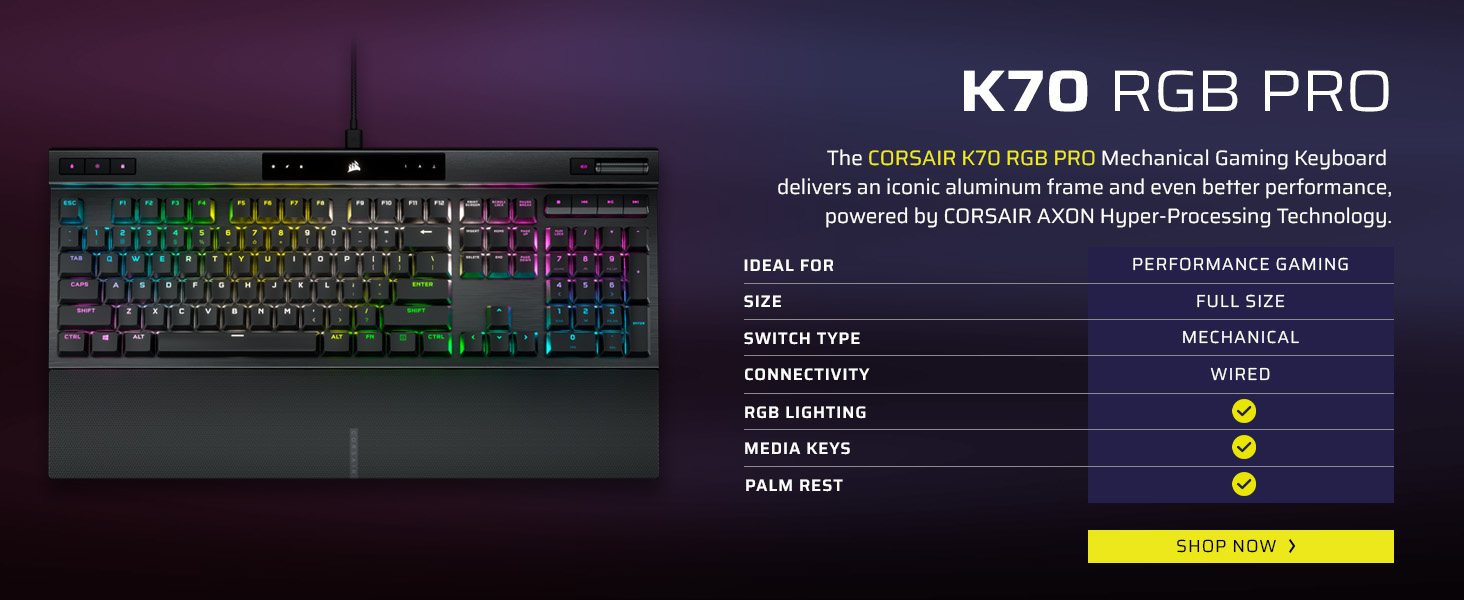
Corsair K70 PRO TKL RGB
Corsair K70 PRO
About this item
- Speed is Everything: It’s all about speed. With Rapid Trigger, ultra-fast polling rates, and per-key adjustable switches, K70 PRO TKL removes every barrier that comes between you and gaming greatness
- Space-Saving Tenkeyless Layout: The sleek, streamlined tenkeyless layout fits in nearly every gaming setup, while leaving room for sweeping mouse movements
- MGX Hyperdrive Magnetic Switches*: Pre-lubricated CORSAIR MGX Hyperdrive magnetic switches deliver a smooth, ultra-responsive keypress. Its sturdy double-rail structure reduces wobble and guarantees peak performance for 150 million keystrokes. *Function keys and non-primary keys feature CORSAIR MLX switches
- Rapid Trigger Advantage: Rapid Trigger dynamically changes your keys’ actuation and reset points, so you can move and reset your movements faster than ever
- Customizable Per-Key Actuation: Adjust the actuation point of each key from a super-sensitive 0.4mm to a deep 3.6mm (in 0.1mm steps) or set two actions to a single keypress with dual actuation for quick-fire combos and action pairs.


Leave a Reply