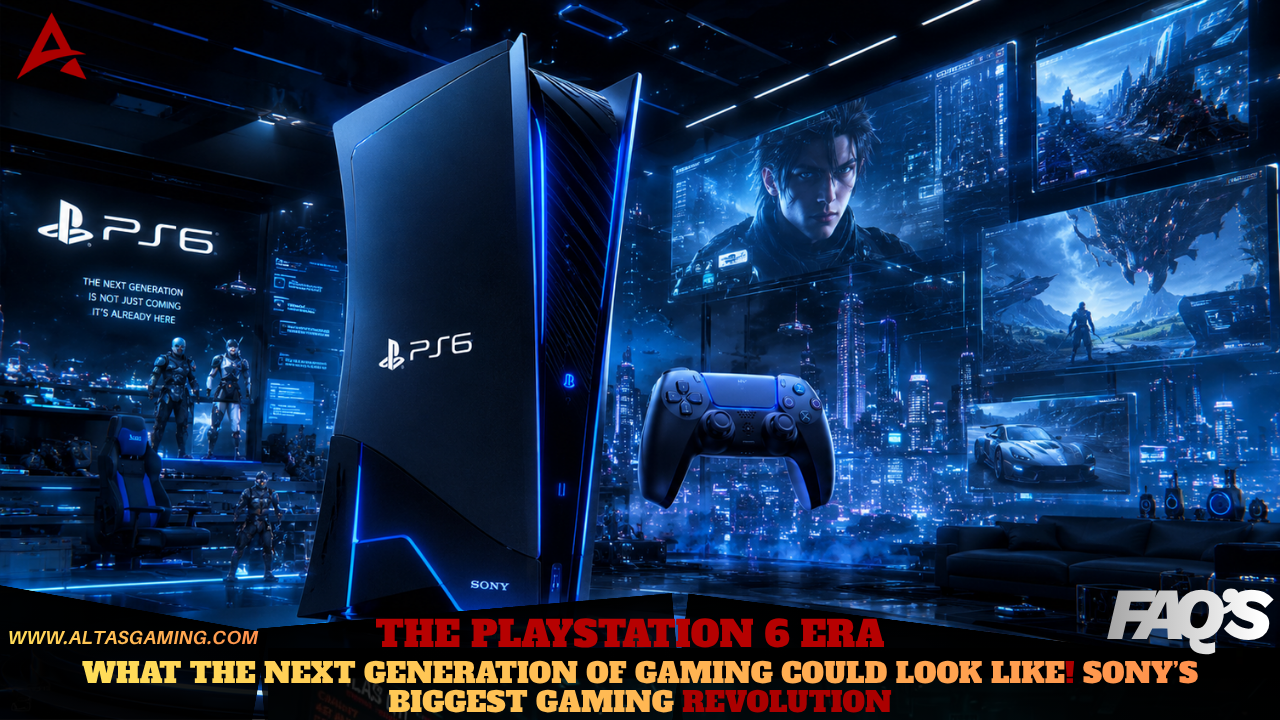
PlayStation 6 – Everything You Actually Want to Know

By Atlas Gaming Editorial | May 2026
Release date rumors. Spec leaks. Price predictions. Hacks. And what Sony’s CEO just said that changes everything.
Let’s Start With the Big Question
Is The PlayStation 6 coming? Yes. When? That is where things get genuinely interesting and a little complicated. As of May 2026, Sony has not officially announced the PS6. No date, no price, no name confirmed. But the leaks, the insider reports, and even Sony’s own CEO have all been talking, and there is more solid information out there than most people realise.
Let’s break it all down simply.
What Did Sony’s CEO Actually Say?
This is the most important thing to read first, because it came straight from the top.
Sony’s president and CEO Hiroki Totoki confirmed in Sony’s May 2026 earnings call that Sony has “not yet decided on what timing it will launch the new console, or at what prices.” He also noted that component costs are expected to remain high through the 2026 fiscal year, and that Sony will need to “really observe and follow the situation.” He added that Sony “would like to think about various simulations, including changing business models to come up with the best solution and strategy.”
Translation: the PS6 is real, it is in development, and Sony is still figuring out the launch timing and pricing because costs are higher than they planned for. That is not a bad sign it is an honest signal that Sony is being careful rather than rushing something out.
So When Is the PS6 Actually Coming?
Here is the honest situation right now.
Sony has a remarkably consistent history. The PS3 launched in 2006, PS4 in 2013, PS5 in 2020 almost exactly seven years apart each time. Following that pattern, 2027 was the most widely expected PS6 launch year. And for most of 2024 and early 2025, that was the consensus among leakers and analysts.
Then something unexpected happened: the world ran out of RAM.
Not literally but close enough. The explosion of AI data centres in 2024 and 2025 created a global shortage of high-bandwidth memory chips. The same chips the PS6 was designed to use. Suddenly, building millions of PS6 units at an affordable price became genuinely difficult.
The 2026 memory crisis has fundamentally changed everything. Sourcing millions of units of high-bandwidth memory is currently a nightmare for Sony’s bill of materials, making a late 2028 or even 2029 release much more realistic.
Former PlayStation boss Shuhei Yoshida the man who ran PlayStation for over 30 years suggested that 2028 “feels right,” especially considering how the PS5’s own launch was slowed by manufacturing issues.
So where does that leave us? Here is the realistic breakdown:
The most optimistic scenario is late 2027, aligned with Sony’s seven-year cycle, if the memory situation eases by mid-2027. The most likely scenario based on current conditions is 2028, which allows Sony to sort out supply chains and bring the cost down to something reasonable. The worst-case scenario is 2029, which analysts mention but most consider unlikely unless the global economic situation deteriorates further.
As of April 2026, prediction market confidence in a 2026 PS6 announcement fell to just 25.6%, based on Kalshi market data with over $100,000 in total market activity. In other words, the people putting real money on these predictions think this year is basically off the table.
The Codename Is “Orion” – And Here Is What We Know About the Specs
The PS6’s internal codename is reportedly Orion, and the leaked AMD documentation that exposed it also revealed a significant amount of hardware detail. This is not random internet speculation these leaks come from actual AMD product roadmap documents that were corroborated by multiple independent sources.
Here is what the leaks point to:
The processor will be a custom AMD APU built on TSMC’s 2-nanometre process node the same cutting-edge manufacturing process that will power the next generation of premium smartphones. For context, the PS5 uses a 7-nanometre chip. Going from 7nm to 2nm is a massive efficiency and performance leap, meaning the PS6 can deliver far more power while using less electricity and generating less heat.
The CPU architecture will be AMD Zen 6 a substantial upgrade from the PS5’s Zen 2 cores that will dramatically reduce the CPU bottleneck that developers have occasionally complained about on PS5.
The GPU, described in leaks as RDNA 5 (or possibly the newer UDNA architecture AMD is moving toward), is expected to deliver somewhere between 34 and 40 teraflops of raw performance. The base PS5 delivers around 10 teraflops. The PS5 Pro pushed that to roughly 16.7 teraflops. The PS6 at 34–40 teraflops is roughly three times more powerful than the PS5 Pro. For reference, that puts it in the neighbourhood of a current high-end gaming PC.
The memory is where the aforementioned RAM crisis bites. Leaker KeplerL2 claims that Sony’s PS6 could ship with 30GB of GDDR7 memory, a jump that could improve overall performance significantly. The bandwidth is expected to reach approximately 640 GB/s a 43% increase over the PS5’s 448 GB/s.
Storage will likely be at least 2TB possibly larger given how much bigger modern games have gotten and the expectation that PS6 titles will be even more demanding.
Performance targets in the leaks describe 4K gaming at 120 frames per second as the standard, with 8K at 60fps as an option for supported displays.
These are leaked specs, not confirmed ones. But the source quality here actual AMD roadmap documents, not anonymous forum posts gives them meaningful credibility.
Project Amethyst – The AI Technology Inside PS6
One of the most interesting confirmed pieces of the PS6 puzzle is called Project Amethyst a collaboration between Sony and AMD revealed during a late 2025 presentation by PS5 lead architect Mark Cerny.
Project Amethyst introduces three key technologies for next-generation PlayStation hardware:
Neural Arrays are essentially dedicated AI processing units built into the chip. They handle tasks like upscaling, image reconstruction, object tracking, and game-world simulation at speeds that traditional GPU and CPU cores cannot match efficiently. Think of them as a small brain dedicated entirely to making games look and feel smarter.
Radiance Cores are hardware-accelerated ray tracing units designed for a technique called path tracing a more physically accurate way of simulating how light moves through a scene. Current games use ray tracing as an enhancement. Path tracing makes the entire lighting model of a game physically realistic. The PS5 Pro got a preview of this with PSSR upscaling. The PS6 is built around it from the ground up.
Universal Compression is a new data management technology that significantly reduces how much memory bandwidth individual tasks consume, effectively making the memory faster and more efficient in practice than the raw gigabytes-per-second number suggests.
Mark Cerny himself said he was “really excited about bringing them to a future console in a few years’ time” during his October 2025 presentation. That is the closest any Sony executive has come to officially acknowledging next-generation hardware exists.
How Much Will It Cost?
Straight answer: more than the PS5 did. Possibly a lot more.
Sony recently raised PS5 prices citing “continued pressures in the global economic landscape” and rising component costs. The PS5 standard edition now costs $649.99. The PS5 Pro costs $899.99 in the United States.
With the PS5 Pro already at $899, Sony has effectively tested the market’s willingness to pay premium prices. The reactions were mixed plenty of people bought it, but there was also significant backlash.
Most estimates from credible sources place the PS6 between $500 and $600 for the standard edition, though some industry observers have pushed that estimate as high as $700–$900 depending on the memory situation and model configuration. Despite rising hardware costs and a bill of materials estimated at roughly $760 by leaker KeplerL2, it remains possible the PlayStation 6 will launch at $699 with a reasonable subsidy from Sony. However, as Xbox is unlikely to be a direct competitor in the next console generation, Sony may ultimately decide not to subsidise its hardware.
Moore’s Law Is Dead claimed in April 2026 that the PS6 could carry a price tag of $749 at launch.
The realistic price range most people are settling on: $649 to $749 for a standard edition, with a premium tier potentially touching $849 or higher if Sony launches multiple configurations.
Wait – There Might Be a PS6 Handheld?
This is the rumour that genuinely surprised the gaming community, and it has enough substance to take seriously.
One of the most unexpected elements of the PS6 conversation is the strong rumour that Sony is planning to launch a dedicated gaming handheld alongside, or shortly after, the PS6 home console. Bloomberg first reported in 2024 that Sony was exploring a gaming handheld internally dubbed “Project Canis.” Since then, leaked AMD documentation has added substantial hardware detail, and multiple leakers have corroborated its existence. Sony has also updated its PS5 developer kits to prioritise “Low Power Mode” support, with documentation suggesting developers ensure their games can run on just eight CPU threads interpreted as Sony quietly preparing the software ecosystem for handheld hardware.
The handheld reportedly features four Zen 6c CPU cores for gaming and two low-power cores for system tasks, paired with 16 RDNA 5 compute units capable of running PS4 and PS5 games natively without streaming. Price estimates place the PS6 handheld around $400–$500.
This would be Sony’s first genuine gaming handheld since the PlayStation Vita a device that was brilliant but commercially failed. The market has changed enormously since then, largely because the Nintendo Switch proved that high-quality portable gaming is something tens of millions of people genuinely want. If Sony can deliver a handheld that plays PS5-quality games portably at $400–$500, the market reception would almost certainly be very different from what the Vita experienced.
What About Backwards Compatibility?
A new Sony patent filed by Mark Cerny hints at full backward compatibility with all previous PlayStation generations, including the PS3. If confirmed, this would mean the PS6 could play PS1, PS2, PS3, PS4, and PS5 games effectively unifying 30 years of PlayStation history on a single device.
The PS5 already plays PS4 games well. The technical challenge has always been PS3 backwards compatibility, which requires either hardware emulation (expensive) or software emulation of the PS3’s notoriously complex Cell processor architecture (difficult). A patent is not a confirmation it is an intent to protect a technology but the fact that Cerny himself filed it suggests this is being seriously worked on.
The Hack History – What Every PlayStation Owner Should Know
Let’s talk about something Sony would rather not advertise: PlayStation’s relationship with hackers and data breaches. Because if you’re planning to hand over your payment details to Sony for a PS6 at launch, you deserve to know the full history.
The PlayStation Network has been hacked repeatedly over the years, and the pattern is worth understanding.
The most famous incident happened in April 2011. The PlayStation Network suffered a breach that exposed the personal information of 77 million accounts one of the largest data security breaches in history at that time. The outage lasted 24 days. Sony was fined £250,000 by the UK’s Information Commissioner’s Office, which stated bluntly that “keeping personal data secure has to be your priority. In this case that just didn’t happen.”
In 2023, Sony was hit twice in four months. Sony suffered a breach via a vulnerability in Progress Software’s MOVEit Transfer platform, exposing the personal data of approximately 6,800 current and former employees. Sony began contacting affected employees and offering credit monitoring services. A separate extortion attempt by a group called Ransomed.vc claimed they had stolen and would release Sony data unless paid.
Then in April 2025, a Sony PlayStation data breach was discovered that exposed sensitive user information including account credentials and payment details. Hackers leveraged unpatched security vulnerabilities in PSN’s infrastructure to infiltrate systems. The breach aligned with broader ransomware campaigns targeting major entertainment and technology companies during that period.
Most recently, in April 2026, thousands possibly millions of PlayStation Network users were suddenly signed out of their accounts simultaneously, triggering widespread panic and viral social media reactions. PlayStation Reddit and social media filled with users fearing their accounts had been compromised. Sony has not been fully transparent about what caused the mass sign-out.
Sony also began rolling out a mandatory age verification system in 2026, requiring users to submit identity documents to continue using voice and text chat features. The rollout immediately encountered server timeout errors, and cybersecurity experts warned that Sony was creating an “identity honeypot” a single centralised database of sensitive ID documents that would be an extremely high-value target for future attacks.
What does this mean for PS6 buyers? It means Sony’s security track record needs to improve before the PS6 launches. The company has spent over a decade being repeatedly compromised because of inadequate infrastructure security, and with a new console generation bringing in a fresh wave of millions of new account holders, the attack surface only grows larger. Be smart: use a unique password for PSN, enable two-factor authentication, and never store payment card details directly in your PSN account if you can avoid it.
What About the PS5 Right Now – Should You Buy One?
With the PS6 unlikely before late 2027 at the earliest and more probably arriving in 2028, the PS5 is far from dead. In fact, 2026 is arguably one of the best years to own a PS5 in the console’s lifetime.
Grand Theft Auto 6 launches on November 19, 2026, exclusively on consoles PS5 and Xbox Series X|S first, with a PC version to follow later. That single game will drive more PS5 sales than anything else Sony could do, and the platform’s exclusive lineup continues to be exceptional, headlined by games like SAROS from Housemarque and a strong upcoming release schedule.
Bloomberg’s Jason Schreier questioned “the idea of a more expensive console now who would want that?” in January 2026, reflecting growing sentiment that Sony may extend the PS5’s commercial life rather than rushing a successor. He is not wrong. The PS5 at this point in its lifecycle is receiving the best game support of its generation. Buying one now means access to years of great software before the PS6 even arrives.
Three-Tier Hardware Strategy – PS6, PS6 Lite, and Handheld
One of the more fascinating recent leaks suggests Sony is not planning a single PS6 they are planning an entire ecosystem of hardware across three tiers.
The latest leaks point to a three-tier hardware strategy including the PS6 Lite, the PS6 Standard or Pro, and a dedicated handheld. The PS6 Lite would presumably be a lower-cost entry point potentially the handheld itself while the standard and pro configurations serve the living room gaming market.
This approach mirrors what Nintendo successfully executed with the Switch, Switch Lite, and Switch OLED. It also mirrors how the mobile gaming market works: multiple device tiers serving different budgets and use cases within a single software ecosystem. If Sony can make all three hardware tiers run the same games, they create a more resilient business model that is less dependent on any single product’s success.
The Competition – What Is Xbox Doing?
Xbox has revealed basic plans for Project Helix, its next-generation system, though pricing and a release window remain unknown. Steam Machine – Valve’s gaming hardware is also set to launch in 2026 without a confirmed price. And Nintendo Switch 2 recently announced a price increase from $449.99 to $499.99 effective September 1, 2026.
The competitive landscape for the PS6 is genuinely different from any previous PlayStation generation. Microsoft has largely repositioned Xbox as a software and services business rather than a hardware-first console maker. This removes the traditional PlayStation-versus-Xbox hardware war dynamic, meaning Sony faces less price pressure from that direction but it also means Sony has less reason to subsidise its hardware and may price more aggressively as a result.
 tlas Gaming Quick Verdict
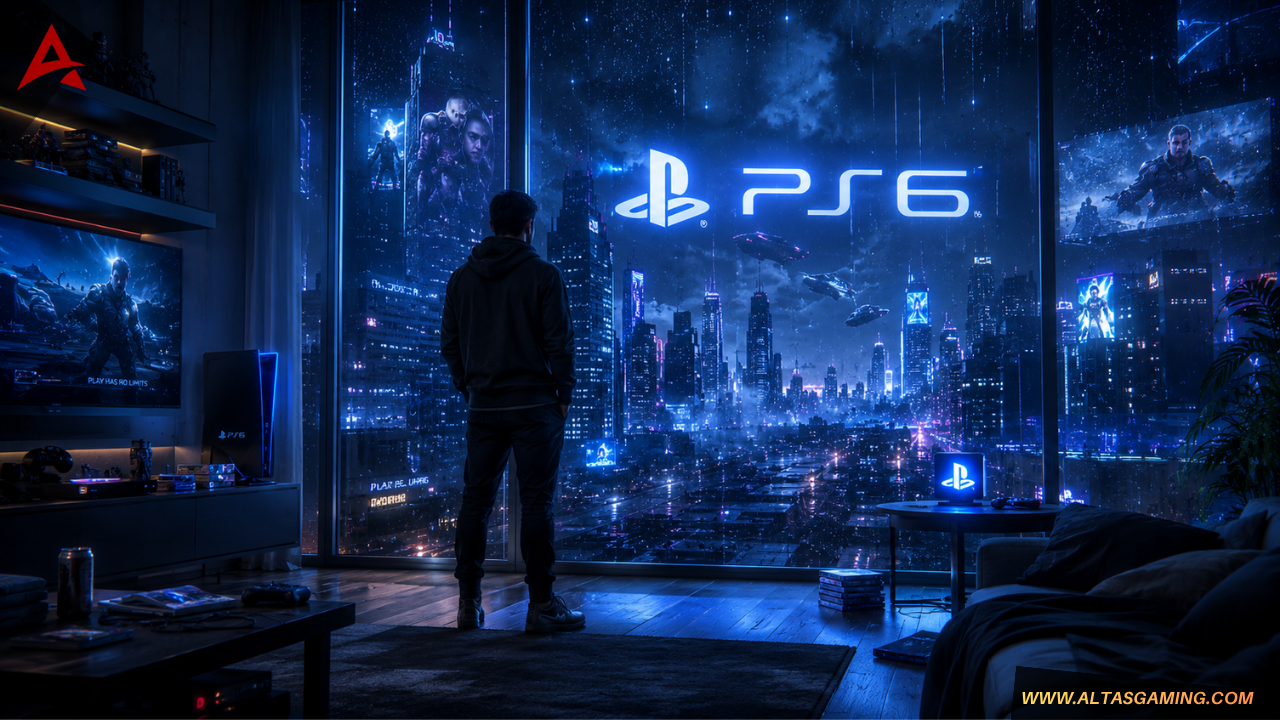
Here is the honest summary of where things stand:
The PlayStation 6 is real and in active development. The codename is Orion. The hardware will be built on a 2nm AMD chip with Zen 6 CPU and RDNA 5 GPU, targeting 4K/120fps gameplay with genuine AI-driven graphics enhancements through Project Amethyst. A companion handheld codenamed Project Canis may launch alongside or shortly after the main console.
The launch window has been pushed back from the originally expected 2027. Based on current conditions, late 2027 is possible if the memory situation improves faster than expected. 2028 is the most realistic target. 2029 is the worst case. Sony’s own CEO confirmed in May 2026 that even Sony has not decided on timing yet.
Price will likely land between $649 and $749 for a standard edition, with a premium configuration potentially higher. The days of a $499 PlayStation are almost certainly behind us.
On the security front, PlayStation has a repeatedly demonstrated vulnerability problem that Sony must address before launching a new generation. Every PS6 owner should use two-factor authentication from day one and treat PSN security as seriously as online banking.
The best advice right now: enjoy the PS5, look forward to GTA 6 in November, and keep your eye on PlayStation Showcase events in 2026 and 2027 where the first official PS6 information is most likely to appear.
Frequently Asked Questions
When will the PS6 come out? Sony has officially confirmed nothing. Based on the best available leaks and analyst estimates, late 2027 is the optimistic scenario, 2028 is the most likely, and 2029 is the worst case if the global memory chip shortage drags on. Sony’s CEO confirmed in May 2026 that even Sony has not finalised the timing.
How much will the PS6 cost? Most credible estimates place it between $649 and $749 for a standard edition. Some more pessimistic estimates, factoring in the high cost of components, push toward $800+. The PS5 Pro currently costs $899.99, which Sony has set as a psychological ceiling for the premium tier.
What are the PS6’s specs? Based on leaked AMD documentation: custom AMD APU on TSMC 2nm process, Zen 6 CPU, RDNA 5 GPU with an estimated 34–40 teraflops of performance, 30GB GDDR7 memory with approximately 640 GB/s bandwidth, 2TB+ SSD storage, targeting 4K/120fps gameplay, and Project Amethyst AI technologies including Neural Arrays, Radiance Cores, and Universal Compression.
Is there a PS6 handheld? Strong evidence from Bloomberg reports, leaked AMD documents, and developer kit updates all suggest Sony is developing a gaming handheld codenamed Project Canis alongside the PS6. Price estimates suggest $400–$500. It would be Sony’s first true gaming handheld since the PlayStation Vita.
Will the PS6 be backwards compatible with PS5 and PS4 games? All available information strongly suggests yes the PS6 will play both PS4 and PS5 games. A Mark Cerny patent also hints at full backwards compatibility extending all the way back to the PS3 and potentially earlier generations.
Has PlayStation been hacked before? Is it safe? Yes, PlayStation Network has suffered multiple significant breaches the most serious being the 2011 breach exposing 77 million accounts, a 2023 employee data breach, a 2025 user data breach, and ongoing account security incidents including a mass PSN sign-out event in 2026. Always use two-factor authentication on your PSN account and avoid storing payment cards directly in your account if possible.
Should I buy a PS5 now or wait for the PS6? Buy a PS5 now if you want to game today. With GTA 6 launching in November 2026 and an excellent exclusive lineup available right now, the PS5 is in the strongest position of its lifetime. Waiting for the PS6 means waiting at least 18 months and probably longer, at a price that will be higher than the current PS5.
What is Project Amethyst? Project Amethyst is a Sony and AMD collaborative technology initiative for next-generation PlayStation hardware, officially revealed in late 2025. It includes three key technologies: Neural Arrays (dedicated AI processing for upscaling and simulation), Radiance Cores (hardware-accelerated path tracing for physically realistic lighting), and Universal Compression (smarter data management for better effective memory performance).
Disclosure: This article may be displayed alongside Google AdSense advertisements. All information, analysis, and opinions in this article are the independent work of the Atlas Gaming editorial team and have not been influenced by any advertiser, manufacturer, or publisher. PlayStation® and PS6 are trademarks of Sony Interactive Entertainment LLC. AtlasGaming.com is not affiliated with or sponsored by Sony Interactive Entertainment. All rumours and leaked specifications cited are from publicly available reports by Bloomberg, Digital Trends, Wccftech, Screen Rant, GameLuster, IBTimes, and Technobezz and are unconfirmed by Sony. Prices and timelines are predictions based on available evidence and may change. All content on this page and all advertisements displayed alongside it comply with Google AdSense Publisher Policies.
© 2026 AtlasGaming.com – All Rights Reserved
Table of Contents
- Iran War 2026 What Happened and Why Is It Important?
- Helldivers 2 Ultimate Survival Guide: Best Weapons, Builds, Missions & Pro Tips (2026)
- The PlayStation 6 – Everything Gamers Have Been Waiting For – Specs, Power, Features, and the Future of PS Gaming
- Global Crisis 2026 – The New World Order? How Nations Are Reshaping Global Power and Economy- What Happens After the Dollar Era?
- The Witcher 3: Wild Hunt – The Fantasy Masterpiece That Redefined Open-World RPGs





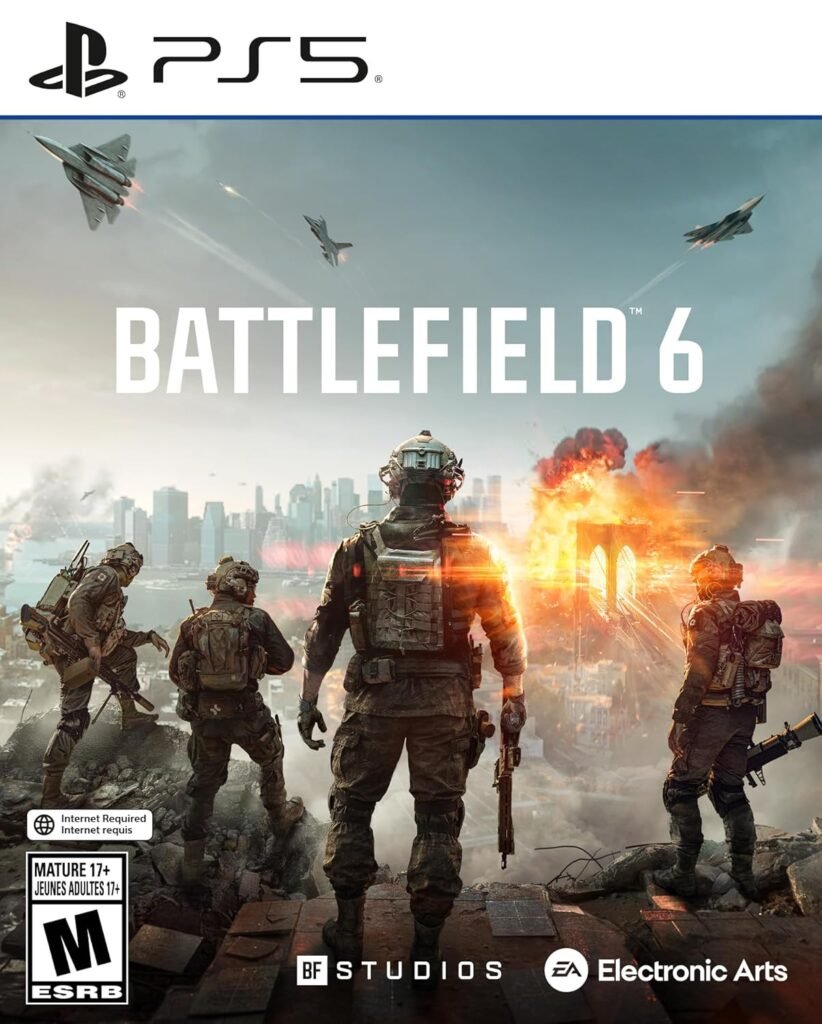

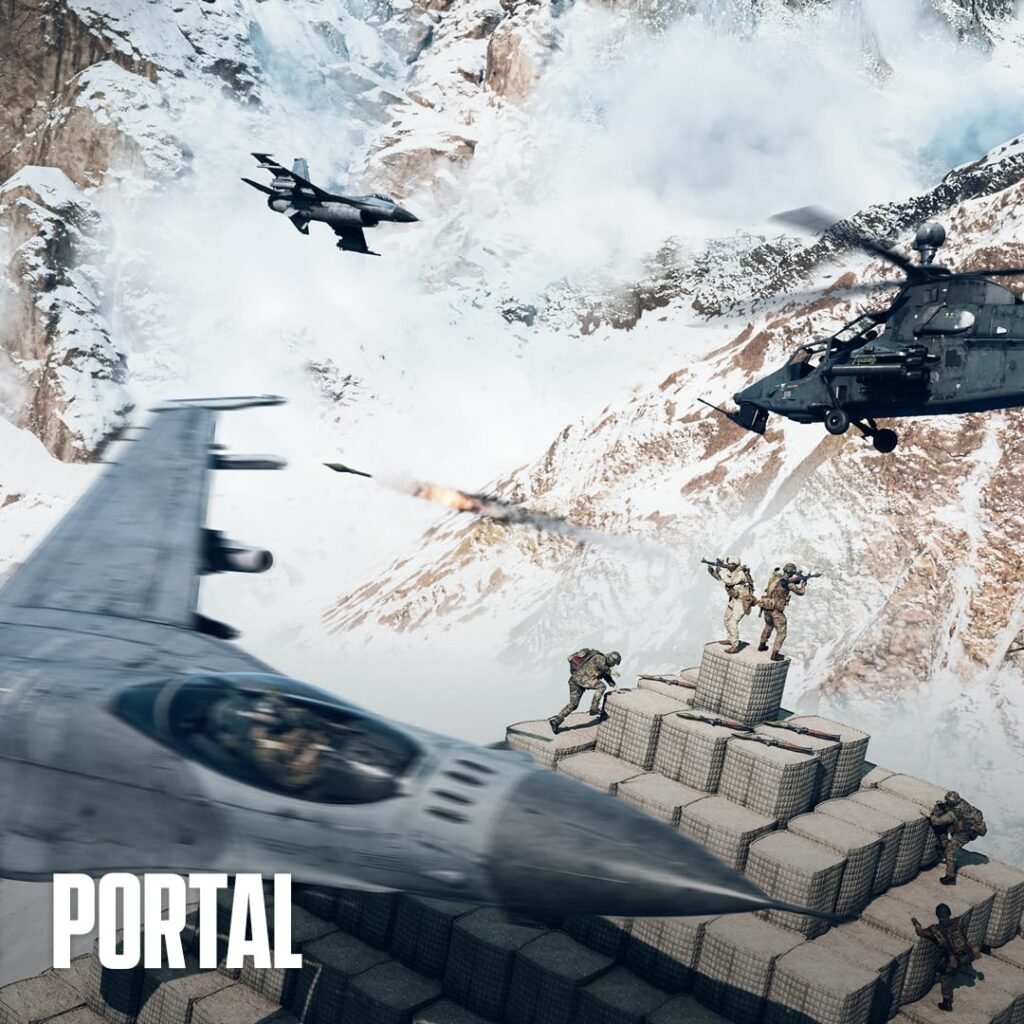


Battlefield 6 – Sony PlayStation 5
Product information
| UPC | 014633382143 |
|---|---|
| ASIN | B0FJHS8TH5 |
| Release date | October 10, 2025 |
| Customer Reviews |
4.5 out of 5 stars |
| Best Sellers Rank |
|
| Product Dimensions | 0.57 x 6.98 x 5.26 inches; 2.88 ounces |
| Type of item | Video Game |
| Language | English |
| Rated | Mature |
| Item model number | 38214 |
| Item Weight | 2.88 ounces |
| Manufacturer | Electronic Arts |
| Date First Available | July 31, 2025 |
From the manufacturer





Leave a Reply